Snowfall vs Snow Depth
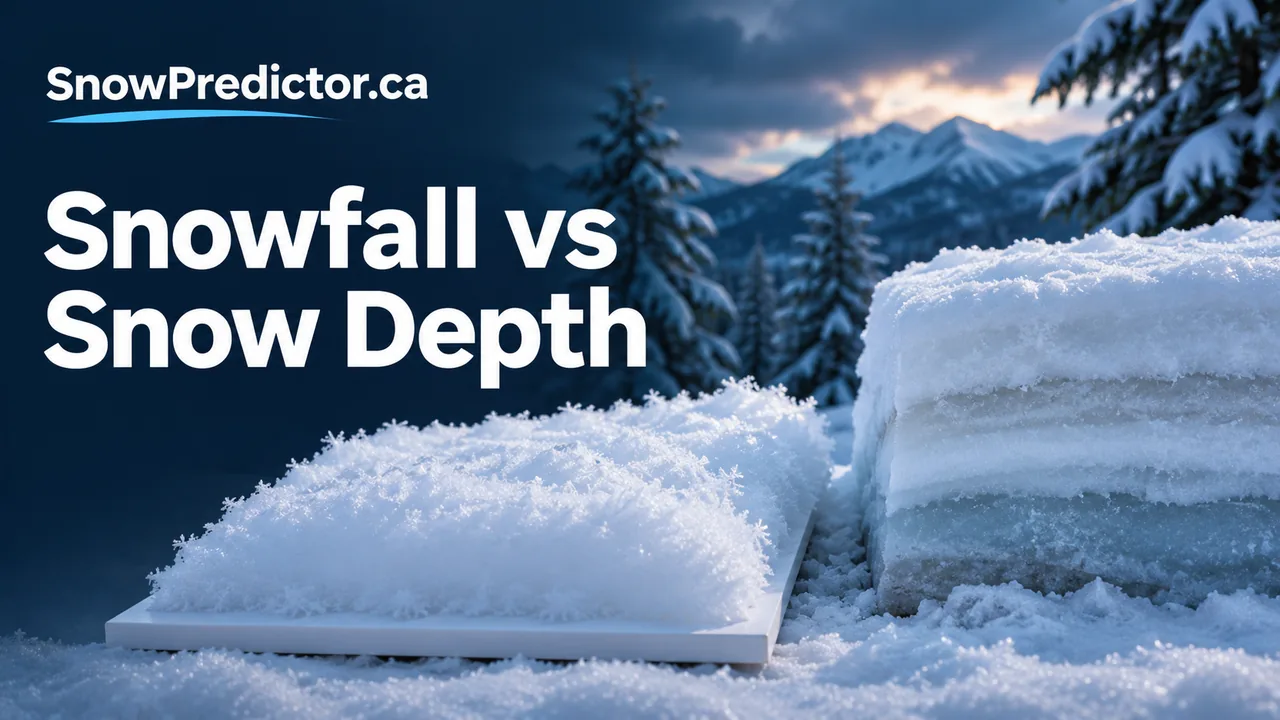
Snowfall measures the new snow that accumulated over a stated period. Snow depth measures how much snow is on the ground at the observation time, including older layers. Both may be reported in inches or centimetres, so the label and time period tell you which number you are looking at.
An example with two correct numbers
Imagine an undisturbed yard with 10 cm of old snow at bedtime. A nearby snow board records 5 cm of new snow overnight. The yard’s morning depth may be less than 15 cm because the existing snow can settle or melt and the new snow can compact. Wind can also redistribute snow between measurement locations.
If you compare reports, check whether the observer measured new snow or total depth. Also match the start and end times. A storm total and a morning depth reading answer different questions even when both come from the same observer.
Where snow water equivalent fits
Snow water equivalent is the amount of water you would obtain by melting the snow being measured. A deep layer of fluffy snow may contain less water than a shallower, dense layer. The NWS measurement guide describes separate procedures for recording new snowfall and total snow depth.
How to compare a forecast with an observation
If the forecast says 5 to 8 cm by noon, compare it with a new-snow observation for the same window and location. A depth reading of 18 cm can include previous storms. An observation taken at 7 a.m. also leaves out the rest of the forecast period. If only depth is available, describe it as depth. Subtracting two depth readings is unreliable when the existing snow compacts, melts or drifts in between.
What to write next to each number
Record the time span with snowfall and the observation time with depth. For example, write “5 cm of new snow from 8 p.m. to 7 a.m.” and “12 cm total depth at 7 a.m.” That wording makes a report useful even after it has been forwarded or copied.
Related reading: Canada’s snowfall season guide.