How to Measure Snowfall at Home
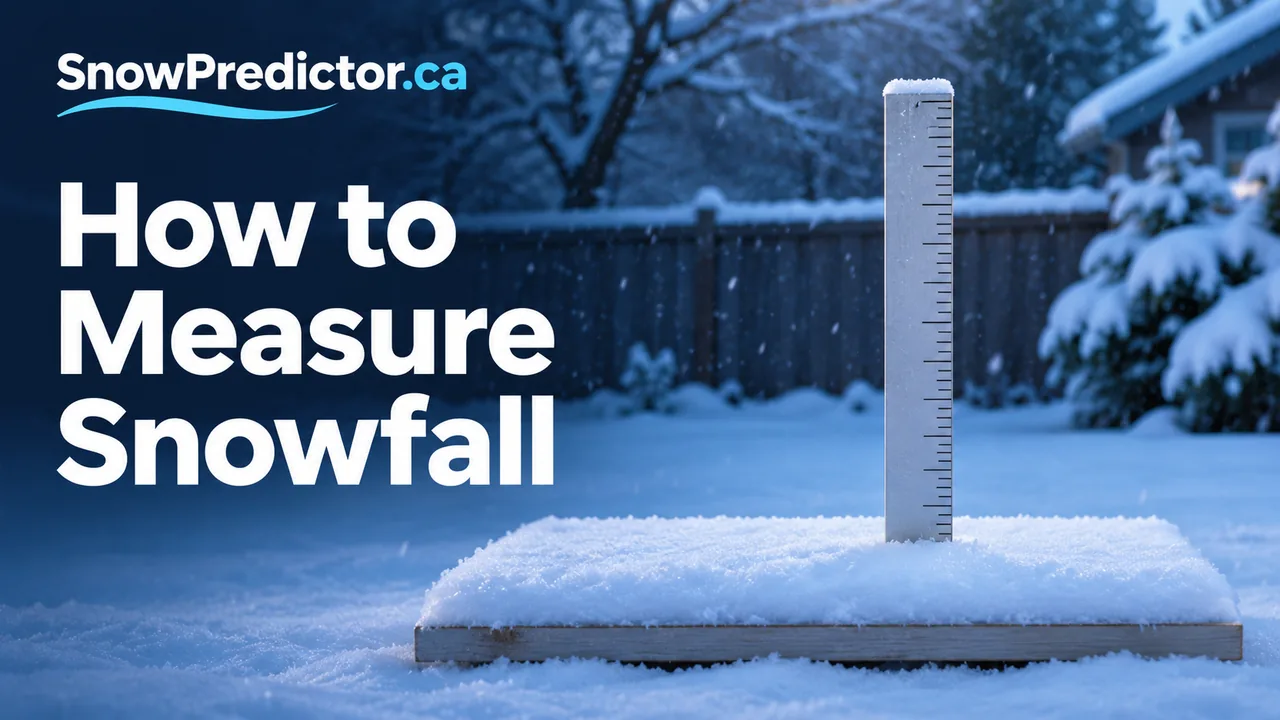
To measure new snowfall, put a flat board on level ground before the event. Choose an open spot away from buildings, overhanging branches and obvious drifts. Place a marker nearby so you can find the board after it is covered.
Set a consistent observation time
Push the ruler vertically down until it touches the board. Read the snow surface without pressing or packing it. If snow has drifted substantially, describe that condition in your notes. Keep a record of the date, local time and whether you are reporting fresh snow or depth.
Follow the NWS snowfall measurement guide if submitting an official observation. Use the receiving programme’s stated intervals and units. Clearing the board too often changes how much settling occurs between readings and can make totals hard to compare.
Keep separate records for separate measurements
New snow belongs in the snowfall column. Measure existing snow cover in a representative undisturbed location to report total depth. If you plan to record snow water equivalent, give that its own field and note what layer you sampled. An observation with its period and method is much easier to compare with nearby reports.
A simple observation log
Record the date and local time, the interval since the previous observation, the amount of new snow and any conditions that made the measurement harder. For example, you might write that you measured 4 cm of new snow since 8 p.m., with some drifting near the fence. Keep the board away from that fence and note if you move it. A short description of the site and method helps explain differences between your report and another observation from across town.
What to do when the snow is uneven
Wind can scour one spot and pile snow in another. Look for representative readings away from obvious drifts and note where you measured. Follow the reporting programme’s method if it asks for an average or a specific observation interval.
Related reading: Canada’s annual snowfall comparisons.