Black Ice and Snow Days in Canada: Why Roads Matter More Than Snowfall
Parents often use snowfall totals to predict a snow day, but that number can mislead. A school board may stay open after several centimetres of dry snow, yet cancel buses after rain or melting snow refreezes into an almost invisible glaze. The difference is road traction. School buses must brake, turn, climb hills and cross bridges, shaded roads and rural routes. This guide explains why black ice school closures can occur with little visible snow, how transportation decisions are made and what families should check before children leave home. The Canada Snow Day Predictor can support early planning, while official weather, road, transportation and school-board notices remain the final sources.
What Families Need to Know First
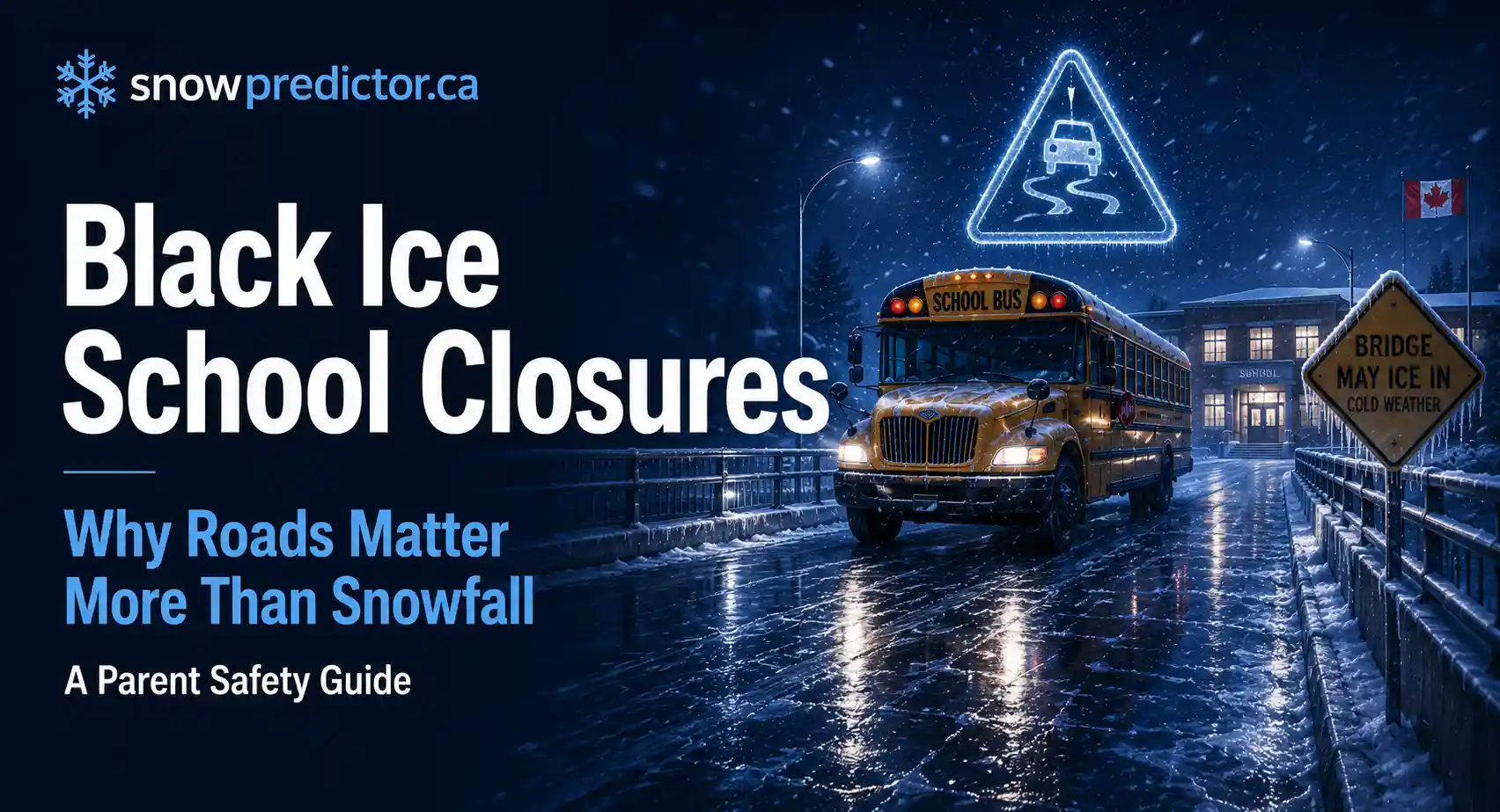
Black ice school closures happen when a thin, nearly transparent layer of ice makes roads, sidewalks or loading areas unsafe even though snow accumulation is small. Black ice forms when moisture freezes on pavement and the dark road surface remains visible through the glaze.
Black ice school closures are not automatic. Transportation providers decide whether buses can complete their routes safely, while school boards separately decide whether buildings remain open. Black ice can leave buses or schools cancelled despite little snow.
| Question | Practical Answer |
|---|---|
| Can buses be cancelled without heavy snow? | Yes. A thin glaze can make braking and steering unpredictable. |
| Does black ice automatically close schools? | No. Transportation and building decisions are separate. |
| Where does ice form first? | Bridges, overpasses, shaded roads, hills and untreated surfaces. |
| What should parents check? | Forecasts, roads, transportation, the school board and the immediate route. |
Why Road Traction Matters More Than Snow Depth
Snow depth is one part of inclement weather travel safety. Transportation teams must determine whether vehicles can maintain traction, stop safely and complete an entire route.
Several centimetres of cold, dry snow may be manageable after roads are plowed and treated. A thin glaze can be more dangerous because tires may lose grip suddenly. A bus might travel safely on a salted main road and then meet untreated ice on a bridge, rural concession road, hill or school entrance.
Key factors include pavement temperature, earlier moisture, treatment progress, route exposure and dismissal conditions. These snow day road conditions explain why snowfall alone cannot produce a reliable snow day forecast.
What Black Ice Actually Is
Black ice is a thin, clear or nearly clear coating on pavement. It is called “black” because the dark road underneath remains visible; the ice itself is not black.
It can form when:
- Rain or drizzle reaches sub-zero pavement
- Meltwater refreezes after temperatures fall
- Wet roads freeze overnight
- Fog or moisture settles on a cold surface
- Daytime snowmelt refreezes after sunset
- Compacted moisture freezes at intersections or stops
During black ice Canada events, roads may look wet, dark or unusually shiny. That may be the only clue before a driver brakes or a pedestrian steps onto the surface.
When Black Ice Is Most Likely
Risk often increases near the freezing point when pavement falls below 0°C after moisture reaches the road. Air temperature alone may not describe the surface accurately.
Common high-risk periods include:
- Before sunrise
- After rain changes to freezing conditions
- Following a daytime thaw and overnight freeze
- During freezing drizzle
- After light snow melts on treated roads
- When temperatures drop quickly near dismissal
- In shaded areas that receive little sunlight
Black ice road conditions can remain patchy. One street may be wet while a nearby bridge or tree-lined road is frozen.
Why Bridges, Hills and Rural Roads Matter
School bus routes are longer and more varied than a family’s trip, often crossing several road types and microclimates.
Bridges and Overpasses
These surfaces lose heat above and below, so they can freeze first and remain icy after nearby roads improve.
Hills and Curves
A bus needs dependable traction to climb, descend, brake and turn. One slippery curve can affect the safety of the entire route.
Rural and Secondary Roads
These roads may be treated later, with more shade, less traffic and longer distances between safe stopping points.
School Entrances and Bus Loops
Even when highways are clear, an icy driveway, loading area or turning circle can prevent safe bus access.
This route-wide risk is a major reason black ice school closures may be considered even when conditions near one home appear normal.
Is There an Official Black Ice Warning?
Canada does not usually issue a nationwide alert titled “Black Ice Warning.” The risk may appear inside a freezing drizzle advisory, freezing rain warning, flash-freeze warning, winter weather travel advisory, Special Weather Statement or local forecast.
Read the complete message rather than searching only for “black ice.” Forecasts may mention falling temperatures, refreezing or hazardous travel without that phrase.
The black ice warning Canada guide explains how those alerts can signal dangerous travel.
Why Buses May Stop While Schools Remain Open
Transportation and school-building decisions serve different purposes. A provider may cancel buses because certain roads cannot be travelled safely. The building may still have power, staff access, treated entrances and safe conditions for students who live nearby.
Possible outcomes include:
- Normal bus and school operations
- Selected route cancellations
- One or more weather zones cancelled
- All buses cancelled while schools remain open
- A delayed opening
- An individual-site closure
- A board-wide closure
- Changes to afternoon transportation
Black ice school bus cancellations therefore do not always mean classes are cancelled. Families must check both the transportation provider and the school board. Icy road school closures and black ice school closures require checking both bus and school-board notices.
The bus cancelled but school open guide explains this difference in more detail.
How Transportation Decisions Are Made
Transportation teams commonly review forecasts, road patrols, driver reports, treatment progress, visibility, ice and difficult routes.
They also consider afternoon deterioration. One dangerous section can affect the whole run even when most roads are clear.
Black ice school closures Canada decisions are not based on the amount of snow in one driveway. A route may cross several municipalities, bridges and rural areas that parents cannot see from home.
The guide to how Canadian schools decide on snow days explains how forecasts, road checks and operations work together.
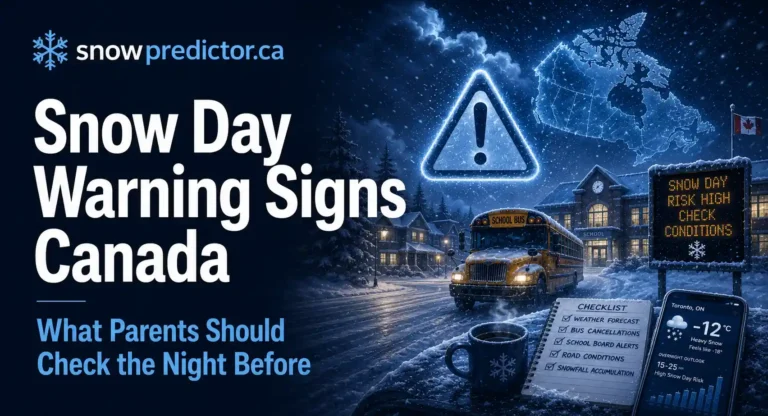
What Parents Should Check Before School
Read the Full Forecast or Alert
Look for freezing rain, freezing drizzle, refreezing, flash-freeze conditions, falling temperatures and icy surfaces. Note whether temperatures are expected to fall below freezing before buses begin operating.
Check Road Information
Provincial and territorial reports may be more useful than snowfall totals. Review closures, surface descriptions, cameras and visibility. Municipal or rural roads may require a separate local check.
Check the Transportation Provider
Look for the child’s route, school, zone or transportation area. Confirm whether a morning cancellation applies throughout the day.
Check the School Board
A bus cancellation does not confirm a building closure. Review the board’s website, email, text alerts and verified social channels for school closure weather updates.
Assess the Immediate Route
Check the driveway, sidewalk, stop and nearby road. Watch for glossy pavement, unexpected slipping or vehicles struggling to stop.
This routine helps families assess black ice school closures without treating one source as final.
A Five-Minute Black Ice Checklist
Before a child leaves home, confirm:
- The current temperature and expected trend
- Whether rain, drizzle or melting occurred before the freeze
- Whether an ice-related alert is active
- The bus and school status
- The condition of the walking route and stop
- A backup childcare or pickup plan
- Whether conditions may worsen before dismissal
- Whether the child has footwear with good traction
Do not rely on snow depth alone. Bare-looking pavement may be more dangerous than a visibly snow-covered road.
Should Parents Drive When Buses Are Cancelled?
A personal vehicle is not automatically safer than a school bus. First determine why transportation stopped.
If black ice school closures are being discussed because of rural roads, bridges or hills outside the family’s route, a shorter urban trip may face different conditions. However, widespread icing can affect every vehicle, including four-wheel-drive models.
Drivers should reduce speed, look well ahead, increase following distance and avoid sudden braking, steering or acceleration. Winter tires improve traction but do not remove the possibility of sliding.
Parents should delay travel when they cannot confidently assess the route. The winter weather safety checklist provides practical guidance for winter driving safety.
Walking and Bus-Stop Safety
Black ice affects pedestrians as well as drivers. Sidewalks, driveways, stairs and bus steps may look wet while being extremely slippery.
Children should:
- Wear footwear with textured soles
- Walk slowly and keep hands free for balance
- Avoid running toward a bus
- Stand well back from the road
- Avoid steep, icy driveways and snowbanks
- Wait with an adult when younger
- Return indoors if transportation is delayed
Black ice safety also applies to playgrounds, entrances and outdoor stairs. Schools may shorten recess or move it indoors when surfaces are unsafe.
What If Conditions Change During the School Day?
Ice can develop after students arrive. A daytime thaw may create meltwater, followed by a rapid temperature drop before dismissal.
Parents should keep transportation and school notifications enabled. Confirm whether afternoon buses are operating and who can collect the child if service changes.
School closures due to ice may be announced later if access, utilities or roads deteriorate. Do not assume the return trip will match the morning.
Preparing the Night Before
When icing is possible:
- Charge phones and power banks
- Enable transportation and board notifications
- Confirm the child’s route and weather zone
- Prepare suitable footwear and clothing
- Arrange backup childcare
- Decide who can collect the child
- Allow extra morning time
- Check the vehicle emergency kit
- Avoid promising that school will be cancelled
The freezing drizzle advisory guide explains why light precipitation can create icy school bus routes.
How SnowPredictor.ca Supports Early Planning
Weather services describe hazards, road authorities report winter road conditions Canada, transportation providers decide bus service and boards decide building status.
The Canada school-closure probability tool supports snow day prediction by estimating possible weather-related disruption for a selected location.
Families can compare that estimate with alerts, road reports, school bus cancellations and board announcements while planning childcare or alternative travel. The predictor supports preparation; it is not a road-safety clearance or official closure confirmation.
Black ice school closures remain local operational decisions, so official notices always take priority.
Frequently Asked Questions
Which Country Has the Longest School Days?
There is no reliable worldwide ranking for the longest daily school schedule because hours differ by age, school, breaks and extracurricular activities. Using the OECD’s closest comparable measure, Australia has among the highest total compulsory instruction time across primary and lower-secondary education. That total covers several years and should not be interpreted as an eleven-hour school day.
Are Kids Still Going to School in Canada?
School attendance depends on the province, local calendar and time of year. Most public-school students are on summer break in late July, while summer school, childcare programmes, private schools and year-round programmes may operate separately. Families should check the current calendar for their own board rather than relying on a national assumption
Is School Cancelled Today in Nova Scotia?
That depends on the date, local school calendar and official regional notice. During scheduled summer break, regular classes are not operating, but that is different from a weather cancellation. During the school year, families should check their regional centre for education, transportation updates and emergency messages.
What Country Has the Shortest Average School Day?
There is no authoritative global ranking based on average daily hours. OECD compulsory-instruction data compares total hours across primary and lower-secondary education, but countries cover different numbers of school years. A lower total therefore does not prove that a country has the world’s shortest daily schedule.
What Country Has Five Years of High School?
South Africa is one example. Secondary school commonly covers Grades 8 through 12, which equals five grade levels. Students usually complete Grade 12 with the National Senior Certificate examinations, although individual school pathways and programme structures can differ.