Colour Coded Weather Alerts Canada: What Yellow, Orange and Red Mean for Parents
Canadian parents may now see yellow, orange or red banners attached to warnings, advisories and watches. These colours help explain the possible impact of hazardous weather, but they do not replace the alert type or confirm whether a school will close. This colour coded weather alerts Canada guide explains how the system works and how parents can use it before school, during dismissal and when conditions change quickly. The Canada Snow Day Predictor can support early planning, while official alerts and board notices remain the final sources.
What the Three Alert Colours Tell Families
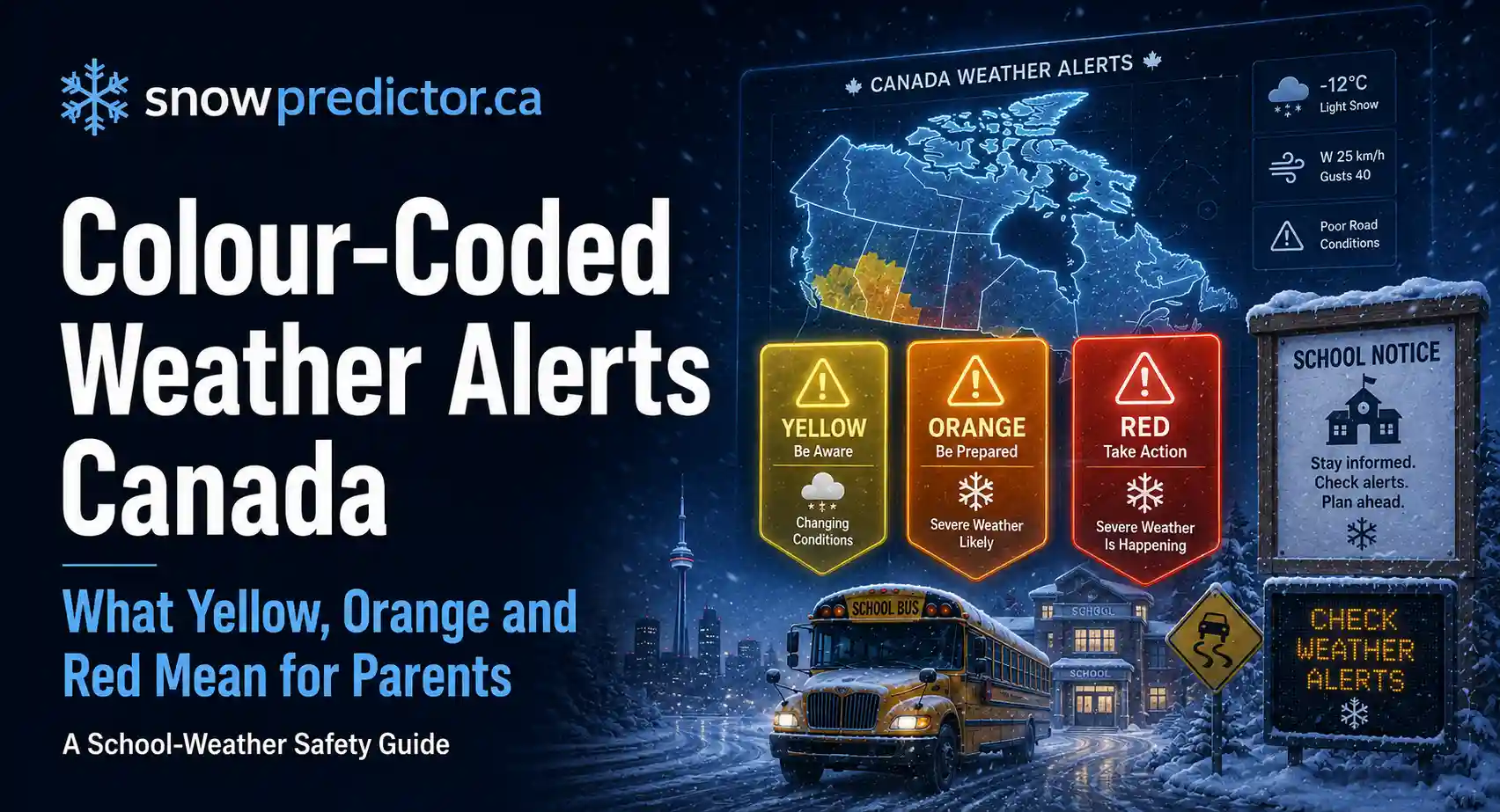
The Canada weather warning system uses yellow, orange and red to show increasing levels of expected disruption. Every formal Warning, Advisory and Watch receives a colour when it is issued.
- Yellow means hazardous weather may cause moderate, localised or short-term impacts.
- Orange means severe weather is likely to cause major, widespread or longer-lasting impacts.
- Red means very dangerous weather may cause extreme, widespread and potentially life-threatening impacts.
The colour describes possible impact and forecast confidence. The alert type explains urgency and certainty. A Yellow Warning and an Orange Watch therefore communicate different information and should be read as complete alerts.
| Part of the Alert | What It Tells Parents |
|---|---|
| Warning | Severe weather is occurring or expected, so action may be needed |
| Advisory | Significant but generally less severe weather is expected |
| Watch | Conditions favour severe weather, but details remain uncertain |
| Yellow, orange or red | The possible level of impact and overall risk |
Why Colour Coded Weather Alerts Canada Were Introduced
Environment and Climate Change Canada introduced colour coded weather alerts to make the possible consequences of hazardous weather easier to understand. Traditional alert names show whether people should prepare or act, but they do not always show how disruptive an event may become.
Forecasters combine expected impact with confidence, timing, location and possible effects on people, travel, utilities and communities.
A storm arriving during the school commute may create greater disruption than the same storm overnight. Rural roads, exposed bridges, population, infrastructure and recovery time can also change the risk.
What a Yellow Alert Means
Yellow is the most common impact level. It indicates hazardous weather that may cause moderate, localised or shorter-term disruption.
The yellow weather warning meaning depends on the hazard and the complete message. For school families, possible effects include slower travel, slippery roads, reduced visibility, short power outages, cancelled outdoor activities, route delays or zone-based bus changes.
Yellow should not be treated as harmless. A local road, bridge, walking route or bus stop can become unsafe even when the wider region experiences moderate disruption.
Parents should check the location, timing, impacts and recommended actions before deciding whether a route is manageable.
What an Orange Alert Means
An orange alert indicates a higher risk of major or widespread disruption. The orange weather warning meaning may include significant travel problems, longer utility outages, dangerous road conditions, flooding, damaging winds or school operational changes.
Families should prepare backup childcare and pickup arrangements, charge phones, review emergency supplies and monitor updates more frequently.
An orange warning does not automatically close every school. Local roads, buildings, staffing and utilities still shape the final decision.
What a Red Alert Means
Red is the highest level used in Canadian weather alert colours. A red weather warning Canada notice signals rare, extreme and potentially life-threatening impacts expected with very high confidence.
Travel may become dangerous or impossible. Utilities, communications, emergency services and transportation may face widespread or prolonged disruption. Families should follow official instructions, avoid unnecessary travel and prepare for major changes to school and bus operations.
Yellow Versus Orange Weather Warning
The yellow versus orange weather warning comparison is about expected impact, not whether one alert is “real” and the other is not.
Yellow generally means moderate or localised effects. Orange indicates major, widespread or longer-lasting disruption. However, an alert’s type still matters. A Yellow Warning can be more immediate than an Orange Watch because a warning means the hazard is occurring or expected, while a watch means it could develop.
Parents should always read three parts together:
- The hazard, such as snow, freezing rain, wind, heat or thunderstorms
- The alert type: Warning, Advisory or Watch
- The colour: yellow, orange or red
This is the safest way to interpret colour coded weather alerts Canada without relying on colour alone.
Are Special Weather Statements Colour-Coded?
No. A Special Weather Statement is informational rather than a formal colour-coded alert. It may describe unusual, inconvenient or potentially concerning weather or provide additional context beyond the regular forecast.
A statement can still help families prepare. It may later be replaced by an Advisory, Watch or Warning if confidence or expected impacts increase.
The Special Weather Statement Canada guide explains how these messages differ from formal alerts.
How Alert Colours Are Selected
Forecasters use an impact-and-confidence matrix. A yellow alert may be issued when moderate effects are expected with high confidence or when greater impacts are possible but confidence is lower.
Orange is used when high impacts are expected with strong confidence, or when extreme impacts have moderate to high confidence. Red requires extreme expected impacts and very high confidence.
This explains why alerts can change as forecasts improve.
Weather warning colours are therefore not based on one national snowfall, rainfall, wind or temperature threshold.
How Colour Coded Weather Alerts Canada Appear on the Map
The official Weather Information map uses yellow, orange and red areas for formal alerts and grey for weather statements.
- Solid colours generally show Warnings or Advisories.
- Transparent coloured areas with dotted outlines show Watches.
- Grey areas show weather statements.
Parents can select a coloured area and open the full message. Check the home, school and route separately because a forecast boundary may cross the journey.
The weather alerts map Canada guide explains how to compare alert areas, radar, roads and school notices.
Which Hazards Use Colour Coded Weather Alerts Canada?
Canada colour coded weather alerts may apply to winter storms, snowfall, freezing rain, snow squalls, blizzards, wind, rainfall, heat, severe thunderstorms and other recognised hazards.
A yellow snowfall warning, orange winter storm warning or red severe thunderstorm warning uses the same colour framework, but each hazard creates different risks.
Before school, parents should focus on the impact section. Road traction, visibility, flooding, lightning, heat, wind and conditions expected near dismissal may matter more than one forecast number.
The Canadian weather alerts guide explains major alert types and their practical meaning.
Do Alert Colours Cancel School Buses?
No. Colour coded weather alerts Canada do not directly cancel school transportation. Bus operators and transportation providers make their own decisions after reviewing forecasts, visibility, road conditions, route checks and whether buses can complete morning and afternoon trips safely.
A yellow alert may cause no change, selected delays or cancellations in exposed zones. Orange increases the likelihood of broader disruption. Red should lead families to expect major disruption and follow official instructions.
School bus weather cancellations may affect one route, several weather zones or an entire transportation system. Families should check the provider responsible for their child instead of assuming the regional colour applies equally to every bus.
Does the Colour Decide Whether Schools Close?
No. Environment and Climate Change Canada does not decide whether schools open or close. School boards assess transportation, roads, building safety, staffing, power, water, heating or cooling and local emergency information.
School closure weather alerts provide hazard information, not an operating decision. Two boards inside the same alert area may respond differently because their routes, buildings and procedures differ.
A cancelled bus also does not always mean the school is closed. The bus cancelled but school open guide explains how families should interpret separate transportation and building notices.
How to Read Colour Coded Weather Alerts Canada
Start with the full title, such as “Orange Warning – Blizzard” or “Yellow Watch – Severe Thunderstorm.” Then check:
- Hazard: What weather is expected?
- Type: Is it a Warning, Advisory or Watch?
- Colour: What level of impact is possible?
- Location: Are the home, school and full route included?
- Timing: When will conditions begin, peak and end?
- Impacts: Could travel, power, visibility, health or property be affected?
- Recommended action: What are officials advising?
Open the current Environment Canada weather alerts message rather than relying on a notification headline, old screenshot or social-media post.
A Reliable Before-School Checking Routine
Read the Official Alert
Confirm the type, colour, location, timing, confidence, impacts and recommended actions.
Check Roads and Local Conditions
Use provincial or territorial road services and municipal updates. Radar cannot show every icy road, flooded underpass, sidewalk or bus stop.
Check Transportation
Look for the child’s route, school or weather zone. Confirm whether a morning cancellation also applies to afternoon service.
Check the School Board
Verify whether the building is open, delayed or closed and whether after-school programmes or dismissal procedures have changed.
Assess the Immediate Route
Look for untreated ice, poor visibility, standing water, fallen branches, lightning, extreme heat or unsafe access.
This routine helps families use colour coded weather alerts Canada as one part of a complete school-safety decision.
What If the Colour Changes During the Day?
An alert can change as forecast confidence, storm movement or expected impacts develop. A Yellow Watch may become an Orange Warning, or an alert may expand into the school region.
Keep weather, transportation and school notifications enabled through dismissal. Conditions later in the day can affect buses, outdoor activities, pickup arrangements or early dismissal.
Parents should confirm who can collect the child and avoid assuming that the morning decision will remain unchanged.
How Families Can Receive Official Updates
WeatherCAN provides official Canadian forecasts, alerts and push notifications. Parents can save both home and school locations rather than monitoring only the phone’s current position.
Alert Ready is a separate emergency system used for certain critical messages. Not every weather warning is distributed through Alert Ready, so families should continue checking official weather and school sources.
The Canada weather warning system works best when families read the full alert and then check the local authorities responsible for roads, buses and schools.
How SnowPredictor.ca Complements Colour Coded Weather Alerts Canada
Official alerts describe weather risk, but they do not predict the final decision of a particular school board or transportation provider.
The Canada school-closure probability tool supports early household planning by estimating possible weather-related school disruption for a selected location. Families can compare the estimate with official alerts, road reports, bus notices and board announcements while arranging childcare or alternative transportation.
SnowPredictor.ca is not a road-safety clearance or official closure confirmation. Official decisions always take priority.
Frequently Asked Questions
What Are Canada’s Colour-Coded Weather Alerts?
Canada uses yellow, orange and red for formal weather Warnings, Advisories and Watches. The colours show the expected level of impact, while the alert type explains urgency and certainty. The system helps people understand possible disruption but does not replace the full alert message.
What Are the Colour Codes for Weather Alerts?
Yellow indicates moderate, localised or shorter-term impacts. Orange indicates major, widespread or longer-lasting impacts. Red indicates extreme, widespread, prolonged and potentially life-threatening impacts. Risk generally increases from yellow to orange to red.
What Colour Is Used for a Weather Warning?
A warning does not have one fixed colour. Depending on expected impact and forecast confidence, it may be yellow, orange or red. For example, a wind warning may be yellow for moderate disruption and orange or red when major damage is expected.
What Do the Weather Colour Codes Mean?
They show how seriously weather may affect people, transportation, health, property, utilities and local services. The colour considers impact, confidence, timing, location, duration and community exposure, not only the forecast amount of snow, rain, heat or wind.
What Do the Colours Mean on Canada’s Weather Map?
Yellow, orange and red show increasing alert risk. Solid colours generally identify Warnings or Advisories, transparent colours with dotted boundaries identify Watches, and grey identifies weather statements that are not formal colour-coded alerts.