Special Weather Statement Canada: Could Schools or Buses Be Affected?
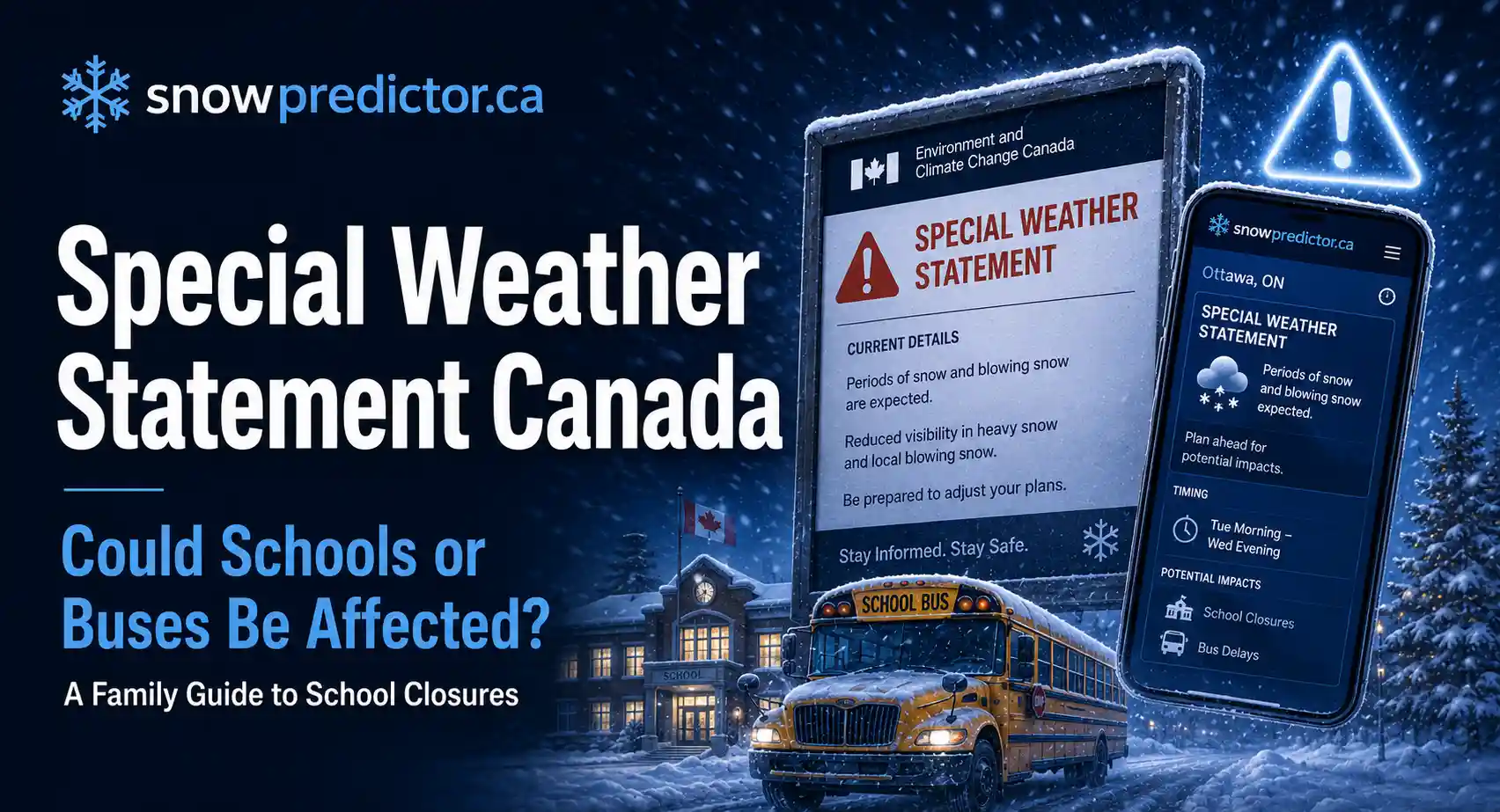
Canadian families may see a special weather statement Canada notice before school and wonder whether it signals a snow day. The message may mention snow, freezing rain, strong winds or a rapid temperature drop without confirming severity. This guide explains how the notice can influence school and transportation decisions. The Canada Snow Day Predictor supports early planning, while official weather, school-board and transportation sources provide final information.
What Families Should Understand First
The special weather statement meaning is informational rather than automatically severe. It highlights unusual, inconvenient or potentially concerning weather, or adds detail that does not fit comfortably inside the regular forecast. It is not one of Canada’s formal colour-coded warnings, watches or advisories.
The notice does not automatically close schools or cancel buses. Schools could still close if later forecasts, road reports or local observations show unsafe travel or building conditions.
The message is most useful as an early planning signal. It gives families time to organise childcare, adjust work schedules, prepare transportation alternatives and gather winter supplies while forecasters continue evaluating the storm’s track, timing and likely effects on local communities.
| Question | Practical Answer |
|---|---|
| Is the notice a formal colour-coded alert? | No. It is issued for information. |
| Does it confirm severe weather? | No. Forecast uncertainty may remain. |
| Can buses still be cancelled? | Yes, when routes are unsafe. |
| Can schools still close? | Yes, when the board identifies operational risk. |
| What should parents do? | Read the full message, prepare and monitor updates. |
Understanding This Weather Bulletin
People searching what is a special weather statement should think of it as an additional weather bulletin. It may describe a developing system, explain uncertainty or highlight possible travel disruption.
Canada’s formal public alert types are warnings, advisories and watches. Those alerts receive yellow, orange or red impact colours. Informational statements sit outside that colour system, but they can still describe weather that deserves attention.
A bulletin may discuss snowfall, freezing rain, strong wind, blowing snow or an uncertain storm track, even before a formal alert threshold is reached.
Why Forecasters Issue an Informational Statement
Forecasters may use this message when notable weather is possible but impact or confidence does not yet justify a formal alert.
The headline alone is not enough. Parents should read:
- The affected forecast region
- The issue and update times
- When the weather may begin and end
- The expected precipitation or wind
- The level of uncertainty
- Possible travel or utility effects
- Whether another update is expected
An Environment Canada weather statement may cover a broad region, while effects vary locally. Forecasts, radar and road reports help families assess their route.
How Statements Differ From Watches, Advisories and Warnings
The special weather statement vs warning comparison is mainly about formal status, certainty and urgency.
| Message Type | Meaning in Canada | Recommended Response |
|---|---|---|
| Informational statement | Extra detail about unusual or potentially concerning weather | Stay informed and prepare |
| Watch | Conditions are favourable for severe weather | Get ready and monitor |
| Advisory | Significant but generally less severe weather is expected | Take precautions |
| Warning | Severe weather is occurring or expected | Act promptly |
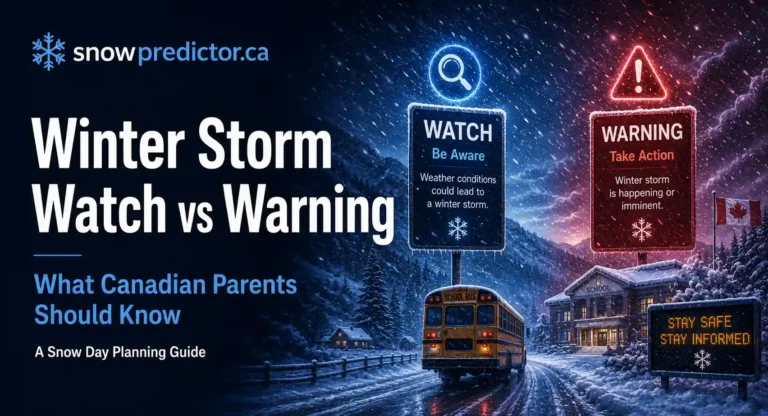
A watch means a serious hazard could develop. An advisory means a significant but generally less severe hazard is expected. A weather warning means severe conditions are occurring or expected and people should take action.
The weather advisory versus warning guide explains these formal alert types, while the winter storm watch versus warning guide focuses on developing winter systems.
Why the Notice Can Still Matter for Schools
School boards need not wait for a formal warning. Road reports or transportation observations may already show unsafe routes.
A board may consider:
- Snow or ice near bus departure
- Conditions expected at dismissal
- Visibility on rural and exposed routes
- Road-clearing progress
- Sidewalks, parking areas and school entrances
- Building heat, power and water
- Staffing and transportation availability
The weather service describes the developing hazard. The school board decides whether buildings open, while the transportation provider decides whether buses operate. This separation explains why one bulletin can lead to different decisions across neighbouring districts.
Possible School and Transportation Decisions
School closure weather alerts are only one input in local planning. Depending on conditions, a board or transportation provider may announce:
- Normal school and bus operations
- Selected route cancellations
- Transportation changes within one weather zone
- All buses cancelled while schools remain open
- A delayed opening
- Selected school closures
- A board-wide closure
- Early dismissal if conditions worsen
School bus cancellations may happen before buildings close because buses travel long distances, stop repeatedly and use secondary roads. One icy hill, exposed road or blocked turnaround can affect a complete route.
Parents should read the whole announcement. “Buses cancelled” does not always mean “schools closed,” and families who drive children to an open building may also need to arrange safe pickup.
Why Nearby Boards May Decide Differently
Forecast regions are often larger than school districts and may include urban streets, rural roads, hills and exposed areas.
One board may cancel by transportation zone, while another makes a district-wide decision. A city board may have short routes on treated roads, while a neighbouring rural board faces long routes and open areas where visibility changes quickly.
Families should follow their own board and transportation provider because local roads and procedures differ.
How to Interpret Ontario and Toronto Searches
A Special Weather Statement Ontario search does not mean the whole province is under the same notice. Ontario contains many forecast regions, and conditions can differ sharply between northern, southern, urban and Great Lakes communities.
A Special Weather Statement Toronto result should be checked against the issue time and the precise forecast area. Toronto may have a statement while other parts of the Greater Toronto Area have a watch, advisory, warning or no message at all.
Canada weather alerts are location-specific. Always confirm that the named area covers the home, school and route between them.
Check Current Results Carefully
A search for special weather statement today may surface an older headline after the message has been updated, replaced or ended. Open the newest official notice and compare the publication time with the current forecast.
A search for special weather statement near me can also be misleading near forecast boundaries or when a device uses an inaccurate location. Check the community and region shown in the official message rather than relying only on a map pin, notification preview or social-media screenshot.
The bulletin may end or be replaced by a watch, advisory or warning.
Weather Conditions That Matter Most to Schools
Snowfall Timing
Snow beginning near bus departure may cover roads faster than crews can clear them. If it ends well before morning, road crews may have more time to treat routes.
Freezing Rain
A freezing rain warning may follow if confidence increases. Even light icing can affect side roads, school steps, parking areas and power lines.
Rapid Temperature Drops
Wet roads can freeze quickly when temperatures fall. A flash freeze can create risk even after rain or melting snow appears to have ended.
Strong Wind and Blowing Snow
Wind may reduce visibility and create drifting on open roads. Rural routes can become unsafe while sheltered city streets remain passable.
Afternoon Deterioration
Boards must consider the journey home. Weather arriving near dismissal may lead to transportation changes or early closure even when the morning was manageable.
A Reliable Checking Routine for Parents
Use the same sequence every time instead of comparing multiple apps.
Read the Full Official Message
Check the affected region, issue time, expected start, duration, weather type and uncertainty. Do not rely only on the title.
Look for an Upgrade
Review Canada weather alerts to see whether a watch, advisory or warning has replaced the statement. A winter storm alert, snowfall warning, snow squall watch, freezing rain warning, snow advisory or fog advisory may provide more specific risk information.
Check the Transportation Provider
Look for route-specific, zone-based or system-wide announcements. Confirm whether the change applies only in the morning or for the whole day.
Check the School Board
Confirm whether schools are open, delayed, closed or changing dismissal time. Use the official website, notification service or verified social account.
Review Local Roads and the Household Route
Check provincial or territorial road information, local cameras and conditions outside the home. A regional forecast cannot describe every driveway, sidewalk, crossing or rural road.
Make the Family Decision
Consider the child’s age, clothing, health needs, walking distance and expected conditions for the return journey. The weather app versus school-board notice guide explains which source answers each question.
Preparing the Evening Before School
An informational weather bulletin is a useful preparation signal, even when closure remains uncertain.
Parents can:
- Charge phones and power banks
- Enable board and bus notifications
- Prepare coats, boots, gloves and school items
- Confirm backup childcare
- Review work and transportation alternatives
- Check medication and accessibility needs
- Inspect home and vehicle emergency supplies
- Recheck the forecast before bed
- Check again early in the morning
Families need not assume closure, but early planning prevents rushed decisions when conditions change overnight.
Written contacts, charged devices and prepared clothing can reduce stress when internet access, school notifications or household plans change suddenly during the night.
The winter emergency kit Canada guide lists supplies for the home, vehicle, outages and winter travel.
Driving When Difficult Travel Is Mentioned
The statement may mention difficult travel. Drivers should check roads, allow extra time, clear windows and carry a charged phone and winter supplies.
When snow, ice or poor visibility develops:
- Reduce speed smoothly
- Increase following distance
- Avoid sudden steering or braking
- Keep headlights on
- Delay unnecessary travel
- Never drive around closure barriers
- Maintain adequate fuel or battery charge
An open school does not guarantee that every family route is safe. Parents should consider the entire journey, including the return trip.
Can the Message Become a Formal Alert?
Yes. A developing event may later become a watch, advisory or warning when forecast confidence or expected impacts increase. It may also end without an upgrade if the system weakens, changes track or is expected to produce limited effects.
Families should monitor the newest message. A later colour-coded alert adds information about impact and confidence.
How SnowPredictor.ca Helps With Early Planning
A weather statement can appear while school officials are still collecting forecasts, road reports and transportation information. The Canadian school closure probability tool helps during that waiting period by estimating how snow, ice, wind and timing may affect school operations.
The estimate can support childcare, work and transportation planning, but it is not an official closure announcement. Once a school board or transportation provider publishes a decision, the official notice takes priority.
Frequently Asked Questions
How Is This Bulletin Used in Ontario?
It is an informational bulletin highlighting unusual, inconvenient or potentially concerning conditions within a named Ontario forecast region. It is not a formal colour-coded warning, advisory or watch, but families should read it because conditions may change or later require an alert.
What Does This Notice Mean on Apple Weather?
In Canada, Apple Weather may display information supplied by national weather services. The message generally reflects the government-issued statement for that location rather than a separate warning created by Apple. Open the full notice to check timing, region and possible impacts.
What Is the Strongest Weather Warning?
Red is the highest colour in Canada’s impact-based system. It indicates very dangerous and potentially life-threatening weather expected to cause extreme, widespread or prolonged disruption. The colour order is yellow, orange and red.
What Is Special Weather?
“Special weather” is not usually a separate formal warning category. It generally describes unusual, inconvenient or potentially concerning conditions that require more explanation than the regular forecast provides.
What Is the Coldest City in Canada Right Now?
The uploaded research recorded Sachs Harbour Airport, Northwest Territories, at -1.7°C on July 29, 2026, as the national cold spot, although Sachs Harbour is a hamlet rather than a city. Among the major cities listed at that time, Iqaluit was 3°C. Current readings change as stations report new observations.