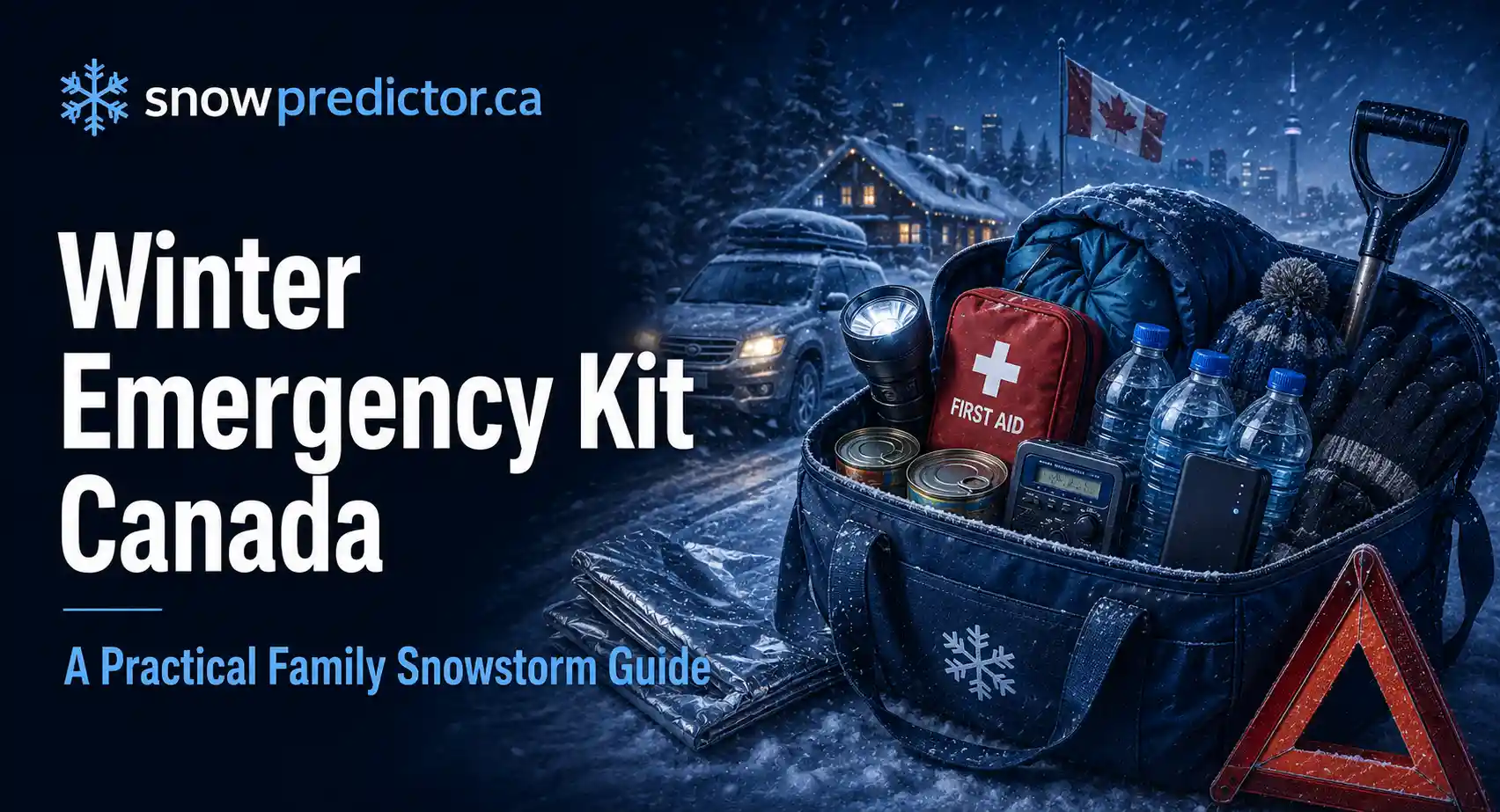
Winter Emergency Kit Canada: A Practical Family Snowstorm Guide
Canadian families know they should prepare for a winter storm, snowstorm, freezing rain or power loss, but many are unsure what to store or whether one kit can serve both the home and vehicle. A reliable winter emergency kit Canada plan should support warmth, food, communication, first aid and safe travel. The Canada Snow Day Predictor can help parents prepare for possible school disruption, while official school, transportation and emergency notices still confirm final decisions.
Why Most Families Need More Than One Kit
A winter emergency kit is a portable collection of supplies that helps a household manage when electricity, roads, shops or communications are disrupted. Some families also call it a winter survival kit or emergency supply kit. Canadian preparedness guidance commonly uses a 72-hour minimum because help and replacement supplies may take time to arrive.
A practical winter storm preparedness checklist starts with two separate kits:
- A household emergency kit for sheltering at home or evacuating
- A vehicle emergency kit that remains in the car throughout winter
Do not move one kit between locations. A storm may begin while the car is away, or a breakdown may happen when the home kit is inaccessible. A well-organised winter emergency kit Canada plan keeps essential supplies where they are most likely to be needed.
A Quick Winter Kit Checklist
| Category | Essential Supplies |
|---|---|
| Water | Drinking water for at least three days |
| Food | Familiar non-perishable food and a manual can opener |
| Warmth | Blankets, sleeping bags, hats, gloves and dry clothing |
| Lighting | LED flashlights, headlamps and spare batteries |
| Power | Charged power banks and device cables |
| Information | Battery or wind-up radio and written contacts |
| First aid | Bandages, gauze, antiseptic products and gloves |
| Medication | Prescriptions, dosage details and medical equipment |
| Hygiene | Soap, wipes, toilet paper, rubbish bags and personal products |
| Documents | Identification, insurance details and an emergency plan |
| Family needs | Supplies for children, pets and accessibility requirements |
| Vehicle safety | Shovel, scraper, traction aid, booster cables and warning equipment |
Plan Water and Food for at Least 72 Hours
An emergency kit for a snowstorm should begin with water. A 72-hour emergency kit Canada household should include about two litres of drinking water per person per day. A family of four therefore needs at least 24 litres for three days. Extra water may be required for cooking, infant formula, hygiene and pets.
Store water in manageable containers that children and older adults can lift. Keep it dry, accessible and protected from freezing or flooding.
An emergency kit for winter storm conditions should include familiar non-perishable food that needs no cooking. Useful choices include:
- Canned meals, beans, vegetables and fruit
- Energy bars, crackers and dry cereal
- Nut or seed butter where allergies allow
- Dried fruit
- Shelf-stable milk
- Ready-to-eat infant food
- Food for medical diets
- Pet food
Add a manual can opener and basic utensils. Choose food the family knows and can prepare without electricity.
Pack Warmth for Heating and Power Loss
A winter storm emergency kit must prepare the family for loss of heating as well as lighting. Keep one warm blanket or sleeping bag per person, thermal base layers, sweaters, dry socks, hats, gloves, indoor footwear, foil blankets and approved heat packs.
Store one complete clothing set for each person in a waterproof bag. This keeps clothing dry and makes it easier to find in darkness. A winter emergency kit for home use should also be supported by accessible snow shovels, ice melt and traction material. Do not leave these supplies in a shed that drifting snow may block.
During an outage, gather everyone in one room, close unused rooms and reduce drafts without blocking ventilation. Never use an oven, barbecue, camping stove or outdoor heater indoors.
The power outage preparation guide explains how to protect warmth, food and medical needs when electricity fails.
Keep Lighting, Communication and Backup Power Ready
If power goes out, a household can lose lighting, internet access and normal phone charging at the same time. Include LED flashlights, headlamps, spare batteries, charged power banks, charging cables, a vehicle charger, a whistle, pen and paper, and a battery-operated or wind-up radio.
Headlamps leave both hands free while checking children or moving through dark rooms. Keep at least one light within easy reach.
Write important contact numbers on paper. Include family members, caregivers, the school, transportation provider, utility, medical contacts and insurance information. A winter emergency kit Canada setup should still work when a phone is damaged, discharged or unable to connect.
Build a First Aid and Medical Plan
A first aid kit should contain more than adhesive bandages. Include sterile gauze, medical tape, antiseptic wound cleanser, disposable gloves, scissors, tweezers, a thermometer, a cold pack, basic pain or fever medication and simple first-aid instructions.
Keep the kit accessible to responsible adults but safely away from small children. Check expiry dates and restock anything used during routine illness or injury.
Medication planning should reflect the real household. Include essential prescriptions, a written medication list, dosage details, copies of prescriptions, spare glasses, hearing-aid batteries, diabetes supplies and backup power for medical devices.
Ask a healthcare professional about medicines requiring refrigeration or strict timing. Rotate supplies so medication stays current. A dependable winter emergency kit Canada plan should reflect actual medical needs rather than a generic checklist.
Protect Documents and Important Contacts
A household emergency kit should contain paper copies of information that may be difficult to access without electricity or mobile service. Keep the following in a waterproof pouch:
- Identification and health-card details
- Insurance information
- Emergency and next-of-kin contacts
- School and transportation information
- Utility emergency numbers
- A written household plan
- Spare house and vehicle keys
- A small amount of cash
Update the pouch when a child changes school, a caregiver changes number or the family’s medical needs change. Your emergency kit Canada plan should match the household as it exists now, not as it looked several years ago.
Adapt the Kit for Children, Pets and Accessibility
Generic survival kits often miss individual needs. Families with babies may need formula, nappies, wipes, medication and extra clothing. Older children may benefit from familiar snacks and a comfort item.
Pet supplies may include food, water, medication, bowls, a leash, carrier, waste bags, veterinary information and a blanket.
Older adults and people with disabilities may need mobility aids, specialised food, extra medication or device batteries. Record evacuation help and charging locations.
A practical winter emergency kit Canada approach considers anxiety and routine as well as physical survival. A familiar activity or comfort object can make an extended outage easier for a child.
Prevent Carbon Monoxide Poisoning
Winter outages may tempt families to use unsafe heating or cooking methods. Never run a barbecue, camping stove or fuel-burning generator inside a house, garage, basement, shed or covered area. Keep portable generators outdoors and away from doors, windows and air intakes.
Never idle a vehicle inside a garage, even when the door is open. Homes with fuel-burning equipment should have working carbon monoxide alarms with battery backup.
If an alarm sounds or anyone develops headache, dizziness, nausea, weakness or confusion, move everyone to fresh air and contact emergency services. Carbon monoxide cannot be seen or smelled, so equipment placement and alarms are essential parts of any winter preparedness plan.
Keep a Separate Kit in Every Family Vehicle
A winter car emergency kit should remain in each regularly used vehicle. A basic car emergency kit should include:
- Water in plastic bottles and non-perishable snacks
- A blanket, warm clothing and footwear
- A first aid kit and seatbelt cutter
- A small shovel, snow brush and ice scraper
- Sand, salt, traction mats or non-clumping litter
- Jumper cables or a portable battery pack
- Windshield washer fluid
- A tow rope
- Reflective warning triangles or lights
- Work gloves, a flashlight and whistle
- A paper road map and phone charger
This winter driving emergency kit is different from the home supply. It supports a breakdown, road closure or long wait in freezing conditions. A car emergency kit Canada families rely on should be inspected regularly because bottled water can freeze, batteries lose charge and children outgrow spare clothing.
A winter roadside emergency kit also needs to be reachable. Do not bury it beneath luggage or store every item in a locked roof box. Searches such as emergency road kit, roadside emergency kit, vehicle emergency kit and automotive emergency kit all reflect the same need: supplies must already be in the vehicle.
Check Conditions Before Driving
Emergency supplies reduce the harm of a delay, but a snow emergency can still make travel unsafe. Before leaving:
- Check the latest weather warning
- Review road conditions for the full route
- Remove all snow and ice from the vehicle
- Check the fuel level or electric-vehicle charge
- Carry a charged phone
- Tell someone the route and expected arrival time
- Delay unnecessary travel during severe conditions
Parents can review the winter weather safety checklist and use the Snow Day Predictor for early school-day planning. School and transportation notices still provide the final operating decision.
Store and Review the Kits Properly
Keep the home kit dry, portable and easy to reach. A backpack, duffle bag or wheeled container is easier to evacuate with than a heavy box.
Good winter preparedness includes reviewing every winter emergency kit Canada family members may rely on at least once a year, preferably before winter. Check food dates, water containers, medication, batteries, power-bank charge, clothing sizes, contacts, insurance details, pet supplies and vehicle equipment.
Replace anything used. A winter emergency kit Canada system is dependable only when it is maintained.
Printable Winter Emergency Kit Checklist
Household Essentials
- Water for at least 72 hours
- Non-perishable food and a manual can opener
- Flashlights, headlamps and spare batteries
- Battery or wind-up radio
- Power banks and charging cables
- First aid kit and prescription medication
- Blankets, sleeping bags and warm clothing
- Hygiene supplies
- Emergency contacts and documents
- Cash and spare keys
- Child, pet and accessibility supplies
Winter Home Supplies
- Snow shovel
- Ice melt or traction material
- Work gloves
- Carbon monoxide and smoke alarms
- Fire extinguisher
- Basic tools
- Emergency heat packs
Vehicle Supplies
- Food and water
- Blanket and spare clothing
- First aid kit
- Shovel, scraper and snow brush
- Jumper cables and tow rope
- Traction material
- Reflective warning equipment
- Flashlight, whistle and phone charger
- Washer fluid
Frequently Asked Questions
What Should Be Included in a Winter Emergency Kit?
A winter emergency kit Canada household should support at least 72 hours. Include water, non-perishable food, a manual can opener, flashlights, radio, batteries, power banks, first aid, prescription medicine, warm clothing, blankets, documents, contacts, hygiene products and supplies for children, pets or medical needs. For winter, add heat packs, ice grippers and a portable shovel where appropriate.
Is CAA Giving Away Emergency Kits?
The supplied research did not verify a nationwide CAA emergency-kit giveaway. Promotions may vary by regional club, and unexpected advertisements offering a free kit may be fraudulent. Verify any offer through the official regional CAA contact before providing personal or payment information.
What Are 10 Essential Items for an Emergency Kit?
A basic list includes water, non-perishable food, a manual can opener, flashlight, battery radio, spare batteries or a power bank, first aid kit, prescription medication, emergency contacts and warm blankets or clothing. Adapt the list for allergies, children, pets, disabilities and medical equipment.
Which Items Should Be Kept in a Vehicle for Emergencies?
Keep water, snacks, warm clothing, a blanket, first aid supplies, flashlight, whistle, shovel, scraper, snow brush, traction material, jumper cables, washer fluid, reflective warning equipment and a phone charger. A tow rope, gloves and paper map are also useful.
What Are 10 Items for an Emergency Go Bag?
An emergency go bag should include water, ready-to-eat food, medication, compact first aid supplies, flashlight, battery radio, phone charger, identification and cash, warm clothing, a compact blanket and hygiene items. Keep it light enough to carry and add separate supplies for infants, pets or accessibility needs.