Power Outages During Winter Storms: What Canadian Families Should Prepare
Canadian families can lose heat, lighting, internet, refrigeration and running water when severe snow, freezing rain or wind damages electrical equipment. The risk is greater for households with children, refrigerated medicine or powered medical devices. This guide explains how to prepare for power outages during winter storms, stay safer without electricity and plan for school disruption. The Canada Snow Day Predictor supports early planning, while utility, transportation and school-board notices guide final decisions.
Begin With a 72-Hour Family Plan
A practical winter storm preparedness checklist should assume electricity may be unavailable for at least three days. Cover warmth, food, water, lighting, communication, medication, sanitation, pets and a safe destination if the home becomes too cold.
Prepare a portable winter power outage survival kit, charged devices, medical backups and an evacuation plan. Assign someone to check utility updates, school notices and relatives. Canadian winter emergency preparation works best as a routine, not a reaction after the house is dark.
Families often search “what to do if power goes out” too late. Preparing before the first major winter storm is safer.
Why Snow, Ice and Wind Can Cut Electricity
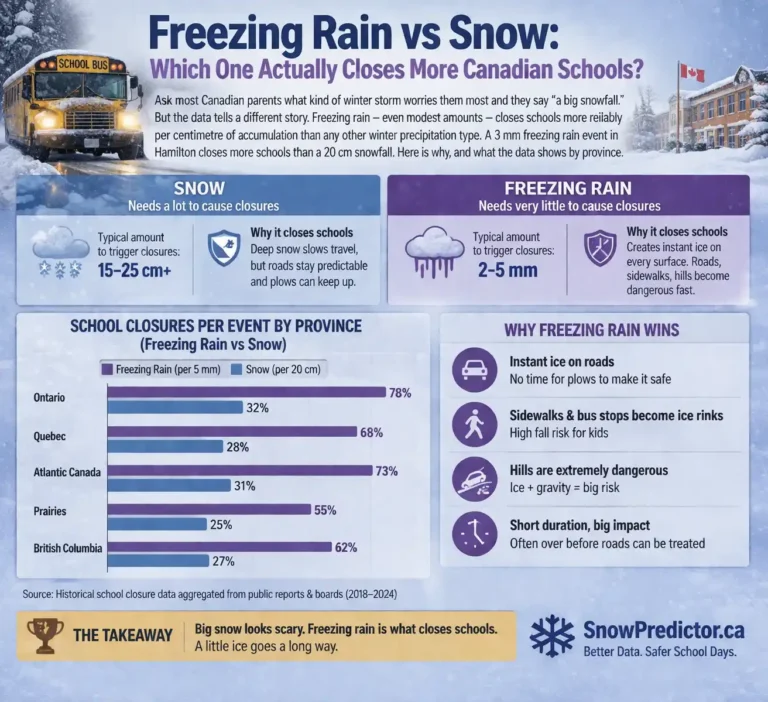
Freezing rain adds weight to branches, lines and utility equipment. Wet snow can break trees, while strong winds may damage poles and transformers. A snowstorm can also block roads and slow repair crews.
The answer to what causes power outages during winter storms is rarely one problem. Ice, wind, falling trees, equipment damage, blocked roads and high demand may occur together. Restoration can continue after the weather improves because crews must locate faults and remove hazards safely.
The Canadian weather alert guide helps families identify whether the main threat is freezing rain, snow, wind or several hazards together.
Why Winter Outages Become Serious So Quickly
A power outage during winter storm conditions can become a heating, plumbing and health emergency within hours. Homes may lose furnaces, well pumps, elevators, internet and controlled appliances.
Indoor temperatures can fall quickly. Pipes may freeze, medical devices may stop and families may lose cooking or safe-water access. Power outages during winter storms also affect traffic signals, payments and school communications.
Good winter storm power outage preparation considers these risks together. Planning only for lighting leaves gaps in medication, plumbing, childcare and evacuation. Families should treat power outages during winter storms as whole-house emergencies.
Build Supplies That Are Easy to Find in the Dark
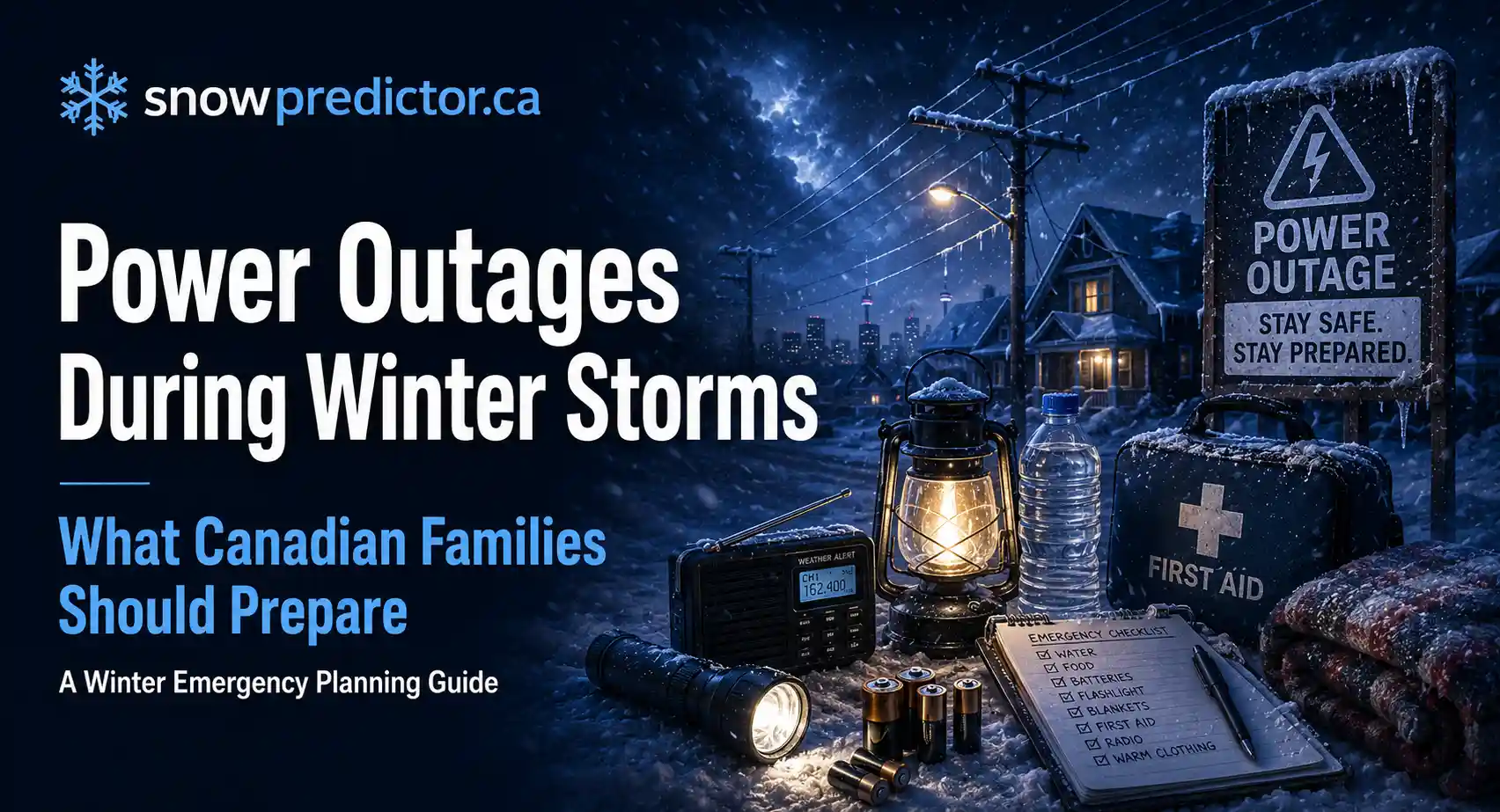
Keep emergency items in labelled, portable containers that family members can find in darkness. An emergency kit for snowstorm conditions should include:
- Drinking water
- Non-perishable food
- A manual can opener
- Flashlights or headlamps
- Spare batteries
- Charged power banks and cables
- A battery-powered or hand-crank radio
- A first-aid kit
- Prescription medication
- Warm clothing and blankets
- Hygiene products
- Paper copies of emergency contacts
- Cash in small denominations
- Supplies for children, pets and accessibility needs
Store drinking water for at least three days, plus extra for cooking, infant formula, hygiene and pets where possible. Choose familiar food that needs no normal cooking.
Check winter storm emergency supplies twice a year. Replace expired food, review medication and recharge power banks. The winter emergency kit Canada guide provides a fuller household and vehicle checklist.
Keep One Room Warm Without Taking Unsafe Risks
When power fails, choose one room away from unused areas. Gather sleeping bags, blankets, warm layers, dry socks, hats and gloves. Close curtains and reduce drafts without blocking ventilation.
Families searching for how to stay warm during a power outage should avoid improvised heating. Never use an oven, barbecue, camping stove or outdoor heater indoors because of fire and carbon monoxide risks.
Wear loose, dry layers and monitor infants, older adults and people with health conditions. If the home cannot remain safely warm, move to a heated location. During power outages during winter storms, warmth affects health, plumbing and medication storage.
Treat Carbon Monoxide as a Major Outage Hazard
Carbon monoxide cannot be seen or smelled. Install battery-backed alarms near sleeping areas and test them before winter.
Never run a generator inside a home, garage, basement, shed or covered area. Keep it outdoors, away from doors, windows and air intakes.
Generator safety during power outage conditions includes cooling equipment before refuelling and storing fuel safely. Never connect a generator to a wall outlet; household wiring requires an approved transfer system installed by an electrician.
Do not idle a vehicle in a garage. If an alarm sounds or someone develops headache, dizziness, nausea or confusion, leave immediately and contact emergency services from fresh air.
Prepare More Than One Way to Communicate
A winter storm may interrupt mobile networks, internet, traffic signals and electronic payments. Charge phones, prepare power banks and activate low-power settings.
A battery or hand-crank radio can provide updates without internet. Keep paper copies of utility, family, school, transportation and medical contacts. Brief texts usually use less power than calls or video.
Families searching “current power outage near me” should use their utility’s official outage map. Ontario residents may check Hydro One power outages where that provider serves them. A utility map does not confirm school or bus status.
During power outages during winter storms, reserve one charged device for essential calls and school updates.
Read Outage Maps and Restoration Estimates Carefully
A power outage map can show known incidents, affected customers, crew status and estimated restoration. Families searching “current power outage near me” should confirm that the map belongs to their actual electricity provider rather than relying on reposted screenshots.
In Ontario, information about Hydro One power outages is useful only where Hydro One supplies the property. Other communities may have municipal or regional utilities with separate maps and reporting systems.
Restoration estimates can change when crews find additional damage. Use the estimate for planning, but do not delay evacuation or medical decisions because a time appears on the map. The map also cannot confirm whether a school is open, whether buses are running or whether a specific road is safe.
Keep the Vehicle Ready for a Snow Emergency
A long outage may require travel to a warming centre, pharmacy or relative’s home. Keep the vehicle fuelled or maintain a strong electric charge before a winter storm. Carry:
- Warm clothing
- Blankets
- Food and water
- A flashlight
- First-aid supplies
- A shovel
- Traction material
- Jumper cables or a battery pack
- Warning equipment
- A phone charger
Review road conditions before leaving and avoid unnecessary travel during a snowstorm. A vehicle kit supports an essential journey; it does not make closed or hazardous roads safe.
Make a Specific Plan for Medication and Medical Equipment
Households using refrigerated medicine, oxygen, CPAP machines, powered mobility devices, dialysis equipment or medical alerts need a specific backup plan.
Ask a healthcare professional how medicine should be stored during an outage. Record battery duration, charging locations and evacuation support.
Apartment residents who need help should notify management before winter. Do not wait for a snow emergency to test batteries or arrange transport. Winter storm emergency supplies should include medication lists, equipment instructions and provider contacts.
Protect Food and Drinking Water
Power outage food safety depends on time and temperature. Keep refrigerator and freezer doors closed. An unopened refrigerator generally stays cold for about four hours, a full freezer for around 48 hours and a half-full freezer for about 24 hours.
Use appliance thermometers. Refrigerators should remain at or below 4°C and freezers at or below -18°C. Discard questionable perishables.
Do not store food outdoors; sunlight, animals and changing temperatures make it unreliable. Homes using an electric well pump may lose water, so store drinking water and follow local safety notices.
Reduce Frozen-Pipe and Electrical Damage
Know the main water shut-off and make sure adults can operate it. Insulate exposed pipes and keep outdoor vents clear of snow and ice.
Unplug sensitive electronics and major appliances. Leave one light on to show when service returns, and use flashlights rather than candles.
If indoor temperatures approach freezing, follow plumbing and utility guidance. Frozen pipes may split and leak as they thaw. These steps belong in any winter storm preparedness checklist because damage may continue after the outage.
What Families Should Do as Soon as Power Fails
First, check whether the problem affects only your home. Inspect the breaker or fuse panel safely. If nearby homes are dark, report the outage and monitor restoration updates.
Then:
- Bring flashlights, blankets and the emergency kit into the main room.
- Keep refrigerator and freezer doors closed.
- Unplug non-essential electronics and appliances.
- Conserve phone and backup-battery power.
- Check smoke and carbon monoxide alarms.
- Monitor the indoor temperature.
- Check children, older relatives and neighbours who may need help.
- Follow weather, utility and emergency instructions.
People searching what to do when the power goes out should never touch fallen lines or damaged equipment. Avoid unnecessary driving because crews need access.
For what to do during a power outage at night, keep footwear, flashlights and warm clothing beside each bed. Use battery lights in hallways and bathrooms.
Know When Staying Home Is No Longer Safe
Leave when authorities advise evacuation or when the home cannot support safe heating, medication, water or sanitation.
Choose destinations before winter, including relatives or warming centres. Plan for pets, accessibility needs and medical equipment. Take identification, medication, chargers, warm clothing and an emergency kit for winter storm travel.
Do not remain in a dangerously cold home because a restoration estimate has been posted; estimates can change.
How an Outage May Change the School Day
A neighbourhood outage does not automatically close schools. A building may remain open if it has heat, water, lighting, communication and safe access. A longer failure may cause delay, closure or emergency dismissal.
School closures during power outages are decided by the board, not by a utility map. Check the board and transportation provider separately because buses may be affected even when the building has electricity.
The weather app versus school-board notice guide explains which source confirms operations. Families can also use the Snow Day Predictor when a winter storm may disrupt the morning.
Prepare for power outages during winter storms by confirming supervision, pickup and family communication.
Bring the Home Back Online Carefully
When electricity returns, restore heating first, then the refrigerator and freezer. Wait before reconnecting other large appliances, and ensure an electric water heater is full before switching it on.
Check for leaking pipes, water damage, unsafe food, damaged cords and unusual heat. Stay away from fallen lines.
After power outages during winter storms, restock supplies and record what was missing. Updating the plan promptly makes the next emergency easier.
Frequently Asked Questions
What Was the Longest Power Outage in Canada?
There is no single national record for every local outage. The January 1998 Québec ice storm caused one of Canada’s longest major power emergencies, with some customers waiting roughly one month for restoration.
How Long Must an Outage Last Before Compensation Applies?
Canada has no universal outage duration that guarantees compensation. Eligibility depends on the province, utility, cause and evidence of loss. Insurance may provide separate coverage.
How Can a Family Manage Winter Without Electricity?
Prepare food, water, medication, flashlights, batteries, power banks and warm clothing. Use one closed room to conserve heat, wear several dry layers and keep carbon monoxide alarms operating. Never use outdoor cooking or fuel-burning equipment indoors. Leave for a heated location if the home becomes dangerously cold.
What Caused the 2003 Blackout in Ontario?
The August 2003 blackout began in Ohio and spread through the interconnected North American grid. Transmission lines contacted overgrown trees, while computer and alarm failures prevented operators from recognising the worsening situation. Further line trips and voltage instability produced a cascading shutdown affecting Ontario and several American states.
What Year Was the Three-Day Blackout?
The major multi-day outage that affected Ontario and parts of the northeastern United States began on August 14, 2003.