Canada Winter Weather Safety Checklist for Parents and Students
Canadian parents, students and school staff need more than a reminder to “dress warmly” when snow, freezing rain, wind or extreme cold may affect the school day. The real challenge is knowing what to prepare, which updates to trust and how to keep children safe at home, at the bus stop and on the road. This winter weather safety checklist Canada guide brings those decisions into one practical routine. SnowPredictor.ca helps families prepare for possible disruption, while boards and transportation providers confirm the final decision.
A Simple Checklist for Busy School Mornings
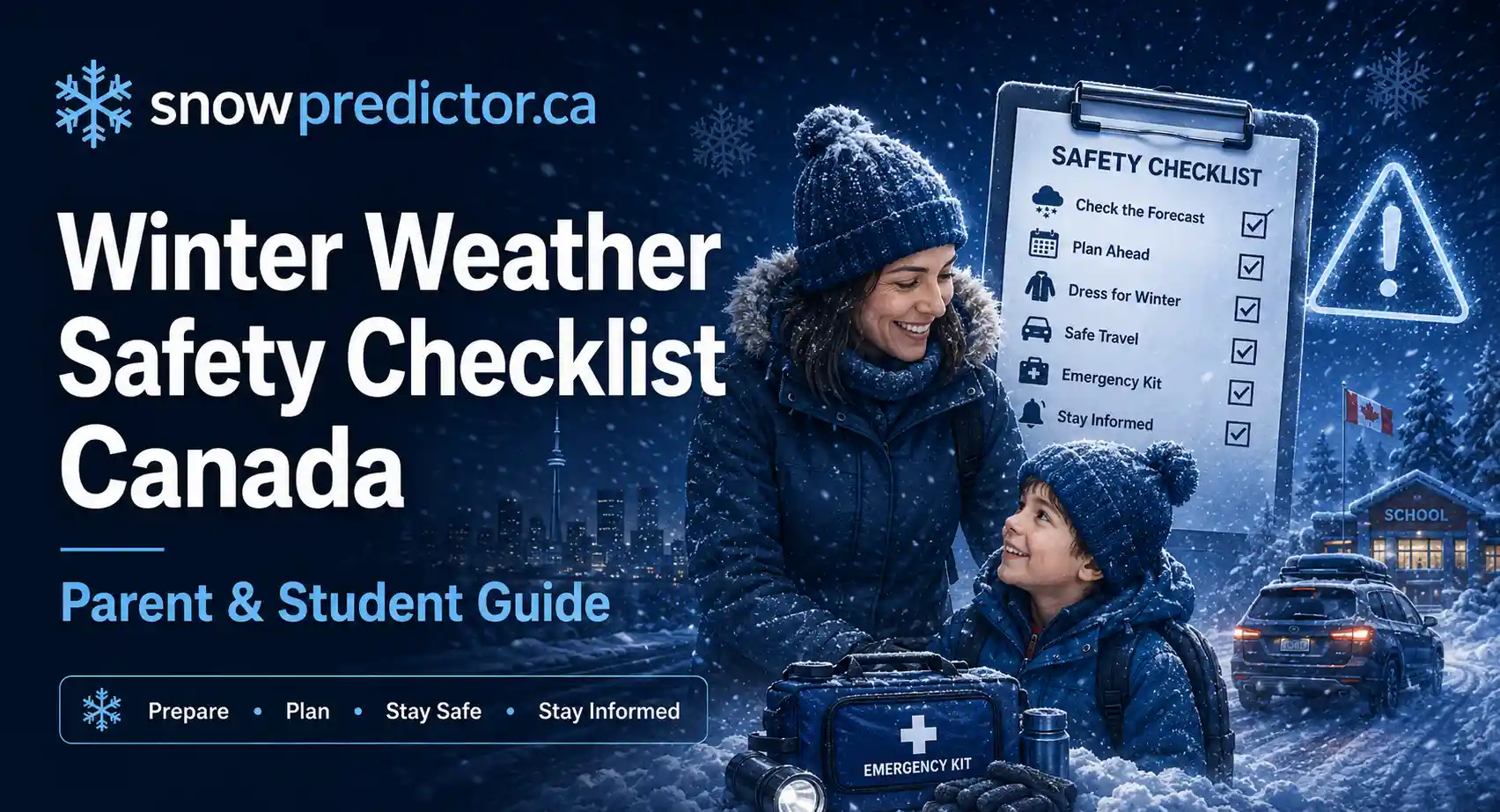
When time is short, use this winter weather safety checklist Canada routine before anyone leaves home.
| Area | What to Check |
|---|---|
| Weather | Review the latest forecast, warning, hourly timing and expected impact |
| School status | Check the school board and transportation provider separately |
| Clothing | Use warm layers, waterproof boots, mittens, a hat and dry socks |
| Backpack | Pack emergency contacts, required medication and a charged phone where appropriate |
| Walking route | Choose cleared sidewalks and allow extra travel time |
| Bus stop | Avoid arriving too early and wait well back from moving traffic |
| Vehicle | Remove all snow and ice, check fuel and carry a winter emergency kit |
| Home | Keep food, water, flashlights, medication and backup power ready |
| Communication | Confirm who will collect or supervise the child if plans change |
This winter weather safety checklist Canada plan works best when the household prepares before the first major storm.
Set Up Your Trusted Weather and School Updates
Do not wait for a storm to decide where information will come from. Save the pages and notifications your family will use.
A weather alert explains the expected hazard, timing and potential impact. It does not confirm whether a school building is closed or whether buses are operating. Those decisions come from different sources:
- Weather information explains the hazard.
- The school board confirms whether buildings are open, delayed or closed.
- The transportation provider confirms whether buses are running.
- A local snow-day estimate helps families prepare while waiting.
The Canadian weather alerts guide explains watches, warnings, advisories and alert colours. Also save school-board and transportation pages before winter.
This is the first step in a useful winter weather preparedness checklist because reliable information reduces last-minute confusion.
Make a Family Communication Plan Before It Snows
A winter storm can disrupt routines before it becomes an emergency. Buses may be cancelled, classes delayed or students sent home early.
Every household should decide:
- Who checks the school and bus notices?
- Who contacts the child?
- Who can provide backup supervision?
- Who is allowed to collect the child?
- What happens if power or mobile service is unavailable?
- Where will family members meet if normal travel is disrupted?
Write essential numbers on paper, including the school, transportation provider, caregivers and medical contacts. Younger students should know their address and one trusted number.
A cold weather preparedness checklist should also cover infants, older relatives, disabilities, medication and pets. This winter weather safety checklist Canada approach only works when everyone understands the plan.
A simple rehearsal can make this plan more useful. Pick one evening before winter and walk through a mock closure morning. Decide who checks updates, who contacts work, where the child waits, and what happens if the bus is cancelled but the school remains open. Test whether emergency numbers are current and whether every caregiver can access the same information.
Families with older students should also agree on when the student may travel independently and when an adult must make the decision. This practice exposes missing details before snow, power loss or a last-minute schedule change adds pressure. It also gives children expectations, which can reduce anxiety when routines change. Keep the plan short, written down and easy to find near the calendar or emergency supplies.
Dress Children for Wind, Moisture and Waiting Time
Temperature alone does not show how cold a morning may feel. Wind, wet snow and damp clothing increase cold stress, especially at bus stops.
A practical clothing setup includes:
- A moisture-managing base layer
- A warm middle layer
- A wind-resistant and water-resistant outer layer
- Insulated waterproof boots
- Warm socks and a dry spare pair for younger children
- Mittens or gloves
- A hat that covers the ears
- A neck warmer
- Reflective details for dark mornings
Avoid tight clothing that restricts movement or circulation. Boots should fit over winter socks, and children should manage their own fasteners.
Winter weather safety for kids also means checking clothing before the return trip. Wet mittens, socks or sleeves should be replaced rather than worn home.
Make Walking Routes and Bus Stops Safer
Snow and ice can make familiar routes unpredictable. Snowbanks block sight lines, and falling snow makes children less visible.
Walking to School
Choose cleared sidewalks and controlled crossings. Students should leave earlier, take short steps on ice and keep phones away near traffic.
Snowbanks can hide children from drivers. Students should stop where they can clearly see traffic before crossing.
These winter weather walking safety tips are simple, but they matter most on dark mornings when road crews are still working.
Waiting for the Bus
Check transportation status before leaving home. Arriving far too early may expose students to unnecessary cold.
Children should wait back from the roadway, avoid snowbanks and never chase a bus. Reflective clothing improves visibility.
A bus cancellation does not always mean the school is closed. The weather app versus school board notice guide explains which source confirms each part of the decision.
Use the Same School-Morning Routine Every Time
Do not base the decision on one snowfall number, app icon or social post. Use this winter weather safety checklist Canada order.
Check the Latest Weather Notice
Read the affected location, hazard, start time, end time and expected impact. Confirm that the notice applies to both home and school areas.
Check Transportation
Look for route-specific, zone-specific or board-wide cancellations. Read the full message because “buses cancelled” and “schools closed” are not interchangeable.
Check the School Board
Confirm whether schools are open, delayed, closed or dismissing early. Check the publication time so an older notice is not mistaken for today’s update.
Review the Actual Route
Review roads, sidewalks, visibility and the full journey. A regional notice cannot describe every local route.
Make the Household Decision
Even when school opens, parents must judge whether their child’s route, clothing and health needs make travel safe.
The guide to how Canadian schools decide on snow days explains why storm timing, road clearing, visibility and bus routes can matter as much as total snowfall.
Build a Home Kit Before a Major Storm
A severe storm may interrupt power or delay travel. A winter storm preparedness checklist should keep supplies accessible and easy to rotate.
Keep:
- Drinking water and non-perishable food
- A manual can opener
- Flashlights and spare batteries
- A battery-powered or hand-crank radio
- First-aid supplies
- Essential medication
- Copies of important contacts and documents
- Warm blankets and extra clothing
- Power banks and charging cables
- Hygiene supplies
- Items needed by babies, older adults or people with disabilities
An emergency kit for snow storm conditions should reflect allergies, medical devices and mobility needs.
Test smoke and carbon monoxide alarms before winter. Never use a barbecue, camp stove, generator or outdoor heater inside a home, garage or enclosed area.
Prepare the Car for Delays, Not Just the Drive
A short school run can become a long wait. A winter preparedness checklist for car travel should cover vehicle condition and emergency supplies.
Carry:
- A first-aid kit
- Blankets and warm clothing
- Water and non-perishable snacks
- A flashlight
- An ice scraper and snow brush
- A small shovel
- Booster cables
- Traction material or mats
- Warning lights or reflective equipment
- A phone charger
- Basic tools
A winter storm emergency kit should stay stocked and accessible inside the vehicle. This winter weather safety checklist Canada rule prevents useful supplies from being buried beneath luggage.
Before winter, check the battery, brakes, heater, lights, wipers, fluid and tires. Before driving, clear all snow and ice.
Driving in winter weather safety tips include leaving more distance, steering smoothly, avoiding cruise control on ice and delaying unsafe travel.
Know When Staying Home Is the Better Decision
An open school does not mean every household must travel.
Consider changing plans when:
- A walking route or road is untreated or blocked
- Freezing rain is creating rapid ice buildup
- Visibility is poor
- The student lacks suitable clothing
- The vehicle is not ready for the conditions
- The forecast may worsen before pickup
- A health condition increases cold-weather risk
- A safe return journey cannot be guaranteed
The Canada Snow Day Predictor helps families prepare, but it does not replace official board or bus decisions.
A good winter weather safety checklist Canada plan gives parents permission to consider the real route in front of them, not only the district-wide decision.
Recognize Frostbite and Hypothermia Early
Cold injury can develop during travel or a long wait. Wet clothing and wind increase risk, even above freezing.
Possible frostbite signs include:
- Numbness or tingling
- Severe pain
- Unusually pale skin
- Firm, shiny or waxy-looking skin
Fingers, toes, ears, cheeks and the nose are common areas of exposure.
Possible hypothermia signs include:
- Persistent shivering
- Clumsy movement
- Confusion or poor judgement
- Slurred speech
- Unusual tiredness or drowsiness
Move the person indoors, replace wet clothing and seek help for serious symptoms. Do not rub frostbite or apply direct heat.
Stay Careful After the Snow Stops
Snow ending does not make every route safe. Side roads, sidewalks and bus stops may remain icy, blocked or affected by drifting.
Recheck school and bus messages. Keep children away from plows, snow blowers, roof ice and roadside piles.
The evening before a difficult forecast, use what to watch before a possible snow day to prepare clothing, childcare, devices, medication and transport plans.
This final stage completes the winter weather safety checklist Canada routine: prepare before the storm, reassess during it and check conditions again afterwards.
A Printable Parent and Student Checklist
The Evening Before
- Check the forecast and active alerts.
- Charge phones and power banks.
- Prepare winter clothing and dry spare items.
- Confirm access to school and bus notifications.
- Review childcare and pickup alternatives.
- Place medication and school essentials together.
- Check the vehicle and fuel or battery level.
Before Leaving for School
- Confirm bus and school status separately.
- Recheck hourly conditions and the route.
- Dress the student for wind and moisture.
- Use the safest cleared path available.
- Confirm who will collect the child if plans change.
- Keep emergency contacts accessible.
When Conditions May Worsen During the Day
- Keep school notifications enabled.
- Make sure an approved caregiver is reachable.
- Monitor early-dismissal messages.
- Avoid unnecessary travel.
- Reassess the return route before pickup.
Following a written winter weather safety checklist Canada plan reduces rushed decisions and keeps attention on local conditions.
Frequently Asked Questions
What Are the 4 P’s of Winter Safety?
The 4 P’s are People, Pets, Pipes and Plants. Protect people, bring pets indoors, insulate pipes and cover sensitive plants. It is a general safety reminder, not an official alert category.
What Safety Precautions Matter Most in Winter?
Monitor weather and school updates, avoid dangerous travel and wear warm layers, waterproof footwear, gloves and a toque. Keep emergency supplies ready, test alarms and never operate outdoor fuel-burning equipment indoors.
What Should a Family Store for a Week of Winter Weather?
Keep food, medication, flashlights, batteries, power banks, a radio, first-aid supplies, blankets, hygiene products and special-needs items. Store enough drinking water for every household member.
How Can You Prepare Your Home for Winter?
Service heating, seal drafts, insulate exposed pipes and inspect the roof. Keep shovels accessible, test smoke and carbon monoxide alarms and plan safely for outages.
How Can You Stay Safe in Cold Weather?
Limit exposure, wear dry layers and cover the head, hands, feet and face. Check children and vulnerable neighbours, move indoors when warning signs begin, delay dangerous travel and never use generators indoors.