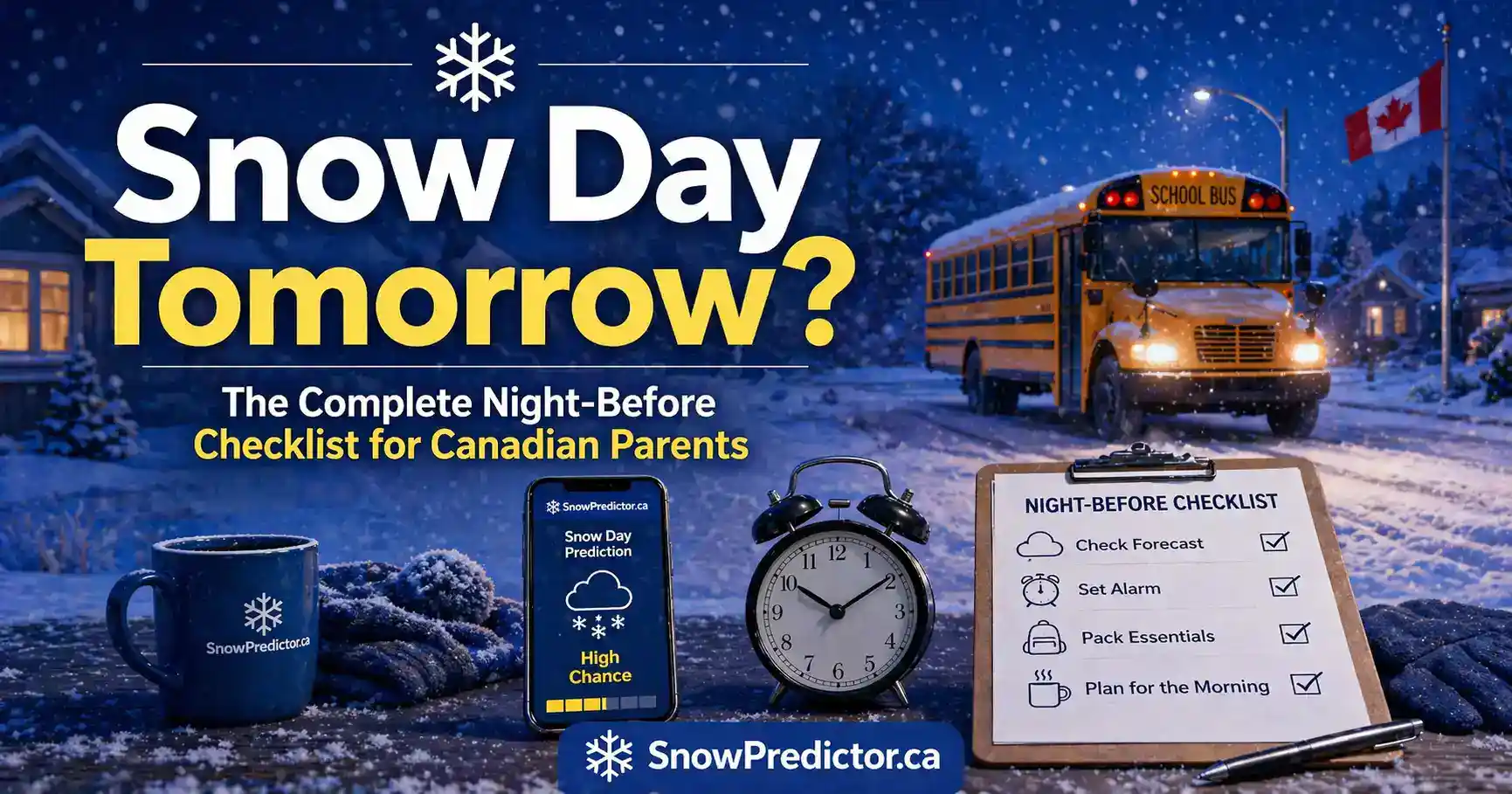
Snow Day Tomorrow? What Canadian Families Should Watch Tonight
A winter storm is approaching, but the snowfall total keeps changing. One app shows snow, another shows freezing rain and the school board has not posted anything. Parents still need to decide whether to arrange childcare, change work plans or prepare for a normal morning.
A snow day tomorrow Canada forecast cannot be judged from one weather icon or centimetre total. The strongest clues come from timing, precipitation type, snowfall rate, wind, visibility, temperature and roads. Local procedures determine how those hazards affect buses and buildings. This guide shows what to monitor without treating a prediction as an official notice.
Snow Day Tomorrow Checklist at a Glance
| What to Check | Lower Disruption Signal | Higher Disruption Signal |
|---|---|---|
| Storm timing | Begins after morning transportation | Peaks overnight or during bus service |
| Snowfall rate | Light and intermittent | Heavy enough to recover treated roads quickly |
| Freezing rain | Not expected | Expected before or during transportation |
| Temperature | Stable and surfaces treated | Rapid fall below freezing after rain or melting |
| Wind | Light | Strong enough to produce drifting or poor visibility |
| Roads | Clear and improving | Ice-covered, drifting, closed or deteriorating |
| Afternoon outlook | Storm ends and roads improve | Conditions worsen before dismissal |
| Official notice | Normal operations confirmed | Route, zone, transportation or school cancellation |
No single signal guarantees an outcome. A combination of hazards during transportation hours deserves the most attention.
1. Check When the Storm Will Arrive
Timing is often more important than the final accumulation. Ten centimetres falling after the morning commute creates a different operational problem from ten centimetres accumulating between midnight and 6 a.m.
Review the hourly forecast and identify:
- When precipitation begins
- When the heaviest period is expected
- Conditions during morning bus routes
- Whether the storm continues through dismissal
- When temperatures cross the freezing point
An overnight snowfall forecast deserves closer monitoring because residential and rural roads may not be fully cleared before buses depart. However, an afternoon storm can still affect return transportation, activities or early dismissal.
Do not assume the date when snow starts is automatically the affected school date. The guide to snow day today versus tomorrow explains how to select the correct dated result around midnight.
2. Look Beyond the Snowfall Total
Accumulation matters, but it does not reveal how quickly snow falls or whether roads can be maintained.
Snowfall Rate
Snow falling rapidly can cover a treated route again soon after a plow passes. The same total spread over many hours may give crews more time to maintain priority roads.
Snow Type
Dry powder can drift in strong wind. Wet snow may be heavy to clear and can affect trees or power lines. Temperatures near freezing may produce slush that later turns icy.
Existing Snow
New snow falling onto packed snow or ice can create different traction from snow falling onto dry, treated pavement. Wind may also move existing loose snow even when the new total is small.
These are stronger signs of a snow day tomorrow than a total viewed without timing or road context.
3. Watch for Freezing Rain and Flash Freezing
Freezing rain can create dangerous traction with little visible accumulation. It freezes on contact with sub-zero roads, bridges, trees and other surfaces. Hills, intersections and untreated routes may become hazardous before the event looks severe.
Freezing rain overnight is especially relevant when it overlaps with early bus service or leaves insufficient treatment time. It can also cause fallen branches, power outages and slippery school entrances.
A flash freeze is different. It occurs when rainwater or melted snow already on surfaces freezes after a rapid temperature drop. If the evening is wet and the temperature is expected to fall below 0°C quickly, monitor the timing closely.
The freezing rain versus snow guide and flash freeze school closure guide explain both hazards in detail.
4. Check Wind, Drifting and Visibility
A moderate snowfall can become a serious travel problem when strong wind reduces visibility or moves snow back across cleared roads.
Open rural highways, agricultural roads and exposed bus routes are vulnerable to drifting. Sheltered streets inside a town may look manageable while another section of the route has whiteout conditions.
Check:
- Sustained wind and gusts
- Blowing-snow language in the forecast
- Snow squall, blizzard or visibility alerts
- Whether loose snow is available to drift
- Expected visibility during bus times
Environment and Climate Change Canada’s impact guidance notes that poor visibility can make routes difficult to navigate and, at higher impact levels, make travel dangerous or impossible. A weather alert signals risk but does not cancel school by itself.
5. Follow Temperature and Wind Chill
Temperature affects precipitation type, road treatment and student exposure. A forecast near 0°C can switch among rain, freezing rain, wet snow and ice pellets. Small temperature changes may therefore alter the school closure forecast substantially.
Extreme-cold practices vary across Canada. Some school authorities publish temperature or wind-chill thresholds for transportation. Others assess cold alongside route length, vehicle reliability and the time students spend outside.
Do not borrow a threshold from another board or province. Use the policy published by the authority responsible for your child’s transportation.
6. Check Weather Alerts, but Read the Full Message
Winter weather alerts Canada families receive now include colour-coded impact information. Yellow represents moderate or localized effects, orange signals major or widespread effects and red is reserved for extreme, dangerous impacts.
Read more than the headline. Confirm:
- The affected communities and travel corridor
- Alert start and end times
- Expected precipitation type
- Forecast confidence and impact level
- Travel, power and visibility concerns
- Whether an updated alert has replaced an earlier one
A snowfall, freezing-rain, winter-storm or blizzard warning can raise concern, but none automatically closes a school. Local authorities make separate operational decisions.
7. Review Current and Forecast Road Conditions
Weather forecasts describe what may fall. Road information shows whether travel is actually becoming unsafe.
Check the relevant provincial 511 service, municipal updates and transportation-provider notices. Look beyond major highways because buses may use side roads, hills, bridges, turnarounds and school approaches.
Morning road conditions may improve if crews have enough time to plow, salt or sand. They can also deteriorate quickly if heavy snow continues, freezing rain develops or wind returns snow to cleared roads.
A clear street outside one home does not prove that the entire route is safe. Transportation officials may inspect the most exposed sections before making a decision.
8. Consider the Afternoon Return Trip
Parents often focus only on getting students to school. Authorities also need to consider whether buses can bring them home safely.
A storm beginning at 10 a.m. may create little morning risk but dangerous dismissal conditions. Freezing rain, rapid accumulation or a flash freeze expected later can influence the morning decision.
Early dismissal is not always a practical solution. Sending students home unexpectedly can create childcare and supervision problems, and transportation conditions may deteriorate before every route finishes. Local policies differ, so do not assume a delay or early release will replace a closure.
9. Know the Difference Between Buses and Buildings
School bus cancellations tomorrow do not automatically mean school buildings will close. A transportation provider may cancel:
- One route
- Selected routes
- One weather zone
- Several zones
- All morning and afternoon transportation
The school board may still keep buildings open for students who can arrive safely. If a parent drives a child to an open school after buses are cancelled, the family may also need to arrange the return trip.
Read the full announcement rather than a notification preview. The guide to bus cancelled versus school closed explains the distinction.
10. Check Whether the Prediction Has Updated
A night-before percentage can change as the forecast and observations improve. Snowfall, storm timing, precipitation type, wind and temperature may all shift overnight.
Before comparing two results, confirm:
- Same location
- Same school date
- Same predicted event
- Different update times
- Changed weather inputs
The article on why snow day scores change explains why a later estimate can rise or fall. A changing score is not automatically inaccurate; it should change when material evidence changes.
What Snow Day Tomorrow Risk Levels Mean for Planning
A probability helps scale preparation. It does not create a national closure threshold.
| General Risk Level | What It Suggests | Parent Response |
|---|---|---|
| Lower | Current inputs provide limited closure support | Continue normal plans and monitor alerts |
| Uncertain | Weather or road outcomes remain balanced | Prepare childcare and work alternatives |
| Elevated | Several disruption signals are aligned | Activate flexible plans and recheck early |
| High | Serious transportation impacts appear plausible | Prepare strongly but wait for confirmation |
For a detailed explanation of probability bands, use the snow day percentage guide. This page is about what to monitor, not assigning universal meaning to one number.
What to Check Before a Snow Day and How to Prepare
A practical snow day preparation checklist reduces the disruption of an early announcement.
Family and Childcare
- Confirm who can supervise children.
- Discuss remote-work or schedule flexibility.
- Decide who will monitor official notices.
- Keep emergency contacts current.
School and Technology
- Charge laptops, tablets and phones.
- Locate school login information.
- Check whether remote learning may apply.
- Pack school items in case operations remain normal.
Travel and Home
- Check fuel or vehicle charge.
- Put out winter clothing and boots.
- Prepare simple meals and snacks.
- Avoid unnecessary travel when authorities advise against it.
Good preparation works whether school closes or opens. It does not require telling children that a forecast has already become a confirmed snow day.
When to Check SnowPredictor and Official Sources
Use SnowPredictor Canada during the evening for an early snow day prediction Canada planning estimate. Confirm the location, date, outcome and update time against the latest snow day forecast tomorrow.
Check again in the morning after forecasts and road observations update. Then move from prediction to confirmation by checking the school board, division and transportation provider.
The guide to when Canadian schools announce closures explains typical reporting windows. Individual authorities may publish at different times, so follow the local procedure rather than a generic national schedule.
Frequently Asked Questions
Will School Be Closed Tomorrow?
Families asking will there be a snow day tomorrow cannot get a guaranteed answer from a forecast. Compare timing, snowfall rate, ice, wind, visibility, temperature and roads, then check the official notice.
What Are the Strongest Signs of a Snow Day Tomorrow?
The strongest signs of a snow day tomorrow include hazardous weather during bus hours, rapidly accumulating snow, freezing rain, poor visibility, drifting, flash freezing and deteriorating routes. Several factors together usually matter more than one total.
Does a Winter Storm Warning Mean School Will Close?
No. A warning describes hazardous weather and expected impacts. The responsible school board, division or transportation provider separately decides whether buses operate and buildings open.
What Time Should Parents Check Tomorrow’s Prediction?
Check in the evening for planning, then review the latest result and official channels early in the morning. Use the notification schedule published by your local authority.
Can Buses Be Cancelled While School Remains Open?
Yes. Transportation and building operations are separate in many Canadian communities. Read whether the notice affects one route, a weather zone, all buses or school buildings.