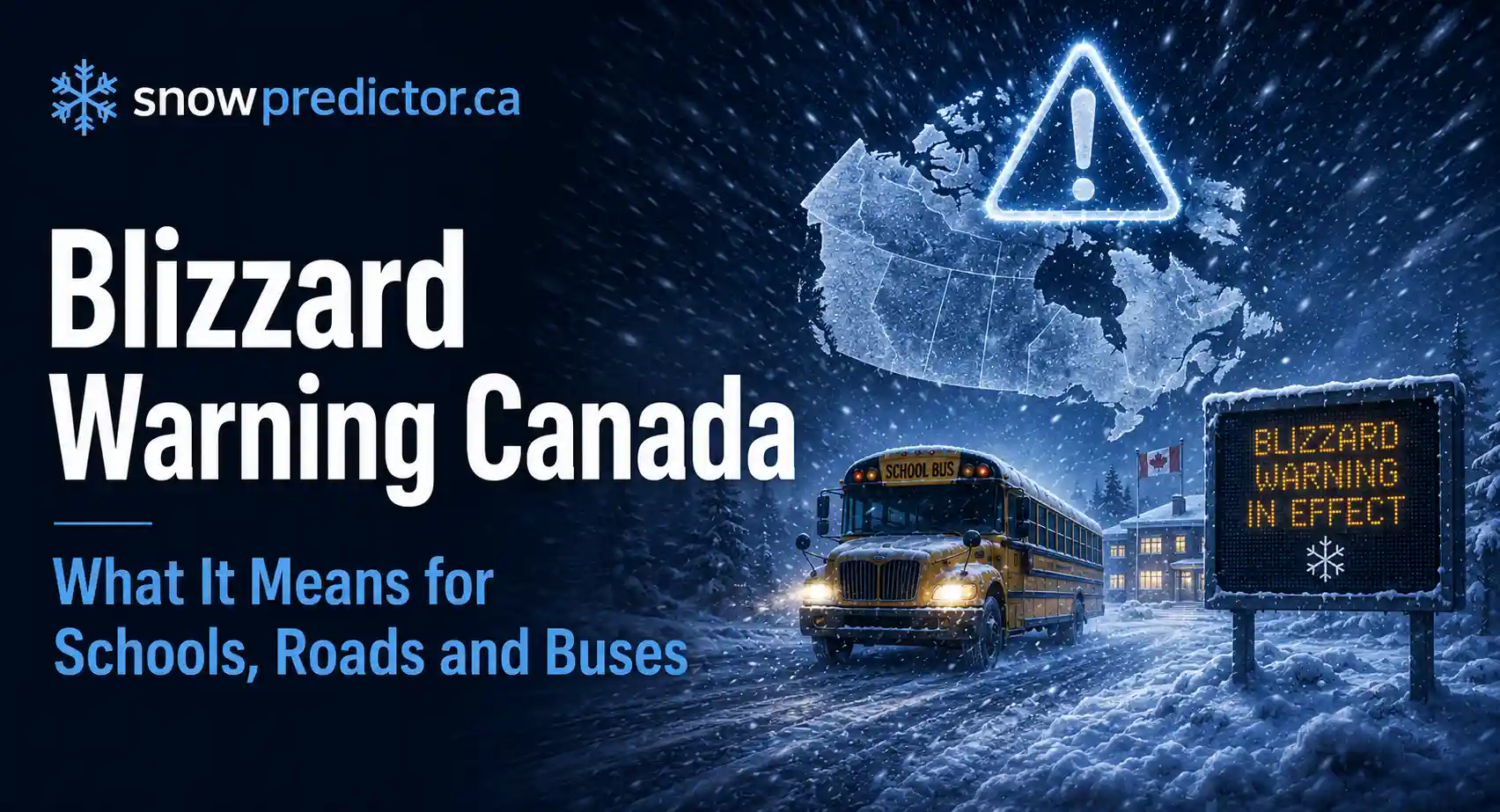
Blizzard Warning Canada: What It Means for Schools, Roads and Buses
Canadian parents, students, school staff and drivers need clear information when strong winds and blowing snow threaten the school day. Visibility, drifting snow, road closures and dangerous cold can make buses or family travel unsafe even when snowfall totals appear moderate. This Canadian guide explains how the alert affects schools, roads and transportation, and what families should check before leaving home. The Canada Snow Day Predictor can support early planning, while official Canadian weather, school-board and transportation notices provide the final information.
What the Alert Tells Families
The blizzard warning meaning centres on strong winds and severely reduced visibility caused by falling snow, blowing snow or both. In Canadian guidance, widespread visibility may fall to 400 metres or less. Deep drifting, blocked roads, difficult rescue conditions and dangerous wind chill may accompany the event.
For families, the alert signals a serious travel hazard, not an automatic school closure. Possible responses include school bus cancellations, zone-based transportation changes, delayed opening, selected school closures, a full district closure or an early dismissal.
| Question | Source to Check |
|---|---|
| Is severe winter weather affecting my area? | Environment and Climate Change Canada |
| Are buses operating? | Local student transportation provider |
| Is the school open or closed? | School board or school division |
| Are roads open? | Provincial or territorial road service |
| What is the early closure probability? | SnowPredictor.ca |
Why a Blizzard Is More Dangerous Than Ordinary Snow
Snow is frozen precipitation. It may be light, heavy, brief or continuous. A blizzard is defined mainly by wind-driven snow and widespread poor visibility. It can develop during new snowfall, but it can also occur when strong winds lift loose snow already lying on the ground.
That difference matters on the road. A snowstorm may create deep accumulation while drivers can still see lane markings and nearby vehicles. During a blizzard, road edges, intersections, stopped vehicles and ditches can disappear from view. Cleared roads may fill again with drifts, and emergency crews may struggle to reach stranded travellers.
Winter blizzards can therefore make travel dangerous even when the new snowfall amount is not exceptional. The winter storm warning guide explains broader events involving snow, ice, wind and cold. The snow squall warning guide covers narrow, short-lived bands that can reduce visibility suddenly.
Why Schools Do Not Follow One Automatic Rule
Weather authorities issue public alerts, but boards and transportation providers decide how schools and buses will operate. A forecast region may include school systems with different roads and geography.
Possible outcomes include:
- Schools and buses operating normally
- Selected rural routes cancelled
- Transportation cancelled in one or more weather zones
- All buses cancelled while schools remain open
- A delayed opening
- Selected buildings closed
- A board-wide or division-wide closure
- Early dismissal if conditions worsen
One district may close while a neighbouring district remains open. A rural board may have long routes across exposed farmland, while an urban board may rely on shorter routes and roads receiving faster treatment. Families must read their own board’s notice.
Why Buses May Stop Before Buildings Close
School buses face risks that private vehicles do not face in the same way. They travel long routes, make repeated stops, use secondary roads and must enter school loops, narrow streets and turnarounds safely.
Drivers may encounter:
- Near-whiteout visibility
- Deep drifting on open roads
- Hidden lane edges and ditches
- Reduced braking and steering control
- Blocked turnarounds
- Unsafe roadside stops
- Students waiting outdoors in severe cold
One dangerous section can make a complete route unsuitable. This is why school bus cancellations may occur while some major roads remain open and the school building continues operating.
“Buses cancelled” does not always mean “schools closed.” Families who drive children may also need to arrange pickup.
How Boards Assess the Morning and Afternoon Risk
School boards and transportation providers may review weather alerts, road reports, bus-operator observations, visibility, drifting, plowing progress and conditions expected at dismissal. They may also consider heating, power, building access and staff availability.
Decision times vary by region, so families should know their board’s official channels before winter.
A calm start does not guarantee a safe return trip. Strong winds arriving near dismissal can delay buses, force parents onto unsafe roads or lead to early dismissal. A storm expected to end before sunrise may create a different decision from one intensifying during active routes.
How Regional Searches Should Be Used
A blizzard warning Ontario search may cover only a particular forecast region, not the whole province. Southern Ontario, northern Ontario and communities near large lakes can experience very different conditions at the same time.
A blizzard warning Manitoba notice may affect open highways, rural divisions and communities exposed to strong winds. A Saskatchewan blizzard warning may also cover a limited region rather than every school system in the province. A Winnipeg blizzard warning should be checked against the city forecast, surrounding highways, school divisions and local transportation updates.
Always check the named forecast region, issue time, start and end times, expected visibility and travel advice.
Check the Latest Alert, Not an Old Search Result
People searching blizzard warning today should open the newest official notice and confirm when it was issued. An older headline may remain visible after the alert has changed, expanded or ended.
A search for blizzard warning near me should lead to the user’s official forecast region rather than an unofficial map, screenshot or social-media post. Location services can be inaccurate near forecast boundaries, so check the place name shown in the full notice.
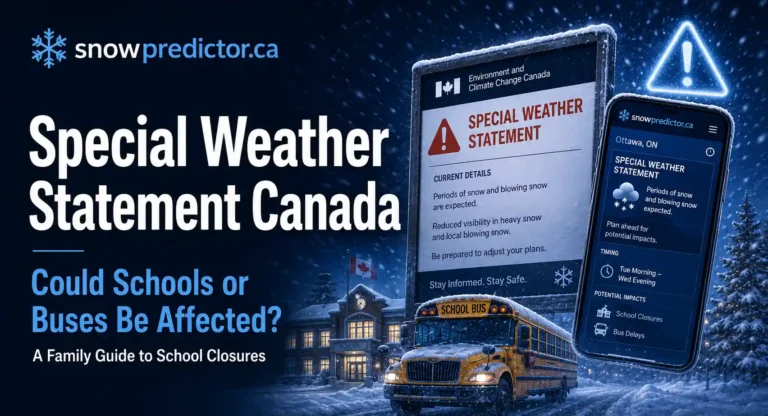
The Canadian weather alert guide explains warnings, watches, advisories, statements and the current impact-colour system.
What Yellow, Orange and Red Alerts Mean
Canada uses colour-coded alerts to communicate expected impact and forecast confidence. The colour does not replace the full alert.
A yellow blizzard warning indicates hazardous conditions that may cause moderate, localised or short-term disruption. Travel can still become difficult, and route cancellations may occur.
An orange blizzard warning indicates a higher risk of major or widespread disruption. Travel may become dangerous or impossible, and road closures, stranded vehicles and lengthy delays become more likely.
Red is the highest alert colour. It is reserved for rare, extreme and potentially life-threatening impacts. People should follow official instructions immediately.
Even a yellow alert can make an exposed rural road unsafe. Canadian families should read the colour, timing, location, expected impact and safety instructions together.
Blizzard vs Winter Storm Warning
The blizzard vs winter storm warning comparison is about the hazard being emphasised. A blizzard focuses on strong winds and severely reduced visibility in falling or blowing snow. A winter storm alert is broader and may combine heavy snow, freezing rain, blowing snow, strong wind and dangerous cold.
A snow squall is different again. It is usually a localised, short-duration burst of intense snow that can create sudden visibility loss. A blizzard generally affects a wider area for a longer period.
Families should identify whether the main concern is visibility, accumulation, ice, cold or several hazards together.
A Reliable School-Morning Checking Routine
Use the same order each time.
Read the Official Weather Notice
Check the affected region, alert colour, issue time, expected duration, visibility and travel guidance. Confirm that the notice covers the home, school and route between them.
Check the Transportation Provider
Look for route-specific, zone-based or system-wide cancellations. Confirm whether the announcement applies only to the morning or for the full day.
Check the School Board
Verify whether buildings are open, delayed, closed or changing dismissal time. Read the complete announcement rather than relying on a notification preview.
Review Road Conditions
Check the provincial or territorial road service for closures, cameras and travel advisories. A board decision cannot describe every road.
Assess the Household Route
Consider the driveway, side roads, walking distance, bus-stop exposure, the child’s age and conditions expected for the trip home. Keep printed contact numbers, backup medication details and a written pickup plan where every responsible adult can find them, because mobile service may become unreliable during widespread severe weather conditions.
The weather app versus school-board notice guide explains which source answers each part of the decision.
When Buses Are Cancelled but School Is Open
Confirm whether families are expected to provide transportation and whether normal absence-reporting rules apply. Do not drive simply because the building remains open.
Assess visibility, the complete route, vehicle readiness and the return trip. Cancelled buses may remain cancelled all day, leaving parents responsible for pickup. A school can be open while a specific family route remains unsafe.
Parents must still judge whether their child can travel safely using official road information and local conditions.
How Drivers Should Respond
Avoid unnecessary travel when severe blowing snow is occurring. When travel is essential:
- Check road closures before leaving
- Clear all windows, lights and cameras
- Carry a charged phone and winter kit
- Share the route and expected arrival time
- Reduce speed and increase following distance
- Avoid sudden braking, steering and acceleration
- Keep headlights on
- Maintain enough fuel or battery charge
- Never drive around a closure barrier
Four-wheel drive may improve traction, but it cannot restore visibility or guarantee safe stopping.
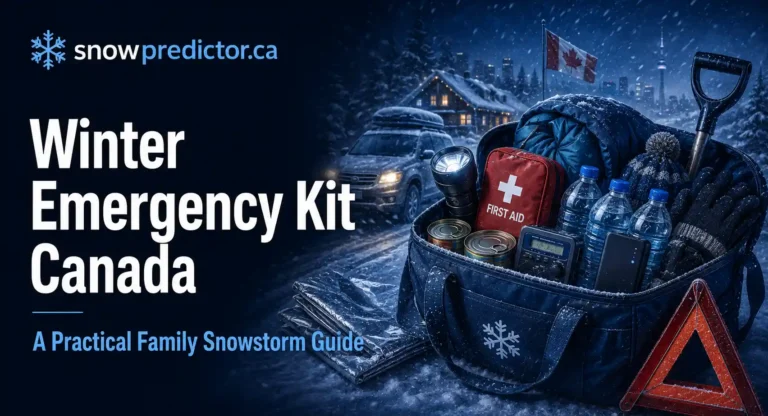
The winter emergency kit Canada guide lists household supplies and a separate vehicle kit for winter travel.
What to Do if the Vehicle Becomes Stranded
Stay with the vehicle unless a clearly safer occupied building is very close and can be reached without losing sight of the car. Call for help, share the location and conserve phone power.
Keep the exhaust pipe clear before running the engine for heat. Use warm clothing and blankets, and remain alert for carbon monoxide. Run the engine only as needed, follow emergency instructions and avoid overexertion while clearing snow.
A visible vehicle is easier for rescuers to find than a person walking through blowing snow.
How Walkers and Students Can Prepare
Walking may become unsafe when blowing snow hides vehicles, intersections and icy surfaces. Students should use cleared crossings, wear reflective winter clothing and wait well back from the road at bus stops.
Phones and headphones should be avoided near traffic. Parents should consider age, clothing, outdoor waiting time and whether the child can recognise worsening conditions.
The winter weather safety checklist provides a broader routine for home, school and travel preparation.
How SnowPredictor.ca Supports Early Planning
The official alert explains the weather hazard. Transportation providers decide whether buses can operate, and school boards confirm whether buildings will open.
The Canadian school closure probability tool supports the period before official announcements by estimating how forecast conditions may affect operations. Families can use the estimate to prepare childcare, work and travel alternatives.
Once an official decision is published, the board or transportation notice takes priority.
Frequently Asked Questions
What Do Blizzard Warnings Mean?
They indicate that severe conditions with strong winds and greatly reduced visibility in falling or blowing snow are occurring or expected. Travel may become dangerous or impossible, so avoid unnecessary trips and follow the instructions in the full alert.
What Is the Difference Between a Blizzard and Snow?
Snow is frozen precipitation falling from clouds. A blizzard is a severe weather condition involving strong winds and substantially reduced visibility caused by falling snow, blowing snow or both. It can occur even when little new snow is falling.
What Is the 4-4-4 Blizzard Rule?
The traditional Canadian shorthand refers to winds of at least 40 km/h, visibility of 400 metres or less and conditions lasting at least four hours. North of the tree line, the traditional duration is often described as six hours. Current alerts also consider expected impact, location and forecast confidence.
What Defines a Blizzard in Canada?
It is a severe weather condition characterised by strong winds and reduced visibility caused by falling or blowing snow. Very low temperatures may accompany the event, but extreme cold is not the defining requirement.
What Is the Highest Weather-Alert Colour?
Red is Canada’s highest weather-alert colour. It indicates very dangerous, potentially life-threatening weather expected to cause extreme, widespread or prolonged impacts. The colour order is yellow, orange and red.