Winter Storm Watch vs Warning: What Canadian Parents Should Know
Canadian parents may see a winter storm watch in the evening and wonder whether school will be cancelled the next morning. A watch signals developing risk, while a warning calls for more immediate action, but neither notice automatically confirms a closure or bus cancellation. This winter storm watch vs warning guide explains how Canadian alerts differ, why timing and local roads matter, and what families should check before school or winter travel. The Canada Snow Day Predictor can support early preparation, while official weather, transportation and school-board sources provide final decisions.
The Practical Difference Between a Watch and a Warning
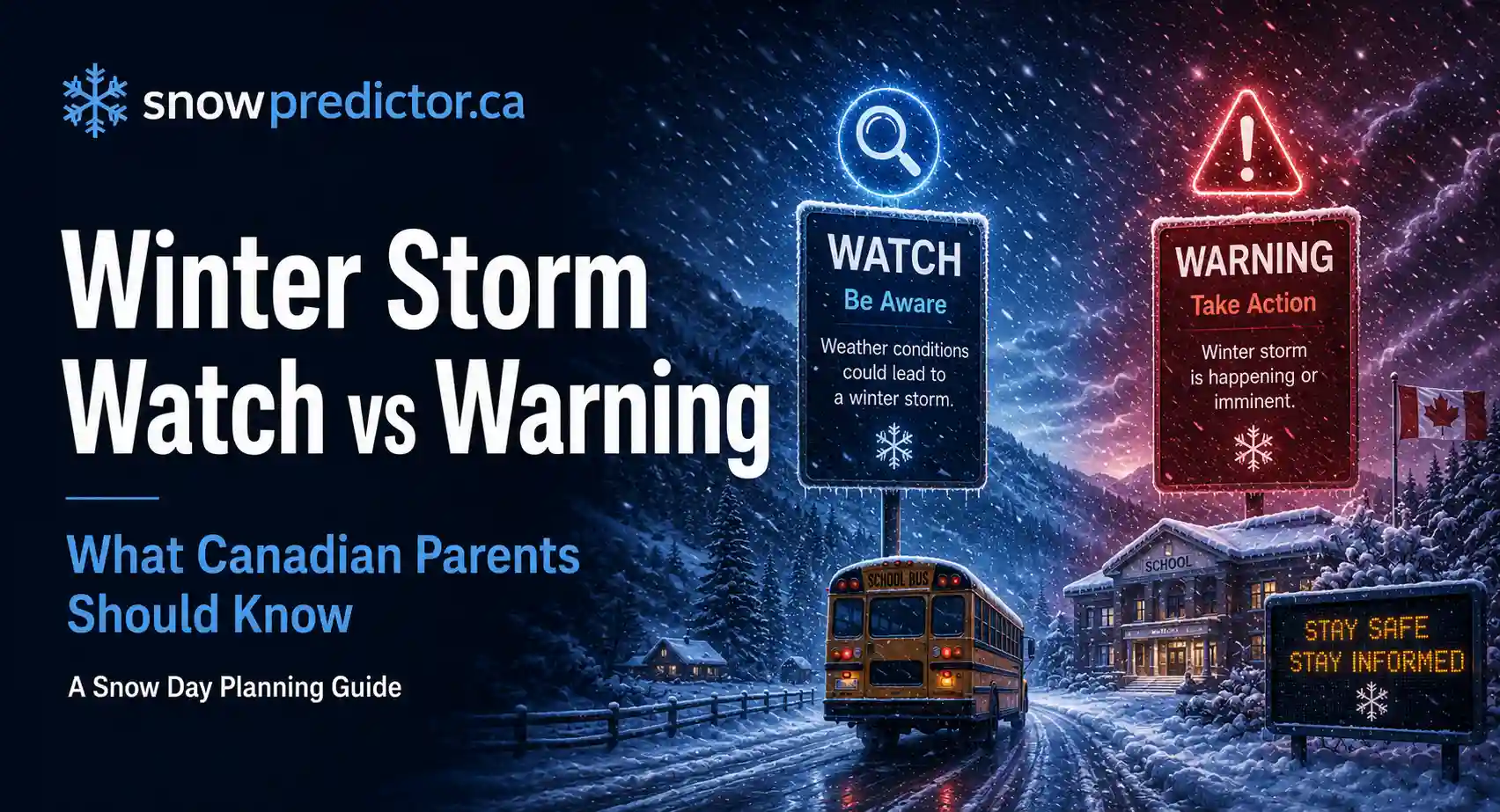
The simplest winter storm watch vs warning distinction is preparation versus action. A winter storm watch means conditions are favourable for severe winter weather to develop, but uncertainty may remain about the track, timing, intensity or exact affected area. Families should prepare and monitor updates.
A winter storm warning means dangerous winter weather is occurring or expected with greater confidence. People should act promptly, reconsider travel and follow the full alert.
| Alert Type | What It Generally Means | What Parents Should Do |
|---|---|---|
| Winter storm watch | Severe winter weather is possible | Prepare, monitor and arrange backup plans |
| Winter storm warning | Severe winter weather is occurring or expected | Act now and reconsider unsafe travel |
| Winter weather advisory | Significant but generally less severe conditions are expected | Take precautions and allow extra time |
| Special Weather Statement | Additional information about unusual or concerning conditions | Read for context and keep checking updates |
This winter storm watch vs warning comparison should always be read with the alert colour, location, timing and impact statement.
What a Winter Storm Watch Means
The winter storm watch meaning is straightforward: conditions could produce a serious winter event, but important details are still uncertain. Parents should use this advance notice to charge phones, enable school and bus notifications, review childcare options, prepare clothing and confirm that emergency supplies are accessible. A watch may be upgraded overnight or shortly before transportation decisions are announced.
A watch is not a prediction that schools will close. It is a planning window. Families that prepare during the watch stage have more options if conditions worsen before the morning commute.
What a Winter Storm Warning Requires
A winter storm warning indicates that severe conditions are occurring or expected. Related winter storm alerts may include a snow warning, ice storm warning, flash freeze warning or cold warning.
A winter storm warning Canada notice should be read in full. Check the affected region, start and end times, expected hazards, confidence, alert colour and recommended safety actions. The headline alone cannot show whether the greatest risk is snow accumulation, ice, wind, visibility or several hazards together.
Winter storm warnings are urgent, but they are not school-closure orders. Boards and transportation providers make separate operational decisions after reviewing local roads, routes, buildings and conditions expected later in the day.
Is a Warning Always More Serious Than a Watch?
A warning is normally more urgent because the hazardous weather is happening or expected with greater certainty. A watch provides earlier notice that a dangerous event may develop.
The easiest memory aid is:
- Watch: Get ready.
- Warning: Act now.
However, alert type is only one part of risk. Canada also uses yellow, orange and red impact colours. An orange watch may describe a potentially high-impact event, while a yellow warning may describe a more immediate but more localised hazard.
Families comparing winter storm watch vs warning should therefore read the type, colour and complete message together. The winter storm watch vs warning question cannot be answered accurately from one word alone.
How Yellow, Orange and Red Winter Alerts Work
Canada winter weather warnings, watches and advisories use impact colours to show how disruptive the event may become.
Yellow
A yellow alert indicates moderate, localised or short-term impacts, or lower confidence in a more serious event. Travel and school routines may still be affected.
Orange
An orange alert indicates a higher risk of major disruption. Roads, school transportation, utilities and daily activities may be significantly affected.
Red
A red alert indicates an extreme, potentially life-threatening and prolonged event. Red alerts are rare and require immediate attention to official instructions.
Forecasters select the colour by considering both expected impact and confidence. Existing snow, road treatment, community exposure and storm timing can change the practical risk.
Does a Winter Storm Watch Mean School Will Close?
No. A watch does not automatically cancel school or transportation. The storm may weaken, shift, arrive after school hours or affect only one part of a large district.
The watch period should be used to prepare for several possible outcomes:
- Schools and buses operate normally
- Selected routes are cancelled
- Transportation is cancelled while schools remain open
- Opening is delayed
- Selected schools close
- The full district closes
- An early dismissal is announced later
School closure weather alerts provide weather information, not the final school decision. The board confirms building status, while a transportation consortium or provider may issue a separate bus notice.
The weather app versus school-board notice guide explains why these sources answer different questions.
Does a Warning Automatically Close Schools?
A warning also does not guarantee closure. It confirms a serious weather threat, but school authorities still assess how that threat affects local operations.
Boards may consider:
- Road and sidewalk conditions
- Visibility along bus routes
- Snowfall or freezing-rain timing
- Rural and urban route differences
- Whether road crews can keep up
- Conditions expected at dismissal
- Building access, heating and electrical service
- Reports from transportation contractors
Winter storm school closures can differ across neighbouring districts under the same alert. One board may include exposed rural roads and long bus routes, while another mainly serves treated urban streets.
The guide to how Canadian schools decide on snow days explains how forecasts, road checks and local observations shape those decisions.
Why Storm Timing Changes the School Risk
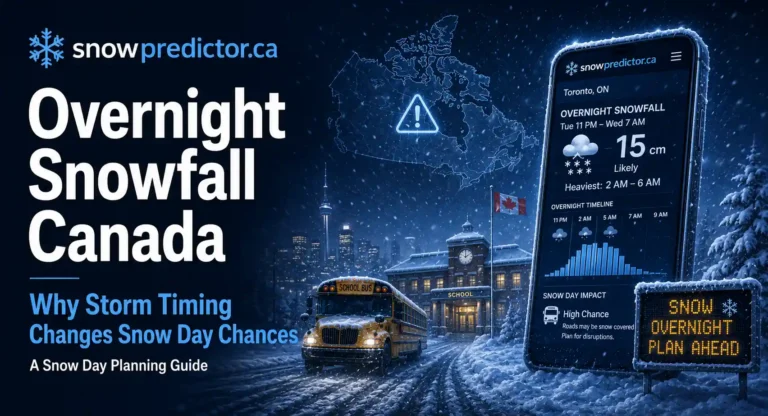
The same storm can produce different outcomes depending on when it arrives. Overnight snow may give crews time to clear routes before buses leave. Heavy snow beginning near departure can cover roads during active routes.
A midday event creates a return-trip problem. Long-duration winter storms can affect road clearing, staffing, power and building access. Ice or blowing snow near dismissal may be more concerning than overnight accumulation that ends early.
This is why families should not stop checking after the first morning notice. Weather conditions and operational decisions may change throughout the day.
Winter Storm Watch vs Advisory
A winter storm watch vs advisory comparison is not a simple stronger-versus-weaker ranking. A watch means a potentially severe event could develop, but uncertainty remains. A winter weather advisory means significant but generally less severe conditions are expected with enough confidence that precautions are needed.
An advisory may cover hazards such as blowing snow, fog, freezing drizzle or frost. Those conditions can still make rural routes, sidewalks and bus stops dangerous.
The broader winter storm watch vs warning comparison concerns certainty and urgency, while an advisory describes a different class of significant hazard. Read the exact alert rather than assuming an advisory is unimportant.
For more detail, see the weather advisory versus warning guide.
Hazards That May Be Included in a Winter Storm
A winter storm can combine several hazards:
- Heavy or rapidly accumulating snow
- Freezing rain and ice buildup
- Strong wind
- Blowing snow and poor visibility
- Dangerous cold or wind chill
- Flash-freeze conditions
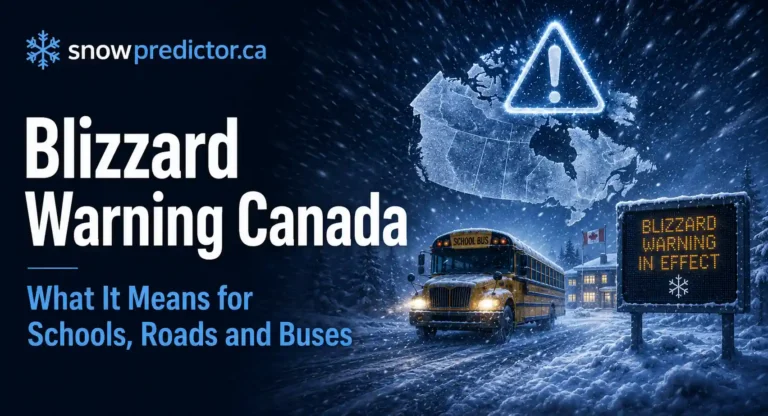
A winter blizzard is more specific. A blizzard centres on strong winds and severely reduced visibility caused by falling or blowing snow. It may occur within a larger winter event, but not every winter storm is a blizzard.
Corrected high-volume terms such as winter storm, winter storms, blizzard, blizzards, snow warning and severe weather are relevant when they describe the hazards in the official message. Misspelled versions should be corrected rather than copied into published content.
The winter storm warning Canada guide explains multi-hazard events in more detail.
What Parents Should Do During the Watch Stage
Use the watch as a planning window rather than waiting for a warning.
- Read the full official alert and confirm the affected region.
- Check the colour, timing and expected impacts.
- Enable school, board and transportation notifications.
- Review childcare or remote-work arrangements.
- Prepare coats, boots, gloves and school items.
- Charge phones and backup batteries.
- Check household and vehicle emergency supplies.
- Review the school route and known problem areas.
- Check again before bed and early the next morning.
The winter emergency kit Canada guide lists practical supplies for snowstorms, outages and winter travel.
This routine gives families time to prepare without treating closure as confirmed.
What Parents Should Do When a Warning Is Issued
A warning requires a faster review of plans. Start with the official alert, then check transportation and school notices separately.
Before leaving home, review provincial or territorial road information, visibility outside, side-road and sidewalk conditions, the expected return journey, and the child’s age, clothing and health needs.
Avoid unnecessary travel when the notice recommends postponement. Do not assume a bus cancellation means the building is closed, and do not assume an open school makes every household route safe.
This winter storm watch vs warning routine keeps weather information, transportation decisions and family judgment in the correct order.
Which Information Source Should Parents Trust?
Each source has a different role:
- Official weather services explain winter storm watch vs warning alerts.
- The school board confirms whether buildings open, close or change hours.
- The transportation provider confirms bus routes or weather zones.
- Provincial or territorial services report highway conditions.
- A prediction tool estimates disruption before an official result.
The Canadian weather alerts guide explains warning, watch, advisory and colour terminology. The Snow Day Predictor helps families prepare during the period before operational announcements.
Once a board or transportation provider publishes a decision, that notice takes priority for school operations.
How SnowPredictor.ca Supports Early Planning
A winter storm watch may appear before school officials have enough local information to decide. The Canadian school closure probability tool estimates how forecast conditions may affect operations during that waiting period.
Families can use the estimate to prepare childcare, work and transport alternatives. It does not issue school closures and should not be presented as an official result.
Searches such as winter storm warning vs watch, weather watch vs warning, and winter weather watch vs warning ask related questions using different wording.
Frequently Asked Questions
What Is the Difference Between a Winter Storm Warning and a Watch?
A watch means conditions are favourable for a potentially serious winter storm, but its timing, location or strength remains uncertain. Prepare and monitor updates. A warning means dangerous snow, freezing rain, wind, blowing snow or cold is occurring or expected. Take action and reconsider unsafe travel.
Is a Winter Watch Worse Than a Winter Warning?
Usually, no. A warning is more urgent because dangerous conditions are happening or expected with greater certainty. A watch is an earlier preparation notice that may later become a warning. Alert colour still matters because it explains potential impact.
What Is Worse, a Watch or Warning for Storms?
A warning normally requires the faster response. A watch means get ready because severe weather could develop. A warning means act now because severe weather is occurring or expected. An orange or red watch may still describe major potential impacts, so read both the alert type and colour.
What Is the Difference Between a Watch and a Warning?
A watch is issued when conditions are favourable for a serious weather hazard, but occurrence, location or timing remains uncertain. A warning is issued when a hazardous event posing a significant threat is imminent, expected or already occurring.
Is a Blizzard the Same as a Winter Storm?
No. A winter storm is a broader event that may combine heavy snow, freezing rain, strong wind, blowing snow and dangerous cold. A blizzard is specifically characterised by strong winds and widespread, severely reduced visibility caused by falling or blowing snow.