
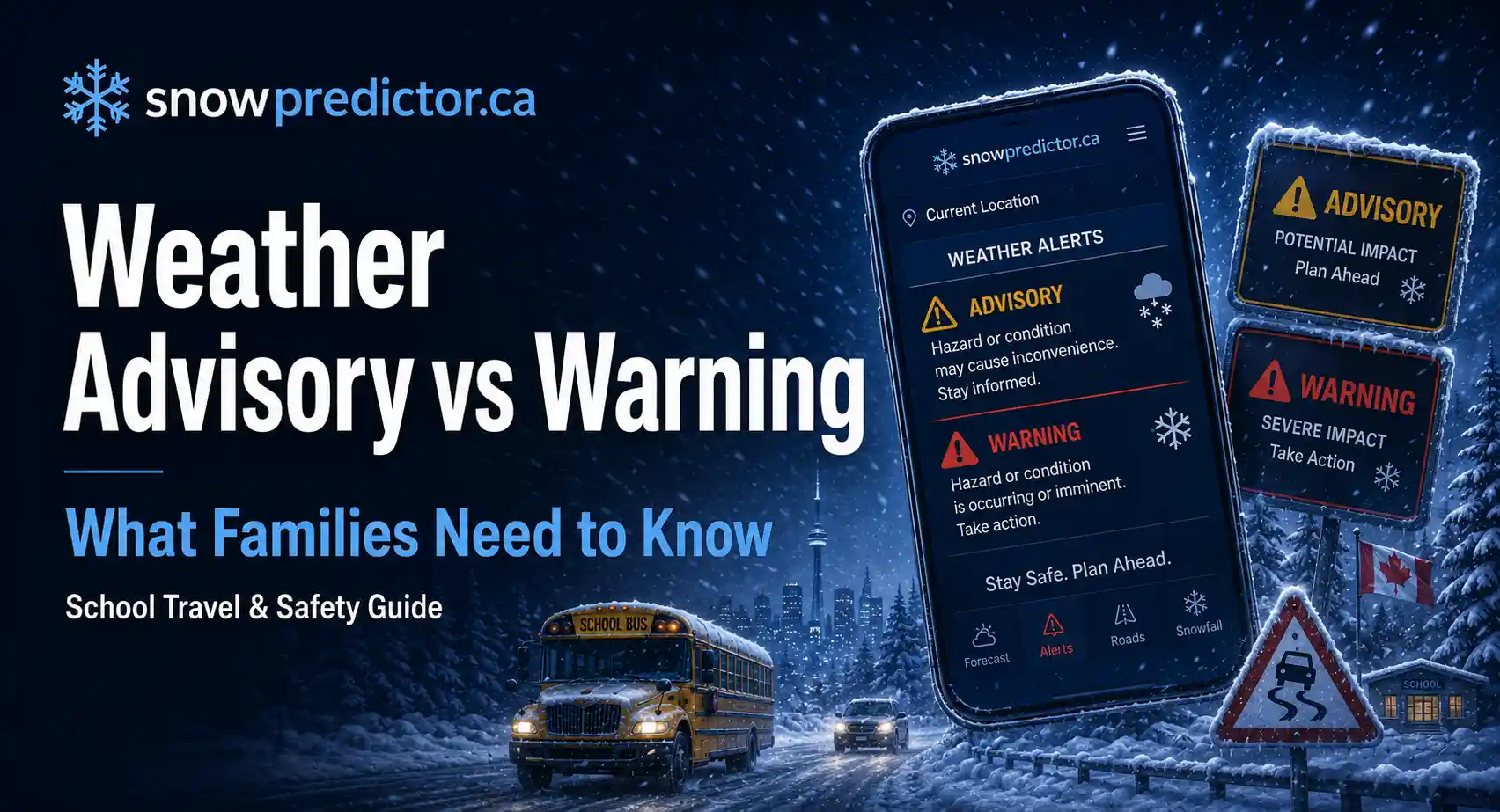
Weather Advisory vs Warning in Canada: What Families Need to Know
Canadian parents, students and drivers often see several alert labels before a difficult school morning, but the wording can be confusing. An advisory may sound optional, while a warning may seem like an automatic closure. Neither assumption is correct. This guide explains weather advisory vs warning in Canada, shows where watches and statements fit, and helps families decide what to check before school or winter travel. The Canada Snow Day Predictor can support early planning, while official weather, transportation and school-board sources provide the final safety and operating information.
How the Main Alert Types Differ
The easiest way to understand weather advisory vs warning is to compare the level of urgency and the action expected from the public.
| Alert Type | What It Generally Means | What Families Should Do |
|---|---|---|
| Warning | Severe weather is occurring or expected | Act promptly and follow the full alert |
| Advisory | Significant but generally less severe weather is expected | Take precautions and adjust plans where needed |
| Watch | Conditions could support severe weather | Prepare and monitor for an upgrade |
| Statement | Additional information about unusual or concerning weather | Read for context and continue checking updates |
What a Weather Warning Tells You
People searching what is a weather warning usually need to know whether immediate action is required. A warning means severe weather is happening or expected, so people should protect themselves, reconsider unsafe travel and follow the instructions in the complete notice.
Warnings may be issued for snowfall, snow squalls, freezing rain, winter storms, blizzards, extreme cold, severe thunderstorms or tornadoes. A severe thunderstorm watch may come first when conditions are favourable, followed by a warning when the threat becomes more immediate or better defined.
Weather warning vs advisory varies by hazard. A tornado warning may require immediate shelter, while a snowfall warning may lead families to change travel times, prepare for bus cancellations or avoid rural roads. The weather warning meaning therefore includes both urgency and hazard-specific action.
A warning does not confirm that every school will close. It confirms a serious weather threat. School boards and transportation providers still decide how roads, buildings, staffing and services will operate.
What a Weather Advisory Means
People asking what is a weather advisory are often unsure whether it can be ignored. It should not be ignored. An advisory indicates significant weather that requires precautions, although the expected event is generally less severe than one covered by a warning.
Advisories may be used for hazards such as blowing snow, fog, freezing drizzle or frost. Light freezing drizzle can make untreated sidewalks and side roads slippery. Blowing snow can reduce visibility on exposed rural routes even when little new snow is falling. Fog can affect bus travel, crossings and school arrival times.
This is why weather advisory vs warning should not be interpreted as “safe” versus “dangerous.” Both can affect travel. Weather advisory vs weather warning reflects differences in expected severity, urgency and scale.
Where a Weather Watch Fits
A watch is the preparation stage. It means conditions are favourable for severe weather, but uncertainty remains about timing, location or intensity. A watch may later be upgraded to a warning as confidence increases.
For families, useful actions during a watch include:
- Charging phones and power banks
- Checking school and bus notification settings
- Reviewing childcare alternatives
- Preparing coats, boots and medication
- Moving travel earlier where practical
- Checking household and vehicle emergency supplies
The phrase watch vs warning for weather is best understood as “prepare” versus “act.” A weather watch vs warning comparison does not mean a watch is harmless. It means the severe event has not yet reached the same level of certainty or immediacy.
Correctly written searches such as watch versus warning, warning versus watch and weather watch versus warning all describe this same distinction. Misspelled forms should be corrected rather than repeated in published content.
Comparing Advisories, Watches and Warnings Together
The weather advisory vs watch vs warning comparison becomes clearer when the three are viewed as different decision stages:
- Watch: Conditions may produce severe weather, so prepare.
- Advisory: Significant but generally less severe weather is expected, so take precautions.
- Warning: Severe weather is occurring or expected, so act promptly.
This is not a perfect ranking. A watch may concern a potentially more dangerous hazard than an advisory, but the event remains less certain. An advisory usually reflects greater confidence that a lower-severity event will occur.
The broader weather advisory vs warning question should therefore be answered by reading the whole message, not by comparing labels in isolation.
What Yellow, Orange and Red Alerts Add
Canada’s colour system adds impact and confidence to the alert type. A yellow weather alert generally indicates moderate, localised or short-term disruption. Families may need more travel time, safer routes or backup childcare.
An orange weather alert indicates a higher likelihood of major or widespread disruption. Difficult travel, cancellations, outages or delayed emergency response may become more likely.
Red is reserved for rare, extreme and potentially life-threatening impacts. People should follow official instructions immediately.
The same warning, watch or advisory can carry a different colour depending on expected impact. Families should read three elements together:
- The alert type
- The alert colour
- The complete impact and timing message
A yellow advisory and an orange advisory do not carry the same practical risk. Likewise, two warnings may affect school travel differently because of location, duration or timing.
Why the Full Alert Matters More Than the Headline
A Canadian alert normally explains the affected region, expected conditions, start and end time, confidence, likely impacts and recommended actions. The same label can create different school risks depending on when the event arrives.
An overnight snowfall that ends before buses begin may be manageable after road treatment. The same accumulation beginning shortly before dismissal could create a greater school closure risk.
The Canadian weather alerts guide explains colours, watches, warnings, advisories and statements in more detail.
How Special Weather Statements Are Different
A severe weather statement or Special Weather Statement provides additional information about unusual, inconvenient or potentially concerning conditions. It is not the same as a formal warning, watch or advisory.
Parents should still read it. A statement may mention freezing rain, a rapid temperature drop, heavy snow or changing travel conditions near school hours. It can be an early sign that closer monitoring is needed, even when no coloured formal alert has been issued.
A statement should not be confused with a severe weather advisory. These terms may appear together in general searches, but the exact label and wording in the official notice matter.
Winter Weather Advisory vs Warning
The winter weather advisory vs warning comparison depends on the hazard described. An advisory may cover blowing snow, fog or freezing drizzle that creates hazardous but generally less severe conditions. A warning may cover heavy snowfall, freezing rain, a snow squall, blizzard conditions or several winter hazards together.
Families should pay attention to:
- Visibility
- Ice buildup
- Accumulation rate
- Wind
- Road treatment
- Morning and afternoon timing
- Power or communication risk
The winter storm warning Canada guide explains how several hazards can combine. The snow squall warning guide covers rapidly changing visibility, while the ice storm warning guide focuses on freezing rain, roads and power lines.
Why Alerts Do Not Automatically Close Schools
School closure weather alerts describe the hazard, not the final operating decision. A weather service does not decide whether a particular district will close schools or cancel buses.
A school board may:
- Keep schools and transportation operating
- Cancel selected routes
- Cancel buses across one weather zone
- Keep schools open while all buses are cancelled
- Delay opening
- Close selected schools
- Close the full district
- Change afternoon transportation or dismissal
Boards consider forecasts alongside road conditions, sidewalks, bus-route visibility, building access, utilities and reports from transportation operators.
This is one of the most important points in weather advisory vs warning guidance for parents: a warning can exist while schools remain open, and an advisory can still lead to route cancellations where local roads are unsafe.
Why Two Boards May Make Different Decisions
Weather alerts cover forecast regions, while school districts differ in size, geography and transportation needs. One board may serve mainly urban neighbourhoods. Another may include exposed farmland, steep hills, long rural routes and roads that receive slower treatment.
The same alert can therefore create different operational risks. One district may cancel selected buses, while another keeps all routes operating. Families should not assume that a neighbouring board’s decision applies to their school.
Transportation providers may also use weather zones. A notice should be checked for the exact route, zone and publication time rather than treated as a district-wide closure unless it clearly says so.
A Reliable School-Morning Checking Routine
Use the same order every time instead of comparing several apps until one gives a preferred result.
Read the Official Alert
Check the colour, issue time, affected region, start time, end time and expected impacts. Confirm that the alert covers the home, school and travel route.
Check the Transportation Provider
Look for route-specific, weather-zone or board-wide cancellations. Bus cancellation and school closure are separate decisions.
Check the School Board
Confirm whether buildings are open, delayed, closed or changing dismissal time. Read the full notice instead of relying on a notification preview.
Review the Actual Route
Check road information, local cameras and conditions outside the home. A regional alert cannot describe every hill, crossing, driveway or rural road.
Make the Household Decision
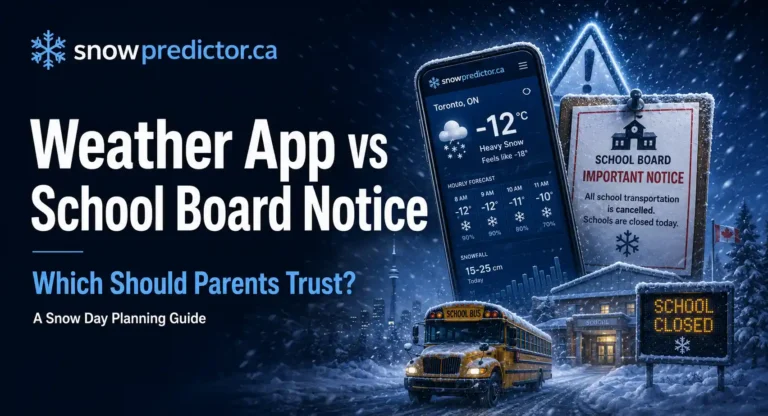
Consider the child’s age, clothing, walking distance, health needs and the return journey. The weather app versus school-board notice guide explains which source provides each type of information.
This routine gives weather advisory vs warning labels the right place in the decision without treating them as school closure announcements.
What Drivers Should Do
The correct action depends on the alert. Check road conditions, clear the vehicle, reduce speed, increase following distance and avoid sudden steering or braking. Carry a charged phone and winter emergency supplies.
An advisory may require caution, extra time or a route change. A warning may justify postponing the trip completely. Follow the specific advice in the message rather than applying one response to every hazard.
The winter weather safety checklist provides a broader routine for home, school and vehicle preparation.
Frequently Asked Questions
What Is the Difference Between an Advisory and a Warning?
In Canada, an advisory means significant weather is expected, but it is generally less severe than conditions covered by a warning. Take precautions and adjust plans. A warning means severe weather is happening or expected and requires more urgent action.
Is a Watch or Warning Worse for Snow?
A warning is more urgent because dangerous winter weather is occurring or expected. A watch means conditions are favourable for severe weather, but its timing, location or intensity may still be uncertain. Prepare during a watch and act when a warning is issued.
What Is an Orange Warning?
An orange warning means there is a high risk of major disruption or dangerous impacts. The colour reflects both expected impact and forecast confidence. Read the full message for the location, timing, likely effects and recommended actions.
Is an Advisory Stronger Than a Watch?
Not in a simple ranking. An advisory means significant but generally less severe weather is expected, so precautions are needed now. A watch means potentially severe weather could develop, so people should prepare and monitor for an upgrade.
How Serious Is an Advisory?
An advisory should be taken seriously. It can indicate blowing snow, fog, freezing drizzle or frost that may disrupt travel, reduce visibility or create slippery conditions. It is generally less severe than a warning, but it still requires attention and practical action.
One Comment