Ontario School Board Closure Comparison: 18 Boards Ranked
Ontario has 72 district school boards, but winter conditions are very different across the province. A storm that cancels buses or closes schools around Sault Ste. Marie may create only minor disruption in Windsor. Toronto may remain open during snowfall that causes transportation problems across Simcoe County.
This Ontario school board closure comparison looks at 18 major boards and compares their estimated weather-related disruption levels. It considers snowfall exposure, lake-effect snow, freezing rain, extreme cold, rural bus routes, terrain and the operational differences between large urban, suburban and northern districts.
The figures below are estimated ranges rather than official audited closure totals. Ontario does not publish one standardized historical database covering every board’s weather closures. The comparison is intended to show relative winter risk and regional patterns, not guarantee how many snow days a board will experience in a particular year.
Ontario School Board Closure Rates Compared
| Rank | School Board | Primary Area | Estimated Closures per Year | Main Winter Driver |
|---|---|---|---|---|
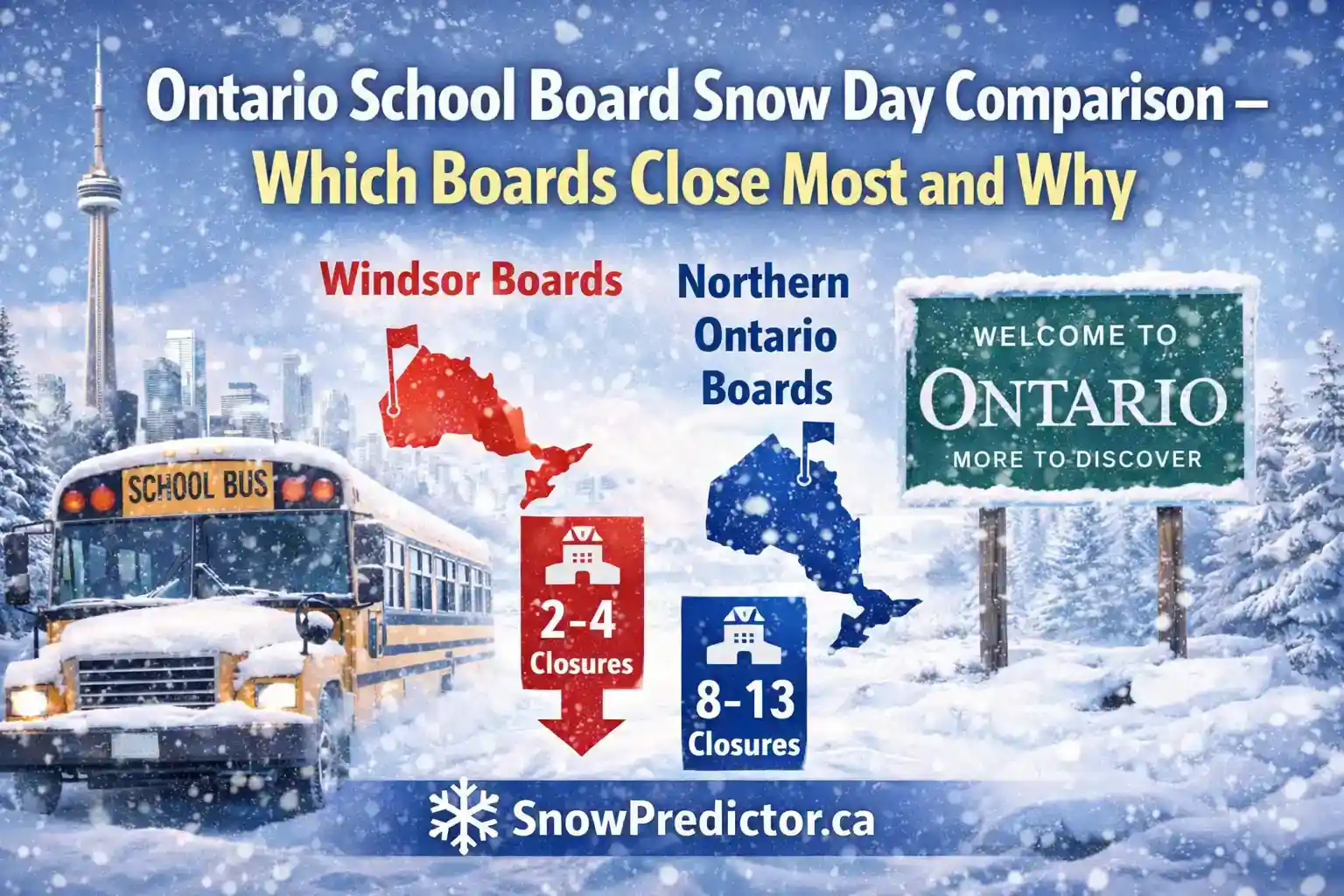
| 1 | Algoma DSB | Sault Ste. Marie, Wawa, White River | 8 to 13 | Lake Superior snow, remote routes |
| 2 | Lakehead DSB | Thunder Bay area | 8 to 12 | Heavy snow, cold, northern roads |
| 3 | Rainbow DSB | Greater Sudbury, Manitoulin | 8 to 12 | Northern snow, rural Shield routes |
| 4 | Near North DSB | North Bay, Parry Sound | 7 to 10 | Snowbelt exposure, difficult terrain |
| 5 | Simcoe County DSB | Barrie, Simcoe County | 6 to 10 | Georgian Bay lake-effect snow |
| 6 | Limestone DSB | Kingston, Frontenac, Lennox and Addington | 5 to 8 | Lake Ontario systems, rural roads |
| 7 | Ottawa-Carleton DSB | Ottawa | 5 to 8 | Ottawa Valley storms, freezing rain |
| 8 | Kawartha Pine Ridge DSB | Peterborough, Clarington, Northumberland | 5 to 7 | Large territory, rural routes |
| 9 | Thames Valley DSB | London, Elgin, Middlesex, Oxford | 4 to 7 | Lake Huron and Lake Erie influence |
| 10 | Hamilton-Wentworth DSB | Hamilton | 4 to 7 | Escarpment elevation, lake influence |
| 11 | Waterloo Region DSB | Kitchener, Waterloo, Cambridge | 4 to 6 | Rural townships, regional storms |
| 12 | District School Board of Niagara | Niagara Region | 4 to 6 | Lake and escarpment effects |
| 13 | Upper Grand DSB | Guelph, Orangeville, Wellington | 4 to 6 | Elevation, rural road exposure |
| 14 | Peel DSB | Mississauga, Brampton, Caledon | 3 to 5 | Urban roads with rural northern area |
| 15 | York Region DSB | Markham, Vaughan, Newmarket | 3 to 5 | Suburban infrastructure, mixed terrain |
| 16 | Durham DSB | Oshawa, Ajax, Whitby, rural Durham | 3 to 5 | GTA roads with rural eastern routes |
| 17 | Toronto DSB | Toronto | 3 to 5 | High closure threshold, urban network |
| 18 | Greater Essex County DSB | Windsor, Essex County | 2 to 4 | Milder southwestern climate |
The estimated ranges combine full school closures and major system-wide weather disruptions where comparable information is available. Bus-only cancellations can occur more often than full building closures.
How This Ontario School Board Closure Comparison Was Built
Snowfall totals alone cannot explain Ontario school board closures. Two boards receiving similar snowfall can make different operating decisions because their road networks, transportation zones, terrain and local conditions are not the same.
This Ontario school board closure comparison considers several factors:
- Average winter severity
- Exposure to Great Lakes snow bands
- Freezing rain frequency
- Extreme cold
- Rural and remote bus routes
- Terrain and elevation
- Size of the transportation network
- Urban versus rural road coverage
- Observed closure and cancellation patterns
The resulting Ontario snow day rankings should be treated as planning estimates rather than guaranteed annual totals.
Northern Ontario Boards Have the Highest Closure Risk
Northern boards appear near the top because they regularly deal with heavy snow, prolonged cold, blowing snow and difficult transportation routes.
Algoma District School Board
Algoma ranks highest in this comparison with an estimated 8 to 13 significant disruptions per winter. The board serves Sault Ste. Marie and a large northern territory that includes communities such as Wawa and White River.
Algoma DSB snow days can be influenced by Lake Superior snowfall, remote roads, wind, drifting and major differences between communities. One part of the district may face unsafe transportation conditions while roads inside Sault Ste. Marie remain more manageable.
Lakehead District School Board
Lakehead serves Thunder Bay and surrounding communities. Its estimated 8 to 12 disruptions reflect heavy snow, extreme cold and northern road conditions.
Lakehead DSB snow days are not always caused by fresh snowfall. Dangerous wind chill, blowing snow and unsafe conditions for children waiting for transportation can also affect school operations.
Rainbow District School Board
Rainbow serves Greater Sudbury, Espanola and Manitoulin Island. The district combines an urban centre with long rural routes across Canadian Shield terrain.
Rainbow DSB snow days may result from heavy snow, low visibility, extreme cold or secondary roads that remain unsafe during the morning transportation period.
These patterns help explain why Northern Ontario school closures tend to occur more frequently than closures in many southern districts.
Lake-Effect and Rural Boards Also Rank High
The next group in the Ontario school board closure comparison includes boards exposed to Great Lakes snow bands or large rural transportation areas.
Simcoe County District School Board
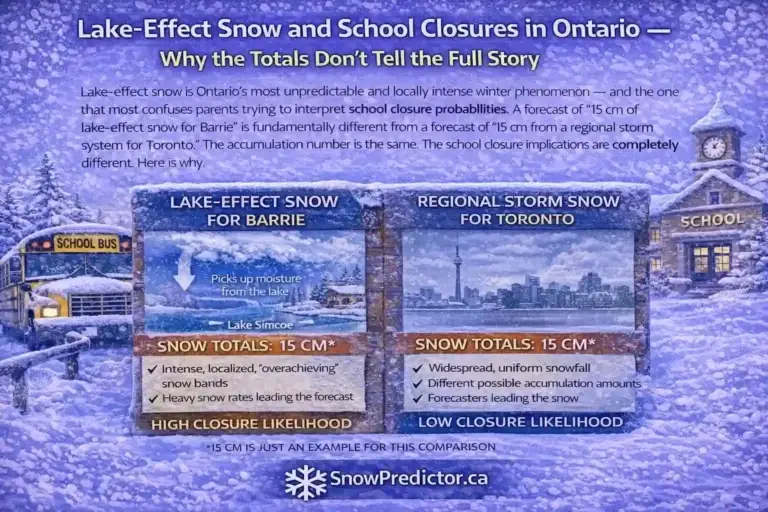
SCDSB serves Barrie and communities throughout Simcoe County. Georgian Bay lake-effect snow can create intense narrow bands that affect one transportation zone while leaving another with much less accumulation.
SCDSB snow days are influenced by the board’s large geographic area, changing Georgian Bay snow bands and major differences in road conditions between zones. These lake-effect snow school closures can depend heavily on where the snow band develops.
The Ontario Snow Day Predictor helps families check local conditions instead of treating the entire province as one forecast area.
Limestone District School Board
Limestone covers Kingston as well as a substantial rural area. Lake Ontario systems, freezing rain and secondary-road conditions can create more disruption than Kingston’s urban weather alone might suggest.
Ottawa-Carleton District School Board
Ottawa receives substantial snow and freezing rain during many winters. Ottawa Valley storm tracks, large transportation networks and changing road conditions keep the board above most GTA boards in this Ontario school closure comparison.
Kawartha Pine Ridge District School Board
KPRDSB covers Peterborough, Clarington and Northumberland. Its combination of urban communities, rural roads and transportation zones means conditions can vary significantly across the district during the same storm.
Southwestern and Escarpment Boards
Boards across southwestern Ontario and the Niagara Escarpment generally fall in the middle of the Ontario snow day rankings.
Thames Valley District School Board
Thames Valley covers London, Elgin, Middlesex and Oxford. Conditions can differ considerably between London streets, rural roads and lake-influenced communities.
Hamilton-Wentworth District School Board
Hamilton’s lower city and escarpment do not always experience the same winter conditions. Elevation changes can affect snowfall, freezing rain and road conditions.
A storm may create manageable conditions near the waterfront while roads on the Mountain become more difficult.
Waterloo Region and Upper Grand
Waterloo Region combines major cities with rural townships. Upper Grand includes Guelph, Orangeville and Wellington County, where elevation and rural road exposure can increase snowfall and drifting.
These mixed districts show why school bus cancellations Ontario families receive may depend on the most difficult transportation routes rather than conditions outside one urban home.
GTA Boards Usually Close Less Often
Peel, York, Durham and Toronto generally sit near the lower end of the Ontario school board closure comparison.
These boards still experience major winter storms, but dense road networks, extensive snow-clearing operations and stronger urban infrastructure can help schools remain operational during moderate snowfall.
Why TDSB Snow Days Are Less Common
The Toronto District School Board operates hundreds of schools across a dense urban area.
Toronto benefits from:
- Extensive municipal snow clearing
- Dense arterial-road networks
- Public transportation
- Limited rural secondary-road exposure
- Large maintenance operations
Major storms can still result in TDSB snow days, but full closures are generally less frequent than disruptions experienced by boards such as Algoma, Rainbow or Simcoe County.
Peel, York and Durham Are Not Completely Urban
These boards contain both suburban and rural territory.
Northern Caledon, northern York Region and rural Durham may experience worse road conditions than Mississauga, Markham, Vaughan, Ajax or Whitby during the same storm.
Families researching school board snow days Ontario should therefore consider local transportation zones rather than assuming conditions are identical across an entire board.
Why Windsor Ranks Lowest
The Greater Essex County District School Board sits in one of Ontario’s milder major winter regions.
Windsor’s southern location reduces exposure to the heavy annual snowfall experienced by northern Ontario and traditional snowbelt communities.
The region can still experience freezing rain, strong winds and occasional major snowstorms, but its estimated 2 to 4 annual disruptions reflect lower overall winter-storm frequency rather than an absence of severe weather.
Bus Cancellation Does Not Always Mean School Closure
Bus cancellations and school closures are separate decisions in many Ontario districts.
| Announcement | What It Usually Means | Parent Action |
|---|---|---|
| Full closure | Buildings and transportation are closed | Keep the child home |
| Bus cancellation | Transportation is suspended, schools may remain open | Check attendance and pickup instructions |
| Zone cancellation | Only named transportation areas are affected | Verify the child’s zone |
| Delayed opening | School and buses begin later | Follow the revised schedule |
| Parent’s discretion | Operations continue but families assess local travel | Check board instructions carefully |
The distinction is especially important when comparing Ontario school board closure rates because transportation cancellations may occur more frequently than complete school shutdowns.
Our guide to bus cancellations and school closures in Ontario explains how to interpret the different announcements.
What Parents Should Check on a Storm Morning
This Ontario school board closure comparison provides long-term context, but it cannot confirm what a board will do during a specific storm.
On a winter morning:
- Check the Canada Snow Day Predictor for your local probability.
- Read your school board’s latest announcement.
- Check the transportation consortium separately.
- Confirm whether the notice applies to buildings, buses or individual zones.
- Review any morning and afternoon transportation instructions.
Weather conditions may also vary significantly within the same school board. A rural transportation zone can become unsafe even when roads near an urban school remain clear.
Use the comparison to understand relative winter risk, but rely on the school board and transportation provider for the final operating decision.
Frequently Asked Questions
Which Ontario School Board Has the Most Snow Days?
Algoma DSB has the highest estimated range in this comparison at approximately 8 to 13 significant winter disruptions per year. Lakehead DSB and Rainbow DSB follow at roughly 8 to 12 because of northern snowfall, extreme cold and challenging transportation routes.
Which Southern Ontario Board Has the Most Snow Days?
Simcoe County DSB has one of the highest estimated disruption rates among major southern Ontario boards. Georgian Bay lake-effect snow, long rural routes and changing conditions between transportation zones contribute to its higher ranking.
Why Does TDSB Close Less Often?
Toronto has dense road networks, extensive snow-clearing operations, public transportation and limited exposure to rural secondary roads. These factors can allow the board to remain operational during weather that causes greater disruption in rural or northern districts.
Are These Ontario School Board Closure Rates Official?
No. Ontario does not publish one standardized historical closure database covering every school board. The figures in this Ontario school board closure comparison are estimated ranges based on regional climate, geography, transportation exposure and observed winter patterns.
Does a Bus Cancellation Mean School Is Closed?
Not always. Many Ontario boards can cancel buses while keeping schools open. Families should read both the school board and transportation announcements to confirm whether buildings, routes or individual zones are affected.