Canadian Snow Day Traditions: How Families Make Winter Closures Memorable
The best snow days begin with an unexpected message: buses are cancelled, classes are paused or the school building is closed. For children, it can feel like winter delivered a surprise holiday. For parents, the same announcement can create an immediate problem involving childcare, work and safety.
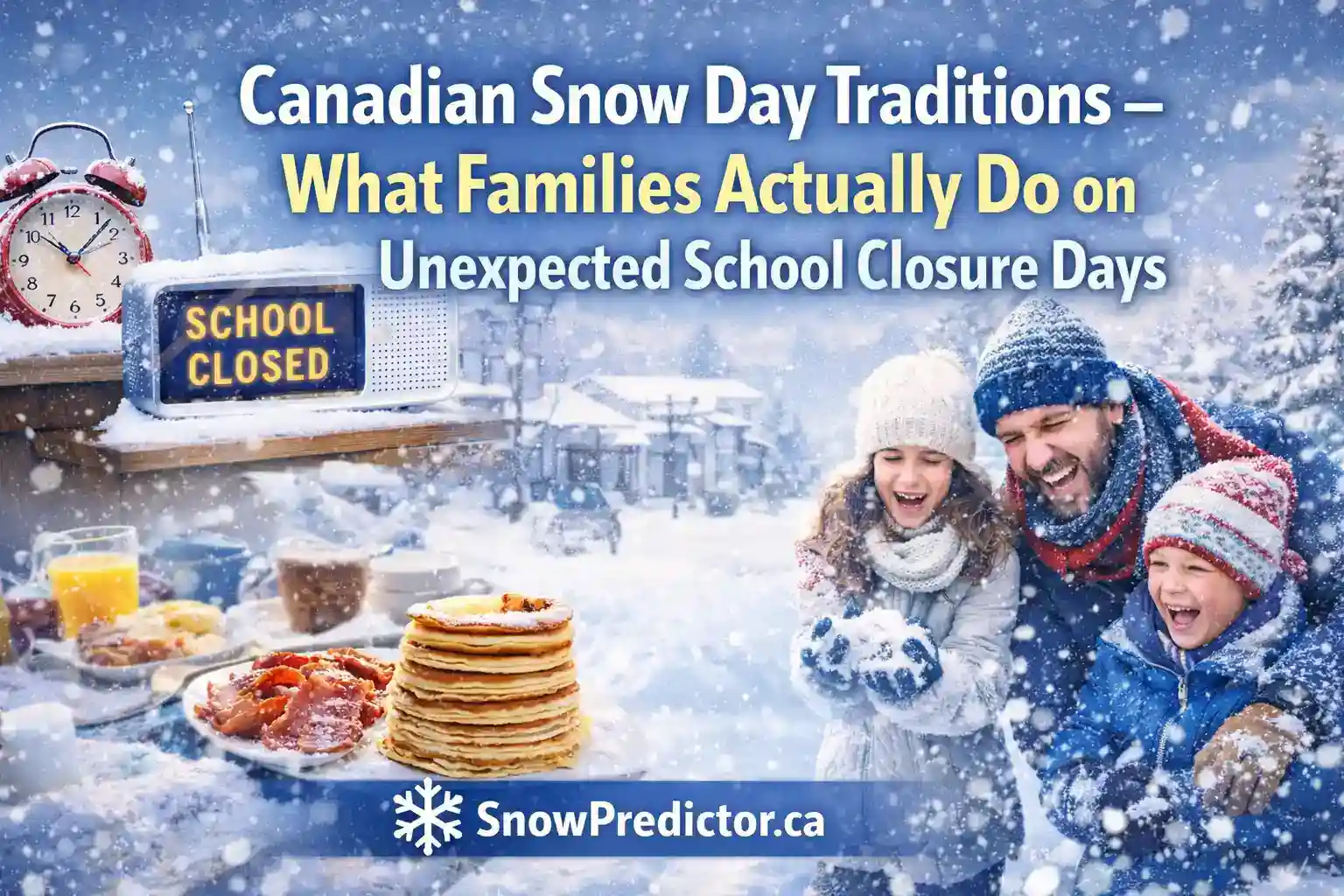
Canadian Snow Day Traditions turn that disruption into something families remember. Some households head for a tobogganing hill. Others make pancakes, build blanket forts or settle in with hot chocolate and a film. These rituals vary by province, and many are shared with other snowy countries. Their Canadian character comes from local weather, landscapes, school systems and the practical habit of adapting to winter. This guide covers activities, regional differences, food, safety and planning.
Canadian Snow Day Traditions at a Glance
| Tradition | Best For | What You Need | Safety Consideration |
|---|---|---|---|
| Tobogganing | Active families | Sled, helmet, winter clothing | Use an approved hill away from roads and obstacles |
| Building a snow fort | Creative outdoor play | Packable snow, shovel, mittens | Keep roofs open and walls below head height |
| Outdoor skating | Older children and adults | Skates, helmet | Use a maintained rink or officially approved ice |
| Hot chocolate ritual | Warming up indoors | Cocoa, milk or alternative | Supervise hot liquids around young children |
| Baking together | All ages | Simple recipe and ingredients | Give children age-appropriate kitchen tasks |
| Blanket fort and film | Very cold or stormy days | Blankets, cushions, books or film | Keep fabric away from heaters and fireplaces |
| Board-game tournament | Families and friends | Cards, puzzles or games | Choose games suited to the available time and ages |
| Neighbourhood shovelling | Older children and adults | Shovels, warm layers | Avoid overexertion and watch for ice |
The First Tradition: Waiting for the Official Announcement
Before apps and websites, many families listened to local radio or watched a television ticker, waiting for their board or school name. The technology has changed, but the suspense remains. Parents now refresh websites, check transportation portals and watch verified social accounts, while children ask for updates every few minutes.
The modern version starts with a forecast and backup plan. Families can check SnowPredictor to estimate disruption, but only the relevant school board, district, division or transportation authority can confirm what will happen.
Read the complete message because bus cancellation and building closure are different outcomes. A school may remain open when transportation is cancelled. The guide to bus cancellations versus school closures explains why the distinction matters for attendance, supervision and childcare.
Outdoor Snow Day Activities Families Return To
Outdoor play is central to Canadian Snow Day Traditions when conditions are safe. These snow day traditions in Canada create opportunities for movement, imagination and time together.
Tobogganing on the Local Hill
Tobogganing is one of the most recognizable Canadian snow day activities. A familiar hill can quickly become a neighbourhood gathering place where children sled until everyone needs a warm drink.
Choose a hill approved for sledding, with a long clear run that does not end near a road, waterway, fence, tree or parking area. Children should wear helmets, remain seated facing forward and wait until the path is clear. Municipal rules vary, so a hill’s popularity does not automatically make it safe or permitted.
Building Snow Forts and Snow People
Fresh, slightly wet snow is ideal for a snow person, fort, maze or sculpture. Younger children can collect snow while older participants shape the details.
Avoid enclosed tunnels and heavy roofs that could collapse. Keep walls low enough for supervision, use lightweight tools and stop when gloves or clothing become wet. A set of food-colouring spray bottles can add colour, but families should use washable, non-toxic mixtures and avoid spraying faces.
Skating, Snowshoeing and Winter Walks
Where maintained facilities are available, skating can turn a closure into a memorable outing. Never assume a pond, river or lake is safe because the surface looks frozen. Use a supervised rink or follow local authority notices about natural ice.
Snowshoeing has deeper significance than recreation. Indigenous peoples across much of Canada developed and used snowshoes for winter travel long before modern sporting equipment. Families should acknowledge that history.
A winter walk can be equally rewarding. Look for animal tracks, compare snow textures or measure accumulation. These outdoor snow day activities make the neighbourhood feel new without an expensive trip.
Cozy Indoor Snow Day Activities
Not every closure creates good outdoor conditions. Freezing rain, dangerous wind chill, poor visibility and strong wind can make staying inside the responsible choice. Indoor snow day activities give the day structure without turning it into hours of uncontrolled screen time.
Build a Blanket Fort
A living-room fort requires little more than blankets, cushions, chairs and imagination. Add books, battery-powered lights and a picnic-style lunch. Never drape fabric over a space heater, fireplace, lamp or other heat source.
Turn the fort into a reading corner. Older children can design its floor plan or create rules for an imaginary base, adding problem-solving to spontaneous play.
Hold a Family Game Tournament
Cards, puzzles and board games are dependable family snow day ideas that can include several generations. Let each person choose a game and offer a simple prize, such as selecting the evening film.
When ages vary, use teams instead of expecting a young child to compete directly with an adult. Cooperative games reduce arguments and make the activity feel less like another school assignment.
Create a Winter Project
Good snow day activities for kids do not need to be elaborate. Children can cut paper snowflakes, keep a weather journal, draw the view outside or make a scavenger hunt. Ask them to estimate the snowfall, record the temperature and compare their prediction later.
Families can also call a relative, start a puzzle or learn a recipe. Do not schedule every minute; part of the value is the break from routine.
Snow Day Food Ideas That Create a Family Ritual
Food gives Canadian Snow Day Traditions their strongest sensory memories. The smell of pancakes, soup or baking can make an ordinary morning feel distinct. Popular snow day food ideas include:
- Pancakes, waffles or French toast for a slower breakfast
- Tomato soup, lentil soup or another family favourite at lunch
- Grilled cheese, poutine or baked potatoes after outdoor play
- Cookies, muffins or bannock made with an appropriate family recipe
- Hot chocolate, tea or warm apple cider
Maple taffy on snow is associated particularly with Quebec and parts of Eastern Canada. Hot maple syrup is poured over clean, packed snow and lifted with a wooden stick as it cools. It requires careful adult handling because boiling syrup can cause severe burns. It should not be described as an everyday practice in every Canadian household, but it is a genuine regional winter food tradition.
Match kitchen tasks to each child’s age. Young children can measure cool ingredients; older children can read recipes and assist with supervised stove work.
How Snow Day Traditions Vary Across Canada
There is no single national snow-day experience. School snow days in Canada reflect regional climate, infrastructure and policy.
Ontario and the Great Lakes
Lake-effect snow creates sharp differences around Georgian Bay, Lake Huron and other snowbelts. One transportation zone may cancel service while a nearby area operates normally. The day may begin with a bus-only cancellation rather than a complete closure.
Quebec and Francophone Winter Culture
Quebec’s Canadian winter culture includes skating, sliding and foods such as tire sur la neige. A snow day is not Carnaval de Québec, but both make winter social.
The Prairies
In Manitoba, Saskatchewan and Alberta, extreme cold, drifting snow and low visibility may matter as much as accumulation. Rural transportation also faces different risks from city schools.
Atlantic Canada
Atlantic storms can bring snow, strong wind and rapid precipitation changes. Some communities call cancellations storm days. Families may prepare for power interruptions before planning outdoor fun.
British Columbia
Coastal communities may experience fewer snow days. Wet snow, steep streets and freeze-thaw conditions can disrupt travel even with modest totals. Interior and northern British Columbia face different conditions.
These differences explain why a national snowfall threshold would be misleading. The article on Canadian microclimates and snow days shows how terrain, lakes, elevation and local roads alter closure risk.
A Practical Snow Day Plan for Working Parents
The charming image of a carefree closure can hide a real burden. Canadian Snow Day Traditions are easier when parents arrange supervision and work options before the announcement.
Create a family plan that covers:
- Who can supervise children if an adult must work?
- Can either parent work remotely or adjust hours?
- Which trusted neighbour or relative is available?
- What food, medication and charging equipment should remain stocked?
- Where will official closure information appear?
Avoid assuming that an older sibling can manage younger children all day. Consider age, maturity, emergency contacts and provincial guidance. The working parent snow day guide offers a fuller preparation checklist.
Snow Day Safety Comes Before Tradition
Snow day safety tips are not the exciting part of the story, but they determine whether the memory remains a good one.
- Check current warnings before going outside.
- Dress in warm, dry layers with covered hands, feet and ears.
- Use reflective clothing when visibility is poor.
- Bring children inside for regular warming and hydration breaks.
- Keep play away from snowplows, roads, roofs and deep roadside banks.
- Never enter a snow tunnel or enclosed fort that could collapse.
- Use only maintained rinks or ice officially declared safe.
- Watch for wet clothing, numb skin, unusual fatigue or persistent shivering.
If conditions involve a flash freeze, freezing rain or blowing snow, staying home may be the entire safety plan. Families can review how blowing snow affects school closures before deciding that a low snowfall total means travel is safe.
Create Traditions Your Family Will Actually Keep
The strongest Canadian Snow Day Traditions are simple enough to repeat. Choose one outdoor activity, one warm food and one indoor ritual. Let children help, but do not pressure adults to create a perfect holiday while managing work.
A realistic tradition might be pancakes after the announcement, an hour outside, hot chocolate and a board game. These Canadian winter traditions give children something to anticipate while leaving room for weather and responsibilities.
Frequently Asked Questions
What are the most popular Canadian Snow Day Traditions?
Common traditions include sleeping in, making breakfast, tobogganing, building snow forts, skating, drinking hot chocolate, baking, playing games and watching a film. Practices differ by region and household.
What can children do indoors on a snow day?
Children wondering what to do on a snow day can build a blanket fort, read, bake, make paper snowflakes, keep a weather journal or organize a scavenger hunt.
Does a bus cancellation mean the school is closed?
No. Transportation can be cancelled while the school building remains open. Read the full announcement from the school board and transportation authority instead of relying on a headline, forecast percentage or social-media screenshot.
Are snow-day superstitions Canadian traditions?
Rituals such as wearing pyjamas backwards or placing a spoon under a pillow circulate widely online, especially in the United States. Some Canadian children may follow them, but they should not be presented as universal or uniquely Canadian customs.
How can working parents prepare for a possible snow day?
Discuss backup supervision, remote-work options, emergency contacts and official notification channels before winter storms arrive. Keep basic food, medication and charged devices available, and confirm the morning decision before changing attendance plans.