Ice Storm Warning Canada: School Closure and Travel Risk Guide
Parents, students and drivers need information when freezing rain is expected because roads, sidewalks and power lines can become dangerous before conditions look severe. The concern is not only whether schools may close, but whether buses can operate and whether an outage could interrupt heating or communication. This ice storm warning guide explains how Canadian alerts work, how boards assess travel risk and what families should check before leaving home. The Canada Snow Day Predictor supports early planning, while official school-board and transportation notices confirm final operating decisions.
When Freezing Rain Becomes a Serious Local Hazard
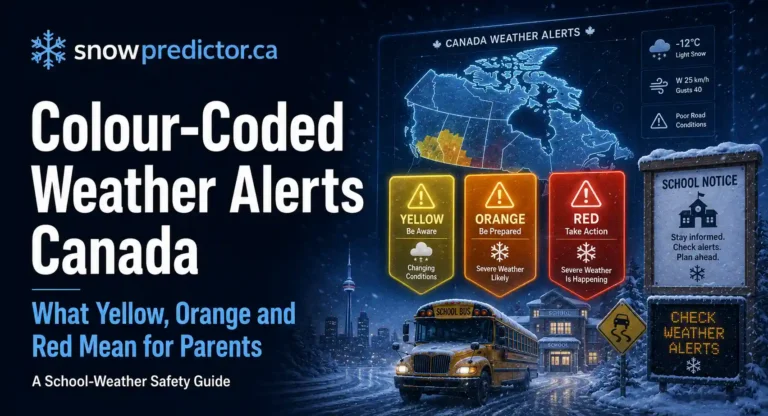
People often use the phrase ice storm warning Canada when a damaging freezing-rain event is expected. In Canada’s alert system, the notice may appear as a freezing rain warning, freezing drizzle advisory, flash freeze warning or a broader winter storm warning, depending on the dominant hazard and likely impact.
The full alert matters more than the headline. Read the affected forecast region, start and end time, expected ice accumulation, forecast confidence, travel impacts, utility risk and recommended actions. Canada winter weather warnings are designed to explain both the expected conditions and their likely effect on roads, infrastructure, daily routines and public safety.
A warning does not automatically close schools. Weather agencies describe the hazard, while boards and transportation providers decide how local routes and buildings will operate.
Why Ice Can Cause More Disruption Than Snow
Freezing rain falls as liquid and freezes when it reaches surfaces at or below freezing. It can create a smooth layer of clear ice on roads, steps, vehicles, trees and overhead lines.
Clear ice is difficult to see. A road may look wet while bridges, overpasses, hills and untreated side streets are already becoming slippery. A short walk to a bus stop may become unsafe before the main roads look badly affected.
Ice also adds weight to branches and electrical equipment. Wind can then break loaded branches, damage lines and block roads. These combined effects explain why ice storm warning may cause power failures, school disruption and slower recovery even after precipitation ends.
The severity of an event depends on timing, temperature, wind, duration and ice buildup, not simply on how much precipitation falls.
How School Boards Respond to Serious Icing
A serious ice alert does not create one automatic school response. A board may keep schools open, cancel buses, delay opening, close selected buildings or dismiss students early.
School and transportation teams may consider:
- Conditions on rural and urban bus routes
- Ice on sidewalks, steps, parking areas and entrances
- Morning and afternoon storm timing
- Power, heating and communication reliability
- Reports from bus drivers and transportation contractors
- Road-treatment and recovery progress
- Differences between neighbourhoods and weather zones
A school may remain open while buses are cancelled. Families should therefore check the board notice and transportation notice separately.
The guide to how Canadian schools decide on snow days explains why local route information can matter as much as the regional forecast.
Why Buses May Stop Before Schools Close
A school bus faces risks that are different from those faced by a private car. It is larger, stops repeatedly and may travel across steep roads, narrow routes, open farmland and untreated streets before reaching a main road.
Ice affects braking distance, steering, turning, pulling away from stops and entering school loops. Icy windows, poor visibility and slippery bus-stop areas add further risk. One unsafe section can make an entire route impractical.
Freezing rain school closures are not always the first response. Transportation may be suspended while buildings remain open for students who can arrive safely by another method. Parents should read the complete message and confirm whether they must also arrange the return trip.
The weather app versus school-board notice guide explains which source confirms weather, school and bus status.
Local Searches Still Need Local Confirmation
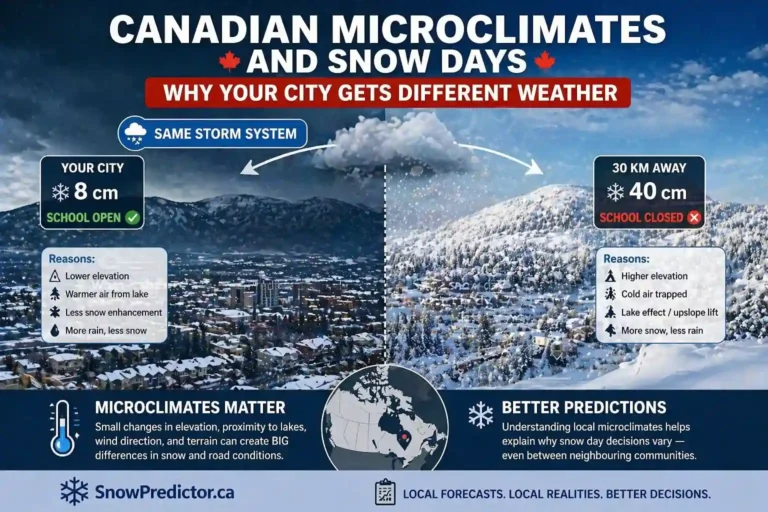
Searches such as ice storm warning Ontario, ice storm warning Toronto and ice storm warning Montreal may show different results because the same weather system can affect each region differently. A city may receive freezing rain while a nearby area gets snow, rain or only brief icing.
An ice storm warning today result can remain visible after an alert has been updated or ended. Check the issue time, exact forecast region and latest notice rather than relying on an old screenshot, search result or social post.
The phrase current ice storm warnings should prompt families to verify both location and timing. A national headline does not describe conditions on a specific school route, bridge or neighbourhood street.
For wider terminology, use the Canadian weather alerts guide.
What Ice Does to Roads, Sidewalks and Utilities
Roads and Bridges
Elevated surfaces often cool faster than surrounding pavement. Bridges, ramps and overpasses may become icy first. Hills, shaded roads and low-traffic streets can remain hazardous longer because they receive less treatment.
Drivers should not assume a road is safe because it looks wet. Clear ice may already be present.
Sidewalks and School Property
Children may face risk before reaching the road. Steps, driveways, crossings, bus stops, school entrances and parking areas can become difficult to use safely. Falls may remain a concern long after precipitation ends.
Traffic Signals and Street Lighting
An ice storm power outage may disable traffic signals, street lighting and communications. Drivers should follow local rules at dark intersections and avoid unnecessary travel when visibility and road conditions are poor.
Fallen Trees and Wires
Ice-loaded branches can block roads and bring down power lines. Never approach or touch a fallen wire, even if it appears inactive. Keep children and pets away and report the hazard.
Conditions After the Alert Ends
An expired alert does not mean roads, sidewalks and utility systems have fully recovered. Treatment, tree removal and repairs may continue for hours or days.
How Ice Alerts Differ From Other Winter Notices
These terms are related, but they do not describe the same threat.
| Alert or Term | Main Concern |
|---|---|
| Ice storm | Damaging freezing rain and significant ice buildup |
| Freezing rain warning | Rain freezing on contact and creating hazardous surfaces |
| Freezing drizzle advisory | Lighter freezing precipitation producing slippery conditions |
| Flash freeze warning | Wet surfaces freezing rapidly after a temperature drop |
| Winter storm warning | Several severe winter hazards occurring together |
| Snow and ice storm warning | Informal wording for a system bringing both snow and icing |
A winter storm warning Canada notice may include snow, ice, strong wind, blowing snow or poor visibility at the same time. Winter storm warnings and winter storm alerts should always be read in full because the dominant hazard can change across the affected area.
A winter blizzard has different criteria and usually centres on strong winds, blowing snow and very low visibility. A blizzard may occur with little new snowfall if loose snow is already available to blow across roads.
The winter storm warning Canada guide explains multi-hazard storms and school-day risks in more detail.
A Reliable School-Morning Checking Routine
Using the same order each time reduces confusion.
Read the Latest Weather Notice
Confirm that the alert covers the home, school and travel route. Review the timing, ice accumulation, latest issue time and expected impacts.
Check Transportation Updates
Look for route-specific, zone-specific or board-wide bus cancellations. Check whether another update is expected.
Check the School Board
Confirm whether schools are open, closed, delayed or dismissing early. Do not rely only on a notification preview.
Review Road and Utility Conditions
Look at road reports, traffic information and the relevant power outage map. In Ontario, families may check the Hydro One outage map where Hydro One supplies the property. A hydro outage map shows electrical conditions, not school operations.
Assess the Actual Household Route
Consider untreated roads, steps, hills, walking distance, the child’s age and whether the return journey may be worse than the morning trip.
Prepare a Backup Plan
Confirm childcare, pickup responsibility, work arrangements and how the family will communicate if power or mobile service fails.
Families should also plan for delayed opening or early dismissal. Keep pickup contacts current and make sure children know who may collect them. A written plan remains useful when phones or internet service are unreliable.
What Families Should Prepare Before the Ice Arrives
Prepare before surfaces freeze and before power lines are damaged.
- Charge phones and power banks.
- Enable weather, school and transportation notifications.
- Refill essential medication.
- Move vehicles away from weak or overhanging branches.
- Secure outdoor items.
- Keep flashlights and spare batteries accessible.
- Store food, water and warm clothing.
- Test smoke and carbon monoxide alarms.
- Maintain fuel or electric-vehicle charge.
- Place salt, traction material and a shovel where they can be reached safely.
The winter emergency kit Canada guide provides a complete household and vehicle checklist.
A family should also know where it can go if the home becomes too cold, who can collect children and how medical equipment will operate during an outage.
Staying Safe During an Ice-Related Power Outage
Ice can damage trees, lines and electrical equipment, leaving homes without heating, lighting, refrigeration, internet or running water.
Use flashlights instead of candles where possible. Conserve battery power, keep refrigerator and freezer doors closed and follow official restoration updates. Ontario residents looking for Hydro One outages should use the current Hydro One outage map rather than screenshots shared by other users.
Never use a barbecue, camping stove, outdoor burner or fuel-burning generator inside a home, garage, basement or shed. Generators must remain outdoors and away from doors, windows and air intakes. Never idle a vehicle inside a garage.
Carbon monoxide cannot be seen or smelled. Leave immediately and contact emergency services if an alarm sounds or anyone develops headache, dizziness, nausea, weakness or confusion.
The power outage guide for winter storms covers safe heating, food, medical planning and evacuation decisions.
When Travel Cannot Be Postponed
During serious icing, delaying travel is often the safest choice. When a journey is essential:
- Check road conditions before leaving.
- Clear windows, mirrors, lights and cameras.
- Drive slowly and increase stopping distance.
- Avoid sudden braking, acceleration and steering.
- Use suitable winter tires.
- Maintain adequate fuel or battery charge.
- Carry a winter car emergency kit.
- Tell someone the route and expected arrival time.
- Avoid cruise control on slippery roads.
- Never drive around closure barriers.
A vehicle kit should include warm clothing, a blanket, food, water, flashlight, first aid, a shovel, traction material, booster cables or a battery pack, warning equipment and a phone charger.
Where the Snow Day Predictor Fits
A weather alert describes the hazard. The transportation provider decides whether buses operate. The school board decides whether buildings open.
The Canadian school closure probability tool supports the period before official announcements by estimating how local winter conditions may affect school operations. Families can use that estimate to prepare childcare, work and transport alternatives.
It should not be treated as an official closure notice. Final status must come from the school board or transportation authority.
Frequently Asked Questions
What Was the Worst Ice Storm in Canada?
The January 1998 Eastern Canada ice storm, especially across southern Québec and eastern Ontario, is widely regarded as Canada’s most consequential ice event. Repeated freezing rain caused extreme ice buildup, widespread infrastructure damage and long-lasting power outages.
How Do You Prepare for an Ice Storm in Canada?
Prepare water, non-perishable food, medication, flashlights, batteries, warm clothing, blankets, a radio and charged power banks. Plan for children, pets, medical equipment and possible evacuation. Keep salt, shovels and vehicle supplies accessible, and stay away from fallen trees and electrical lines.
What Is a Winter Storm Warning in Canada?
A winter storm warning is used when several severe winter hazards may occur together, such as heavy snow, freezing rain, blowing snow, strong winds or dangerous wind chill. Read the full alert and reconsider unsafe travel.
What Is the Coldest City in Canada Right Now?
The answer changes as new observations are reported, and the coldest monitored location may be a remote weather station rather than an incorporated city. Check current national weather observations for a live comparison.