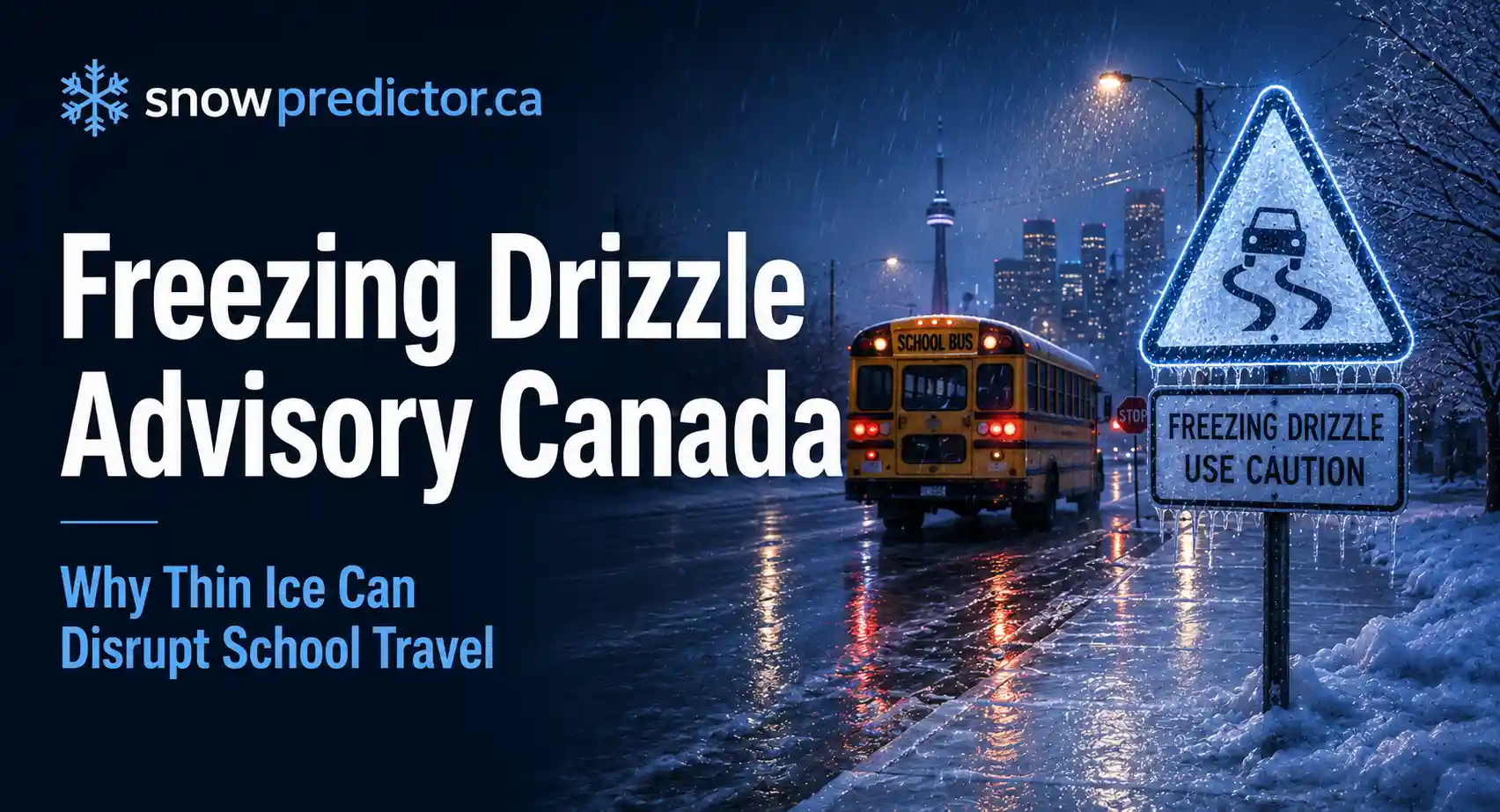
Freezing Drizzle Advisory Canada: Why Light Icing Can Disrupt School Travel
Canadian parents, students and school staff can underestimate freezing drizzle because the precipitation often looks light and leaves little visible accumulation. The real danger is the thin layer of clear ice it can create on roads, steps, sidewalks, vehicles, bus stops and school entrances. A freezing drizzle advisory tells families that small droplets may freeze on contact and create hazardous surfaces. The Canada Snow Day Predictor can support early planning, while official weather, transportation and school-board notices provide the final safety and operating information.
Why a Small Amount of Ice Can Create a Big Problem
The freezing drizzle advisory meaning is simple: very fine liquid droplets are expected to freeze when they touch surfaces at or below freezing. The precipitation may be difficult to see, yet it can quickly create slippery road conditions and unsafe walking areas.
In Canada, an advisory is a formal weather alert for significant conditions that are generally less severe than those covered by a warning. It still requires attention and practical action.
| Question | Practical Answer |
|---|---|
| What is the hazard? | Fine drizzle freezes on contact and forms a thin glaze |
| Is it a formal alert? | Yes, an advisory is a formal Canadian weather alert |
| Does it automatically close schools? | No, school boards decide separately |
| Can buses be cancelled? | Yes, when local routes become unsafe |
| What should families do? | Read the alert, check buses and schools, then assess the route |
What Freezing Drizzle Looks Like
Freezing drizzle consists of very small liquid droplets that freeze when they strike cold roads, pavements, vehicles or other exposed surfaces. Because the droplets are fine, the first sign may not be visible precipitation. Instead, families may notice a shiny step, a windshield that ices again after scraping or a vehicle losing traction on a road that appears wet.
A thin glaze is especially dangerous in darkness because drivers and walkers may not recognise the change. Bridges, shaded roads, untreated sidewalks, school steps and rural routes often become slippery first.
Searches for freezing drizzle advisory today should always lead to the newest official message. Old alerts, screenshots and notification previews may remain visible after conditions have changed.
Why School Travel Can Be Affected Quickly
The disruption comes from surface conditions rather than precipitation volume. Heavy snow is obvious, while light icing can develop quietly.
Ice Can Form Before People Notice It
Drivers may leave home believing the road is only wet. Students may step onto a driveway or bus-stop area without seeing the glaze. This delay in recognising the hazard increases the risk of falls and collisions.
Small Amounts Can Reduce Traction
A light coating can affect braking, steering and safe walking. The result can be icy school travel even when there is no major storm, deep snow or dramatic radar image.
Conditions Can Vary Across One District
One neighbourhood may stay wet while a colder rural road, bridge or exposed bus route freezes. School boards and transportation providers therefore need route-level information rather than relying only on a broad regional forecast.
Timing Can Overlap With the Commute
An event beginning shortly before buses depart may be more disruptive than heavier precipitation that ends overnight. Boards must also consider whether conditions will worsen near dismissal.
Freezing Drizzle vs Freezing Rain
The freezing drizzle vs freezing rain comparison focuses mainly on droplet size, intensity and typical impacts.
| Condition | Main Characteristic | Common Travel Concern |
|---|---|---|
| Freezing drizzle | Very fine, light droplets that may be hard to see | Thin glaze on roads, steps and sidewalks |
| Freezing rain | Larger raindrops that can produce heavier icing | Wider ice buildup, tree damage and outages |
| Flash freeze | Wet surfaces freeze after a rapid temperature drop | Sudden widespread icing |
| Ice pellets | Frozen particles reach the ground already solid | Reduced traction and surface accumulation |
A freezing rain advisory is not the usual Canadian label for a major icing event; families may instead see a freezing rain warning when more serious impacts are expected. Even so, both freezing drizzle and freezing rain can create dangerous ice.
For broader icing risks, read the ice storm warning and freezing rain guide.
What a Yellow Advisory Means
Canada weather alerts use yellow, orange and red colours to communicate increasing potential impact. A yellow alert generally indicates moderate, localised or short-term disruption. Orange indicates a higher risk of major disruption, while red is reserved for rare and extreme impacts.
The phrase yellow advisory freezing drizzle describes a yellow-level advisory for this hazard. It is still a call to take precautions. Untreated roads may become slick, buses may be cancelled and walking routes may require more time.
Families should read the colour together with the affected area, timing, expected impacts and recommended actions. A yellow alert for one rural route may create more practical danger than a broader but less exposed urban area.
Does the Alert Mean Schools Will Close?
No. A freezing drizzle advisory describes the weather hazard, but the school board decides whether buildings open and the transportation authority decides whether buses operate.
Possible outcomes include:
- Normal school and bus operations
- Route-specific school bus cancellations
- Transportation cancelled in one weather zone
- All buses cancelled while schools remain open
- Delayed opening
- Selected school closures
- District-wide closure
- Early dismissal if conditions worsen
A board may keep buildings open while cancelling rural or exposed routes. It may close selected schools if icing affects entrances, staffing, heat, power or safe access.
The guide to how Canadian schools decide on snow days explains how weather, route conditions and local observations shape these decisions.
Why Buses May Be Affected Before Schools
School buses travel long routes, stop frequently and may use bridges, hills, rural roads and untreated turnarounds. Freezing drizzle can affect:
- Braking distance
- Steering control
- Safe stopping at bus stops
- Pulling away on hills
- Entering school loops
- Turning on untreated roads
- Student footing while boarding
- Visibility through refreezing windows
One hazardous section can make an entire route unsuitable even when a nearby main road looks normal.
“Buses cancelled” does not necessarily mean “schools closed.” Families who drive children to an open school may also need to arrange safe pickup. The bus cancelled but school open guide explains these announcement differences.
Why Walking Routes Also Need Attention
The school journey includes front steps, driveways, pavements, crossings, bus stops, parking areas and entrances. Clear ice can form on any of these surfaces.
Younger students may not recognise transparent ice or adjust their pace. Heavy backpacks can affect balance, and a fall near traffic creates additional risk.
Families should choose treated routes, allow extra time, use footwear with good traction and keep hands available for balance. A school can remain open while one family’s walking route remains unsafe.
How to Check a Toronto or Local Alert
A freezing drizzle advisory Toronto search should be checked against the named forecast region and issue time. Toronto may have an advisory while nearby communities have different conditions or no alert.
A Canadian advisory result may refer to another province or city, so families should confirm that the notice covers their home, school and travel route.
Searches such as freezing drizzle advisory near me can be affected by location settings, stale pages or forecast boundaries. Open the complete official message and verify the community name, start time, expiry time and expected impacts.
A Reliable School-Morning Checking Routine
Use the same sequence each time instead of comparing multiple apps until one shows the forecast you prefer.
Read the Official Advisory
Check the issue time, affected region, timing, colour, expected surface conditions and safety advice. An Environment Canada weather page or other official Canadian source should take priority over screenshots and reposted headlines.
Check Transportation Separately
Look for route-specific, zone-based or system-wide school bus cancellations. Confirm whether they apply only in the morning or for the entire day.
Check the School Board
Verify whether schools are open, delayed, closed or considering early dismissal. Read the complete message rather than relying on a notification preview.
Review Local Conditions
Check roads, bridges, hills, side streets and pavements outside the home. A regional alert cannot describe every driveway, crossing or rural road.
Assess the Return Trip
Conditions may worsen after classes begin. Review the hourly forecast and confirm who can collect or supervise the child if transportation changes.
The weather app versus school-board notice guide explains which source should answer each part of the decision.
How Drivers Should Respond
During light icing, reduce speed, increase following distance and avoid sudden braking or steering. Clear every window, mirror, light and camera before moving.
Before departure, inspect wiper blades, washer fluid, tire condition and exterior lights. Keep an ice scraper within reach, and allow extra time for bridges, shaded streets, parking areas and school entrances that may freeze first.
Before leaving:
- Check official road conditions
- Carry a charged phone
- Maintain enough fuel or battery charge
- Tell someone the route and expected arrival time
- Carry a winter car emergency kit
- Delay unnecessary travel when conditions are unsafe
Winter tires improve traction, but they cannot remove the risk of clear ice. Four-wheel drive may help a vehicle move, yet it does not guarantee safe braking.
The winter emergency kit Canada guide covers household and vehicle supplies for winter travel and outages.
What Schools and Families Should Do During the Day
Keep official notifications enabled because an advisory may be updated, expanded, replaced or ended.
Confirm early-dismissal arrangements and make sure students know who will collect them if buses change. School staff may treat entrances and walkways, but fresh drizzle can freeze after salt was applied. Conditions should be reassessed rather than assumed safe.
Families should also keep written pickup contacts available in case phone batteries, mobile service or internet access become unreliable.
Can the Advisory Become a Warning?
The notice may be updated if the event becomes more serious, changes precipitation type or produces greater impacts than expected. It may also end without escalation if temperatures rise or precipitation stops.
A winter weather advisory Canada message can describe significant conditions that require precautions, while a warning signals a more severe or urgent hazard. Families should monitor the latest Canada weather alerts rather than treating the first notification as final.
How SnowPredictor.ca Supports Early Planning
A freezing drizzle advisory can appear before a school board or transportation provider makes a final decision. The Canadian school closure probability tool helps families estimate whether local icing, timing and travel conditions may affect school operations.
Use the estimate to prepare childcare, work and transport alternatives. It does not issue closures, and any official board or transportation announcement takes priority.
Frequently Asked Questions
What Is a Freezing Drizzle Advisory?
It means light drizzle is expected to freeze when it touches sub-zero roads, pavements, vehicles and other exposed surfaces, creating a thin layer of clear ice. Even small amounts can make travel and walking hazardous. In Canada, this hazard is normally handled as an advisory because it is significant but generally less severe than conditions requiring a warning.
What Is the Coldest City in Canada Right Now?
The answer changes as new observations are reported, and the coldest monitored location may be a remote weather station rather than an incorporated city. Check current national weather observations for a live comparison.
Is Freezing Drizzle the Same as Freezing Rain?
No. Freezing drizzle consists of very fine, light droplets and often creates a thin, difficult-to-see glaze. Freezing rain consists of larger raindrops and can produce heavier ice accumulation more quickly. Both freeze on contact and can make roads, pavements and power lines dangerous.
Is an Advisory Better Than a Warning?
An advisory is generally less severe than a warning, but it is not harmless. An advisory means significant weather is expected and precautions are needed. A warning means severe weather is occurring or expected and more urgent action is required. Always read the colour and full message.