Freezing Drizzle Advisory Canada: Why Light Ice Can Still Cancel School Buses
Canadian parents may see light drizzle and assume school travel will be easier than during a snowstorm. Yet tiny droplets can leave a clear glaze on pavement, bridges, sidewalks and bus steps. This freezing drizzle advisory Canada guide explains why light icing can disrupt transportation, what families should check before school and how to separate a weather alert from an official bus or school decision. The Canada Snow Day Predictor supports early planning, while official weather, road, transportation and school-board notices remain final.
Why a Thin Layer of Ice Can Create a Serious Travel Risk
A freezing drizzle advisory Canada notice means significant freezing drizzle is occurring or expected in the affected region. Very small liquid droplets freeze on sub-zero roads and objects, producing a thin, transparent coating.
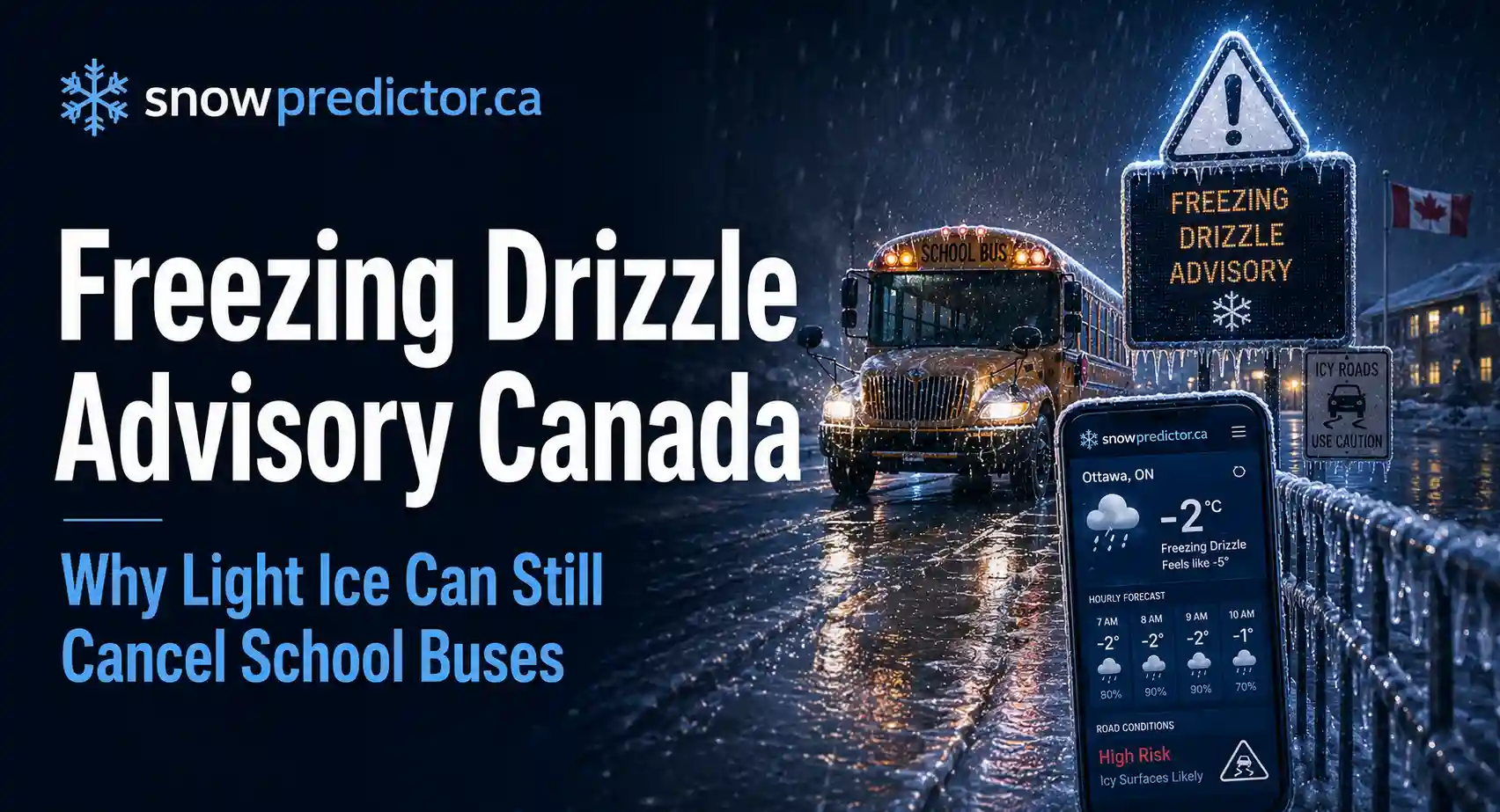
Parents may see Yellow Advisory Freezing Drizzle. “Advisory” is the alert type, “Freezing Drizzle” the hazard and yellow the impact level. The alert itself does not cancel buses or close schools. Local transportation providers and school boards make those decisions separately.
| Question | Practical Answer |
|---|---|
| Can light drizzle make roads dangerous? | Yes. A thin clear glaze can sharply reduce traction. |
| Does the advisory cancel buses automatically? | No. Transportation providers assess routes and local conditions. |
| Can schools remain open when buses stop? | Yes. Transportation and building decisions are often separate. |
| What should parents check? | The full alert, road reports, bus notices, school status and the immediate route. |
Why Freezing Drizzle Is Easy to Underestimate
The word “drizzle” sounds mild, but freezing on contact creates the danger. A thin glaze can reduce tyre grip and make walking surfaces slippery before drivers or pedestrians recognise it.
Risk is uneven. A salted main road may be manageable while a shaded hill, rural road, bridge, school entrance or turnaround remains icy.
The freezing drizzle advisory meaning is therefore practical: expect difficult travel and take precautions even when precipitation looks light.
Freezing Drizzle Versus Freezing Rain
The freezing drizzle versus freezing rain comparison depends mainly on droplet size, accumulation rate and likely impact.
| Hazard | Main Characteristic | Common School-Travel Concern |
|---|---|---|
| Freezing drizzle | Very small droplets gradually create a thin glaze | Hard-to-see slick roads, sidewalks, steps and bus stops |
| Freezing rain | Larger raindrops can produce faster or heavier ice buildup | Serious road icing, tree damage, outages and broader disruption |
| Flash freeze | Water from rain or melting snow freezes rapidly after temperatures fall | Sudden widespread ice on roads and walkways |
A freezing rain warning generally signals heavier icing, but duration, temperature, treatment, terrain and timing still determine travel risk.
The ice storm and freezing rain guide explains the risks of heavier ice accumulation.
Advisory, Watch and Warning Have Different Purposes
Canada uses Warnings, Advisories and Watches for formal weather alerts. An Advisory covers significant but generally less severe weather. A Warning means severe weather is occurring or expected, while a Watch means conditions favour a severe event that may develop.
Older reports may use different terminology, so follow the current official message. A winter storm warning, freezing rain warning or snow squall warning communicates a different hazard.
The weather advisory versus warning guide gives parents a clearer comparison of these alert types.
What Yellow, Orange and Red Mean
Every Canadian Warning, Advisory and Watch receives an impact colour.
- Yellow indicates moderate, localised or shorter-term impacts.
- Orange indicates major, widespread or longer-lasting impacts.
- Red indicates extreme, widespread and potentially life-threatening impacts.
Most freezing drizzle alerts are likely to appear as yellow because the hazard is often more localised or lower impact than a major freezing rain event. Yellow does not mean harmless. A moderate regional impact can still make one bridge, rural route or school entrance unsafe.
Read the colour, hazard, timing, location and complete impact statement together.
Why School Bus Routes Are Especially Vulnerable
School buses cross varied conditions. One route can include treated streets, untreated rural roads, bridges, hills, shaded curves and open areas.
A thin glaze on one critical section can make safe braking, turning or stopping difficult. Drivers also make repeated stops near shoulders where treatment may be limited.
Transportation officials may consider:
- Current and forecast road conditions
- Reports from bus operators and road authorities
- Ice on rural or secondary roads
- Bridges, hills and shaded areas
- Conditions expected before afternoon dismissal
- Whether the full route can be completed safely
- Access to school entrances, loops and turnarounds
- Traction at roadside pickup locations
This is why icy school bus routes may be cancelled despite little visible precipitation.
Why Buses Can Be Cancelled While Schools Stay Open
Bus cancellation and school closure are separate. A provider may stop one route while a board keeps buildings open.
Possible outcomes include:
- Normal transportation and classes
- Selected route cancellations
- One or more weather zones cancelled
- All buses cancelled while schools remain open
- A delayed opening
- An individual-school closure
- A board-wide closure
- Changes to afternoon transportation
School bus cancellations do not automatically confirm ice-related school closures. Check the transportation provider and school board separately.
The bus cancelled but school open guide explains what families should consider when transportation stops but classes continue.
Why Morning Timing Matters
A freezing drizzle advisory Canada message can be especially disruptive when icing develops overnight or just before the morning commute. Roads may look wet before sunrise, and glaze can form after crews have treated only part of the route.
A small amount of ice before dawn can affect buses more than a larger weekend amount, especially before treatment is complete.
Conditions may improve, then worsen near dismissal, so consider both journeys.
A Reliable Before-School Checking Routine
Read the Complete Advisory
Check the alert colour, affected area, issue time, expected end time, forecast confidence, listed impacts and recommended actions. A freezing drizzle advisory today search may show an old or replaced notice, so open the newest official version.
Check the Home, Route and School
The home may be on a treated street while the school bus crosses colder, shaded or untreated roads. Check each location separately.
The weather alerts map Canada guide explains how to compare alert areas, radar and the full route.
Review Road Information
Use the relevant provincial or territorial service for winter road conditions Canada, closures and cameras. Municipal or rural roads may require a separate local check.
Check Transportation Updates
Look for the child’s route, school, weather zone or system-wide notice. Confirm whether a morning cancellation remains in effect for afternoon service.
Check the School Board
Verify whether the building is open, delayed or closed and whether childcare, recess, activities or dismissal procedures have changed.
Inspect the Immediate Area
Look for shiny pavement, icy steps, untreated sidewalks and difficulty walking safely. Regional information cannot describe every driveway or stop.
A Five-Minute Morning Checklist
Before children leave, confirm:
- The freezing drizzle advisory Canada notice is current
- The correct home and school locations were checked
- School transportation weather updates have been posted
- The route or weather zone is operating
- The school’s status is clear
- The walking route and bus stop are accessible
- Footwear provides suitable traction
- An adult can respond if the bus is delayed
- The pickup plan is ready if conditions worsen
Do not assume dark pavement is safe; clear ice can look wet.
Walking and Bus-Stop Safety
Freezing drizzle road conditions can make sidewalks, stairs and bus steps hazardous. Children should walk slowly, keep hands free and wear textured winter soles.
At the bus stop:
- Stand well back from the road
- Avoid icy snowbanks and steep driveways
- Wait with younger children
- Do not run after a moving bus
- Allow vehicles extra stopping distance
- Return indoors if service is delayed and conditions worsen
Freezing drizzle school safety also includes entrances, playgrounds and outdoor recess. Schools may shorten or move recess indoors when local surfaces are icy.
Should Parents Drive When Buses Are Cancelled?
A personal vehicle is not automatically safer. First learn whether untreated roads, bridges, hills or widespread ice caused the cancellation.
Drivers should clear windows, slow down, leave more space and avoid sudden movements. Bridges may remain icy after nearby roads improve.
Delaying the trip may be the safest decision when the route cannot be assessed confidently. The winter weather safety checklist provides practical winter driving guidance.
What If Conditions Change During the School Day?
A freezing drizzle advisory Canada notice can be updated, extended, expanded or replaced. Keep school and transportation notifications enabled and confirm who can collect the child if dismissal changes.
Morning improvement may not last; falling temperatures or fresh drizzle can create new glaze.
Confirm buses, dismissal and after-school care.
Preparing the Night Before
When freezing drizzle is forecast:
- Charge phones and power banks
- Enable school and transportation notifications
- Prepare suitable footwear and clothing
- Treat steps and driveways where appropriate
- Confirm the child’s route and weather zone
- Arrange backup childcare or transportation
- Check the vehicle emergency kit
- Allow extra morning time
- Avoid promising that school will be cancelled
The Canada Snow Day Predictor can support early planning by estimating possible weather-related disruption for a selected location. Compare that estimate with official alerts, current road reports, transportation notices and school-board announcements.
It is not a road-safety clearance or official cancellation notice.
How to Read a Freezing Drizzle Advisory Canada Notice
Open the message and confirm its issue time, communities, duration and impacts. A Yellow Advisory Freezing Drizzle notice may be updated as temperatures, precipitation and road reports change. Check whether it covers the home, school and route, not only the child’s location.
When possible, parents should compare the latest alert with local road cameras and recent transportation notices because conditions can change sharply between nearby neighbourhoods, bridges, hills and exposed rural routes.
Use radar for precipitation movement, but remember that radar cannot confirm surface ice. Pavement temperature, earlier moisture, traffic and treatment determine whether a road is slippery. The Canadian weather alerts guide explains how official alert types, colours and map areas work together.
How SnowPredictor.ca Supports Household Planning
A freezing drizzle advisory Canada notice explains the weather hazard, while road services report travel conditions, transportation providers decide whether buses operate and school boards confirm building status. SnowPredictor.ca adds a separate planning estimate so families can prepare childcare, work and pickup alternatives before final announcements.
Use the estimate alongside official information, not instead of it. Recheck conditions shortly before departure because light icing can develop between scheduled updates, especially on shaded roads, bridges and untreated sidewalks.
Frequently Asked Questions
What Is the Gloomiest City in Canada?
Prince Rupert, British Columbia, is frequently described as one of Canada’s cloudiest and wettest cities because of its Pacific coastal climate. “Gloomiest” is not an official weather title, however, and rankings can differ depending on whether they measure sunshine, cloud cover, fog or rainfall.
Is There a Freeze Warning in Toronto?
That depends on the current official alert status and the season. A freeze or frost warning is different from a freezing drizzle advisory Canada notice and is generally related to temperatures that may damage plants during the growing season. Check the latest Toronto alert page rather than relying on an older search result.
What Is the Coldest City in Canada Right Now?
The answer changes as weather stations report new observations. Iqaluit, Yellowknife and Whitehorse are often among the colder incorporated cities, while smaller northern communities may be colder. Check the current national conditions table for a live comparison.
Which Province Has the Worst Weather in Canada?
There is no official “worst weather” province because the answer depends on whether someone dislikes cold, snow, freezing rain, wind, heat or storms. Newfoundland and Labrador is a strong candidate for stormy conditions, while Manitoba and Saskatchewan are stronger candidates for prolonged extreme cold and blowing snow.
What Is the Unhappiest Province in Canada?
Canada does not assign an official permanent title for the “unhappiest province.” Survey results can vary by year, sample, question and economic conditions. Statistics Canada life-satisfaction data can provide a comparison for a specific period, but it should not be treated as a fixed description of any province or its residents.