School Closure Risk Canada: Snow, Ice, Wind Chill and Road Safety Explained
Canadian parents often want a number that will reveal whether school will close: a snowfall total, temperature, wind chill or percentage from a snow day predictor. School closure risk Canada decisions are more complex. Transportation teams and school boards consider whether buses can complete routes, whether students can wait outdoors safely, whether buildings can operate and whether conditions may worsen before dismissal. This guide explains how snow, ice, cold and road safety affect closures. The Canada Snow Day Predictor can support early planning, while official weather, road, transportation and board notices remain final.
What Families Should Understand First
School closure risk Canada searches reflect a concern, but no national formula automatically closes Canadian schools. Local boards and transportation providers evaluate current and forecast weather, road conditions, visibility, ice, snow removal, staffing, utilities and the afternoon outlook.
Weather alerts and school decisions come from different organisations. Weather agencies describe hazards, road authorities report travel conditions, transportation providers decide whether buses operate, and school boards decide whether buildings, classes and programmes remain open.
School closures Canada-wide can differ from bus cancellations and building closures. Families must therefore check the transportation provider and official school board separately.
| Question | Practical Answer |
|---|---|
| Does one snowfall total close schools? | No. Timing, rate, roads and local procedures matter. |
| Can buses stop while buildings remain open? | Yes. Transportation and building decisions are separate. |
| Does an official warning confirm closure? | No. It describes a hazard, not a board decision. |
| What should parents check? | Alerts, roads, buses, school status and the immediate route. |
Why There Is No Universal Snow-Day Formula
Canada includes coastal, prairie, northern, mountain, rural and urban school systems. Ten centimetres may be routine in one district and highly disruptive in another. A compact city board also faces different challenges from a region with long rural routes, exposed highways, hills and bridges.
School closure risk Canada changes with storm timing, snowfall rate, visibility, road treatment, wind, bus-stop exposure, afternoon travel, building access, power and staffing. Five centimetres over treated pavement may be manageable, while two centimetres over freezing rain can create dangerous travel.
That is why a school cancellation predictor Canada tool can estimate disruption but cannot replace local decisions.
The Four Main Parts of Closure Risk
Most winter decisions involve four connected areas.
| Risk Factor | What Decision-Makers Examine |
|---|---|
| Snow | Accumulation, snowfall rate, timing, drifting and visibility |
| Ice | Freezing rain, freezing drizzle, black ice and road traction |
| Wind chill | Frostbite risk, walking exposure and safe bus-stop waiting |
| Roads | Hills, bridges, rural routes, plowing and afternoon conditions |
No factor operates alone. Snow and school closures may receive the most attention, but ice, visibility or transportation access can become more important than accumulation.
How Snow Changes the Risk
Snow affects school closure risk Canada through more than the final total. Decision-makers consider when it starts, how rapidly it accumulates, whether wind is causing drifting and whether drivers can see road edges and stopped vehicles.
Snow ending before midnight gives crews time to clear and treat routes. The same amount falling between 4 a.m. and 7 a.m. may repeatedly cover roads during inspections. Snow squalls can create severe conditions in one community while a nearby area remains manageable.
Parents should ask what the routes will be like when buses travel, not only how much snow is forecast.
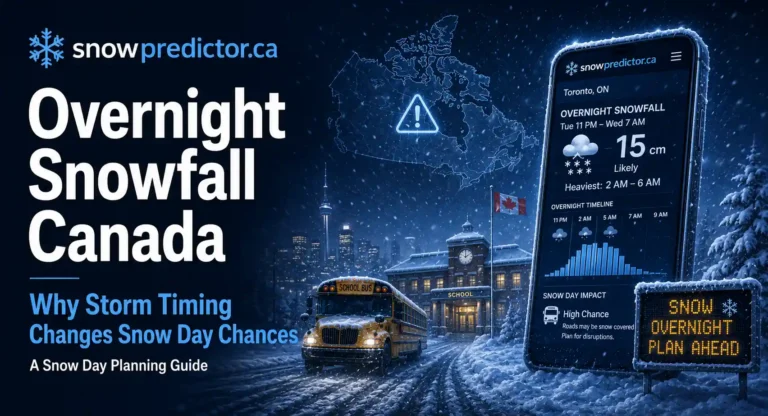
The overnight snowfall Canada guide explains why timing can change snow day probability even when storm totals are similar.
Why Snowfall Rate Matters
A moderate amount spread across twelve hours may be easier to manage than the same amount falling in three hours. Fast snowfall can cover treated pavement, hide lane markings, reduce visibility and slow plows, buses and regular traffic together.
Hourly forecasts often reveal more than a daily snow icon. Look for phrases such as “rapidly accumulating,” “heavy at times,” “poor visibility,” “drifting” or “difficult travel.”
Snowplow timing matters as well. A priority road may be cleared early, while residential, rural or secondary roads remain covered. Continued snowfall can also undo an earlier plow pass.
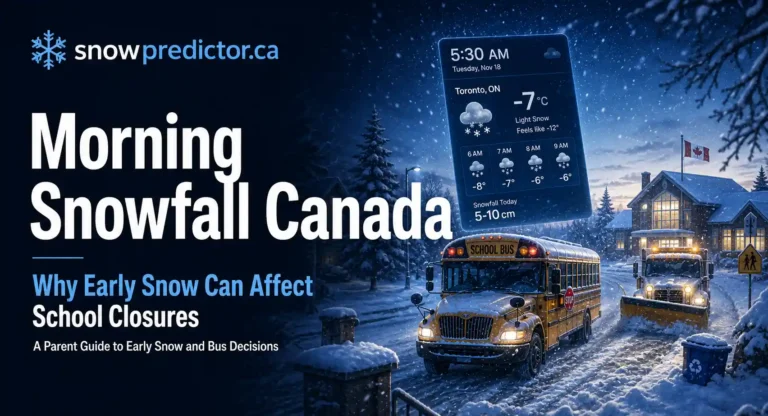
The morning snowfall school closures guide explains why snow arriving close to departure can create rapid school transportation cancellations.
How Ice Raises Risk With Little Snow
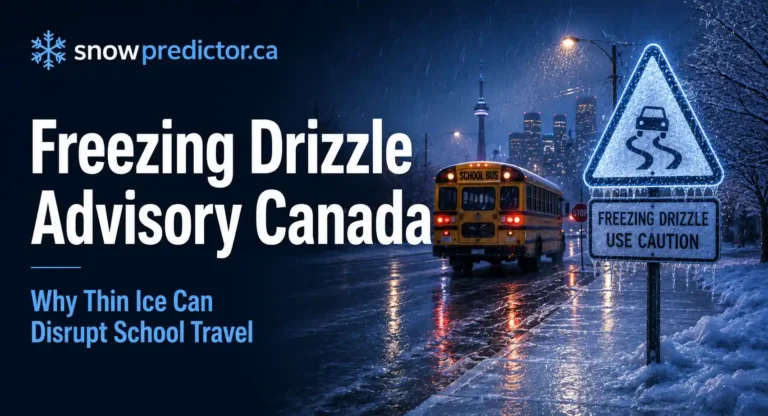
Ice is one reason school closure risk Canada can rise when almost no snow is visible. Freezing rain, freezing drizzle, refreezing meltwater and black ice can reduce traction on roads that appear merely wet.
High-risk locations include:
- Bridges and overpasses
- Hills and sharp curves
- Shaded roads
- Rural and secondary routes
- School entrances and bus loops
- Untreated sidewalks and stops
A transportation provider must assess the complete route, not the street outside one home. One icy bridge or steep road can make safe braking and turning difficult for a large vehicle.
Ice-related school closures remain less common than bus cancellations because buildings may still be accessible even when selected routes are unsafe.
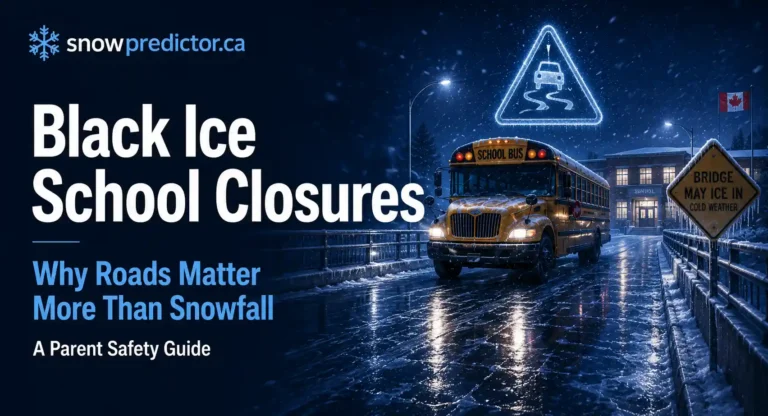
The black ice and school closures guide provides more detail about clear glaze and hidden road hazards.
Wind Chill and Outdoor Exposure
Wind chill describes how cold exposed skin feels when air temperature and wind are combined. It can increase heat loss and shorten the time before frostbite becomes possible.
Wind chill school closures do not follow one Canada-wide temperature. Boards may move recess indoors, cancel outdoor physical education, adjust transportation or keep students inside while buildings remain open.
Risk varies with local climate, walking distance, expected bus delays, clothing, age and health needs. A brief supervised walk differs from a long wait at an exposed rural stop.
Parents should review the board’s cold-weather procedure rather than relying on a threshold from another region.
Why Road Safety Often Decides the Outcome
School buses must brake, turn, climb hills and stop repeatedly while carrying students. Routes may include roads families never see from home.
Transportation teams commonly assess:
- Driver and road-patrol reports
- Current and forecast precipitation
- Visibility, drifting and wind
- Plowing and salting progress
- Rural, secondary and elevated roads
- Access to schools and turning areas
- Traffic and collision conditions
- Whether the afternoon journey can be completed safely
Winter road conditions can vary sharply across one district. A clear highway does not prove every concession road, bridge, subdivision or loading area is safe.
The winter road conditions and school closures guide explains how route exposure and maintenance affect decisions.
Bus Cancellation and School Closure Are Different
This distinction causes frequent confusion. A transportation provider may cancel buses because routes are unsafe while the building remains open, staffed and accessible.
Possible outcomes include:
- Normal transportation and classes
- Selected route cancellations
- One or more weather zones cancelled
- All buses cancelled while schools stay open
- Delayed opening
- Individual school closures
- Board-wide closure
- Changes to dismissal or afternoon transportation
School closure risk Canada must therefore be checked through two channels. A bus notice answers whether transportation operates; a board notice answers whether the building and programmes operate.
The bus cancelled but school open guide explains what families should consider when arranging private travel or pickup.
How Weather Alerts Relate to Decisions
A Warning, Advisory, Watch or Special Weather Statement helps families understand the hazard, but it does not decide school status.
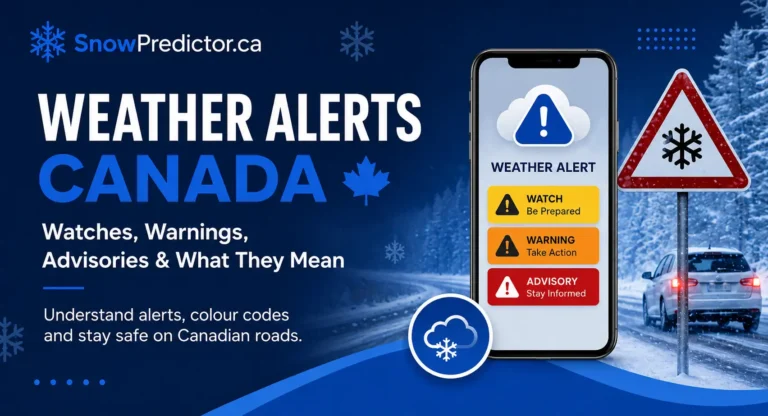
Canadian formal alerts may include yellow, orange or red impact colours. Yellow can still create dangerous local roads. Orange signals greater expected disruption, while red indicates extreme and potentially life-threatening effects.
Parents should read:
- The hazard, such as snowfall, freezing rain, blizzard or cold
- The alert type and colour
- The affected communities
- The start, peak and end time
- Expected travel and health impacts
- Recommended safety actions
Inclement weather school closures remain local operational decisions even when a broad regional alert is active.
The Canadian weather alerts guide explains how to interpret these messages before school.
What Parents Should Check Before Children Leave
Read the Current Forecast and Alerts
Check timing, snowfall rate, ice, wind, visibility, temperature and wind chill. Confirm whether the home, school and full route are inside the affected area.
Check Official Road Information
Use the provincial or territorial traveller-information service for surface conditions, closures and cameras. Municipal or rural roads may need a separate local check.
Check the Transportation Provider
Look for the child’s route, school, zone or service area. Confirm whether a morning cancellation also removes afternoon transportation.
Check the School Board
Verify whether the building, classes, childcare and activities are open, delayed, modified or closed. Search queries such as “are schools closed today” or “will schools be closed tomorrow” should lead families back to the official board notice.
Inspect the Immediate Route
Check the driveway, sidewalk and bus stop. Look for untreated ice, blocked paths, drifting, poor visibility or unsafe snowbanks.
A Five-Minute Risk Checklist
Before children leave, confirm:
- Which hazard is occurring
- When it will peak and end
- Whether roads are improving or worsening
- Whether ice is hidden beneath snow
- Current visibility and wind chill
- Bus, route or zone status
- School operating status
- Conditions expected near dismissal
- Backup childcare or pickup arrangements
The best question is not, “How many centimetres fell?” It is, “Can students and staff complete the full journey safely now and later today?”
Should Parents Drive When Buses Are Cancelled?
A family vehicle is not automatically safer than a school bus. First identify why transportation stopped.
The hazard may be limited to rural routes, but widespread ice, poor visibility or heavy snow can affect every vehicle. Winter tires improve traction but cannot remove the risk of sliding, drifting or low visibility.
Parents should delay travel when the route cannot be assessed confidently, roads are closed or officials advise against driving. An open school does not guarantee that private travel is safe.
What If Conditions Change During the Day?
School closure risk Canada can rise after students arrive. Snow may intensify, freezing rain may begin, wind chill may worsen or a power failure may affect a building.
Keep school closure weather updates and transportation notifications enabled through dismissal. Confirm who can collect the child if buses stop or activities end early.
A route that is manageable in the morning may become unsafe in the afternoon, which is why decision-makers consider the full day.
How SnowPredictor.ca Supports Planning
The Canada school-closure probability tool can support school closure prediction by estimating possible weather-related disruption for a selected location.
Families can compare the estimate with official alerts, winter road conditions, school bus cancellations and board announcements while preparing childcare, work and pickup alternatives.
School closure risk Canada estimates are useful planning aids, not official closure notices or road-safety clearances. Final decisions always come from the relevant transportation provider and school board.
Frequently Asked Questions
Will Schools Be Cancelled Tomorrow in Ontario?
That depends on the date, local calendar, forecast, transportation conditions and official board notices. During the regular school year, check the responsible transportation provider and school board before departure. Summer-school, private-school and year-round programmes may follow separate schedules
What Age Can You Legally Quit School in Ontario?
Students in Ontario are generally required to attend school until they turn 18 or graduate, whichever happens first. Some students aged 14 to 17 may qualify for supervised alternative learning, but they cannot simply stop attending without an approved arrangement or legal exemption.
At What Temperature Do School Buses Not Run?
Ontario has no single province-wide temperature that automatically cancels every bus. Transportation authorities set local policies and may consider air temperature, wind chill, road conditions, visibility, mechanical reliability and forecast timing. Check the provider serving the child’s route.
Is School Cancelled Today in Nova Scotia?
That depends on the current date, regional calendar and official notice. During scheduled holidays or summer break, regular classes may not operate, but that is different from a weather cancellation. During the school year, check the regional centre for education and transportation updates.
Is Halifax School Open Tomorrow?
The answer depends on the date, Halifax Regional Centre for Education calendar and any current emergency or weather notice. Check the official calendar, cancellation page and transportation updates. Weekend, holiday and summer closures are scheduled and should not be confused with weather-related decisions.