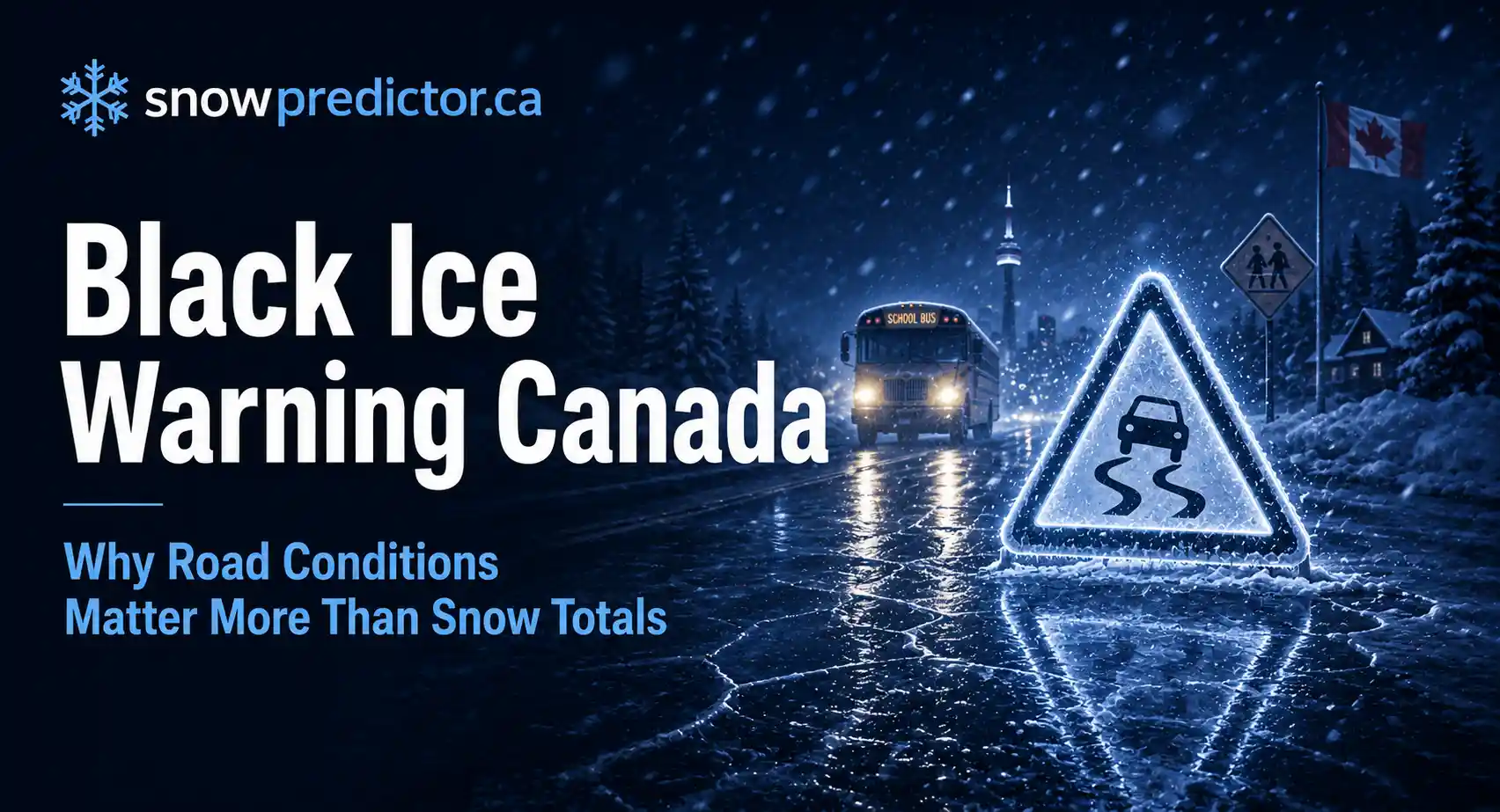
Black Ice Warning Canada: Why Road Conditions Matter More Than Snow Totals
Canadian parents, students and drivers can see very little snow on the ground and still face one of the most dangerous school-travel mornings of winter. Black ice forms as a thin, nearly invisible layer on roads, bridges, sidewalks and school entrances. This black ice warning guide explains how hidden ice develops, why road conditions may matter more than snow depth, and what families should check before buses or private vehicles leave home. The Canada Snow Day Predictor can support early planning, while official weather, road, transportation and school-board sources provide final decisions.
What Canadian Families Should Understand First
Canada does not normally use black ice warning as a standard nationwide weather-alert title. People search the phrase when they are concerned about invisible road ice, but official Canada weather alerts are more likely to mention a flash freeze warning, freezing rain warning, freezing drizzle advisory, icy surfaces or a winter storm.
The black ice warning meaning is concern that moisture may freeze into a hard-to-see glaze. Families should focus on the actual hazard, location and timing rather than waiting for the exact phrase to appear in an official notice.
| Question | Practical Answer |
|---|---|
| Is black ice always visible? | No. It may resemble a wet, dark or shiny road. |
| Is it a standard Canadian alert title? | Usually not. Check for flash-freeze, freezing-rain, freezing-drizzle or winter-storm messages. |
| Can schools close with little snow? | Yes, when roads, walkways or building access are unsafe. |
| Can buses be cancelled while schools remain open? | Yes. Transportation and building decisions are separate. |
What Is Black Ice?
People searching what is black ice are asking about a thin, clear or nearly transparent layer of ice on a road or walking surface. The pavement remains visible beneath it, which is why the surface appears dark rather than white.
The black ice warning meaning refers to its appearance, not its colour. The ice is clear, so a road may look wet or slightly shiny until traction is lost.
Black ice can form when rain, freezing drizzle, fog droplets or melted snow freeze on a cold surface. It may also develop when temperatures fall below freezing while roads remain wet after a thaw. The definition of black ice includes both the transparent glaze and how difficult it is to detect.
Why Road Grip Can Matter More Than Snow Depth
Snow accumulation is easy to notice. Traction is harder to judge, but it may have a greater effect on whether school transportation can operate safely.
A district may receive little snow while experiencing freezing rain, refreezing meltwater or a sudden temperature drop. Those conditions may be more dangerous than deeper snow that has already been plowed and treated. A winter storm can also leave wet pavement that freezes after the main precipitation ends.
Boards and transportation providers may consider:
- Road and pavement temperatures
- Precipitation type
- Timing of the freeze
- Salting, sanding and plowing progress
- Rural route exposure
- Hills, bridges and sharp turns
- Conditions near bus stops and schools
- The afternoon forecast
Local road reports and route observations may therefore matter more than a general snowfall forecast.
Where Hidden Ice Forms First
Bridges and Overpasses
Bridges lose heat from above and below, so they often freeze earlier and remain icy longer.
Shaded Roads
Shaded roads receive less sunlight and can stay icy after exposed pavement begins to thaw.
Rural and Low-Traffic Routes
Rural roads may receive slower treatment, while buses still use narrow routes, hills and turnarounds.
Intersections and School Entrances
Intersections, parking lots, school loops, steps and bus-stop shoulders may remain icy after main roads are treated.
Early-Morning and Evening Routes
Wet roads can freeze overnight or refreeze before dismissal as surface temperatures fall.
Weather Patterns That Create Black Ice
Flash Freeze
A flash freeze warning is issued when rain or melted snow may harden quickly as temperatures fall below freezing.
Freezing Rain
A freezing rain warning may signal broader or heavier icing on roads, trees, vehicles and power lines.
Freezing Drizzle
Small droplets can create a hard-to-see glaze. The freezing drizzle advisory guide explains the school-travel risk.
Refreezing After a Thaw
Meltwater can refreeze at intersections, parking areas, drains and road shoulders.
Freezing Fog
Fog droplets can freeze on roads even when no rain or snow is falling.
The ice storm warning and freezing rain guide covers more widespread ice buildup and power-line risks.
Why Schools May Change Operations With Little Snow
Black ice does not automatically close schools. Weather agencies describe the hazard, but school boards and transportation authorities decide how buildings and buses will operate.
Possible outcomes include:
- Normal school and bus operations
- Route-specific school bus cancellations
- Transportation cancelled by weather zone
- All buses cancelled while schools remain open
- A delayed opening
- Selected school closures
- A district-wide closure
- Early dismissal
School closures in Canada depend on local conditions. Buildings may remain open while routes on untreated secondary roads are cancelled, or close when ice affects access, staffing or utilities.
The guide to how Canadian schools decide on snow days explains how forecasts, road checks and transportation reports shape these decisions.
Why School Buses Can Be Cancelled First
School buses are large vehicles that make frequent stops and may travel before sunrise on roads that have not been fully treated. Black ice on roads can affect:
- Braking distance
- Steering control
- Roadside pickup stops
- Pulling away on hills
- Turning on narrow routes
- Entering school loops
- Rural driveways and turnarounds
- Student footing while boarding
One icy bridge or hill can make a route unsuitable, so school bus cancellations may occur while buildings remain open.
Check whether a morning cancellation also affects afternoon service and whether safe pickup is required.
How Boards Assess Icy Routes
Boards may review forecasts, road reports, cameras, maintenance updates and bus-operator observations before every route can be checked.
The return journey also matters because routes may thaw, refreeze or become icy again before dismissal.
Neighbouring districts may decide differently because their roads, exposure and transportation systems differ.
How to Use Today, Near-Me and Canada Searches
A black ice warning Canada search should lead families toward official Canadian terminology and local road information. It should not be treated as proof that a formal alert with that exact name exists.
A black ice warning today result may be outdated, so check its issue time, region, expiry and road updates.
A black ice warning near me search may misread boundaries, so confirm the community and actual route.
For formal alert terminology, use the Canadian weather alerts guide.
Black Ice, Flash Freeze and Freezing Rain Compared
| Term | What It Describes |
|---|---|
| Black ice | A thin, difficult-to-see layer of clear ice |
| Flash freeze warning | Rapid cooling is expected to freeze water from rain or melted snow |
| Freezing rain warning | Freezing rain is expected to create hazardous icing |
| Freezing drizzle advisory | Persistent fine drizzle may freeze on contact |
| Winter storm warning | Several serious winter hazards may occur together |
| Ice storm | A damaging freezing-rain event with significant ice buildup |
Relevant misspellings should be corrected to winter storm, freezing rain and ice storm.
Why Temperature Readings Can Be Misleading
Air temperature does not always match pavement temperature. A vehicle may show above 0°C while a shaded bridge is already freezing.
Treat a black ice warning concern seriously whenever wet surfaces are followed by falling temperatures. Watch for spray disappearing from other vehicles, unusually quiet tires, a glossy road surface or frost on nearby objects. These clues justify slower driving and greater following distance.
Road Treatment Helps but Does Not Remove Every Risk
Salt and sand improve traction, but treatment takes time and meltwater can refreeze in untreated areas.
Icy road conditions may therefore remain on bridge decks, shaded curves, school parking lots, rural turnarounds and bus-stop shoulders after major roads appear clear. Check updated road reports and local observations shortly before departure.
Prepare the Evening Before a Possible Freeze
When temperatures are expected to cross the freezing point overnight, families can reduce morning pressure by preparing early:
- Charge phones and power banks
- Enable school and transportation notifications
- Place salt or traction material near steps
- Prepare boots with suitable grip
- Check windshield washer fluid and scraper condition
- Confirm backup childcare and pickup arrangements
- Move departure time if extra road treatment may be needed
- Recheck conditions before bed and again before leaving
Keep a flashlight, reflective clothing and written contact numbers accessible in case travel changes or power and mobile service fail.
This preparation does not assume closure; it gives families more time to respond if conditions become unsafe.
A Reliable School-Morning Checking Routine
Read the Official Weather Message
Look for ice-related notices and check the issue time, region, timing, colour and safety advice.
Review Road Information
Check road reports, closures and cameras for the routes actually used.
Check Transportation
Confirm whether the child’s route, weather zone or full system is affected and whether the cancellation applies for the entire day.
Check the School Board
Verify school status separately from transportation.
Inspect the Immediate Route
Inspect the driveway, sidewalk, crossing, bus stop and nearby road.
Consider the Return Journey
Confirm pickup plans because routes may refreeze later.
The weather app versus school-board notice guide explains which source answers each question.
How Drivers Should Respond
Avoid unnecessary travel when authorities report dangerous ice. When travel is essential:
- Reduce speed before bridges, curves and shaded sections
- Increase following distance
- Avoid sudden braking, steering or acceleration
- Keep headlights on
- Do not use cruise control
- Use winter tires on all wheels
- Carry a charged phone and winter emergency kit
- Follow road closures and local restrictions
Winter tires improve traction, but no tire or drivetrain makes ice fully safe.
If the vehicle skids, ease off the accelerator and steer smoothly.
The winter emergency kit Canada guide includes household and vehicle supplies for icy travel and power outages.
How Walkers and Students Should Respond
Students should use treated routes, wear suitable footwear, walk slowly and keep their hands free for balance.
Avoid phones near traffic and consider the child’s age, distance and mobility.
An open school does not make every walking route safe.
How SnowPredictor.ca Supports Early Planning
A road report describes current travel conditions. A transportation authority decides whether buses operate, and a school board confirms whether buildings open.
The Canadian school closure probability tool supports the period before those announcements by estimating how forecast snow, ice, temperature and timing may affect school operations.
Use the estimate for planning; official board and transportation notices take priority.
Frequently Asked Questions
What Is a Black Ice Warning?
In Canada, the phrase is not usually a formal weather-alert title. It generally indicates concern that invisible ice may form on roads, bridges or pavements. Official related messages may include a flash-freeze warning, freezing-rain warning, freezing-drizzle advisory or winter-storm warning.
At What Temperature Does Black Ice Form?
Black ice forms when moisture on a surface freezes at approximately 0°C or below. Pavement temperature matters more than the reported air temperature, so ice may develop while a vehicle thermometer shows slightly above freezing. Bridges, overpasses and shaded sections often freeze first.
What Is the Risk of Black Ice?
It provides very little tyre or footwear traction and is difficult to see. It can cause sudden skidding, longer braking distances, collisions, pedestrian falls and unsafe conditions for buses. A road that appears unusually dark, wet or shiny during freezing conditions may be icy.
What Exactly Is Black Ice?
It is a thin, transparent layer formed when moisture freezes on a road or pavement. It is not actually black. The dark surface underneath remains visible, making the road appear normal or slightly shiny. It can form from rain, melting snow, freezing drizzle, refreezing water or freezing fog.
How Long Does Black Ice Last?
There is no fixed duration. It can remain until the pavement warms, sunlight reaches the surface, road crews apply treatment or the road dries. It may disappear after sunrise or persist for many hours in shaded areas. Bridges and overpasses can remain frozen longer than surrounding roads.