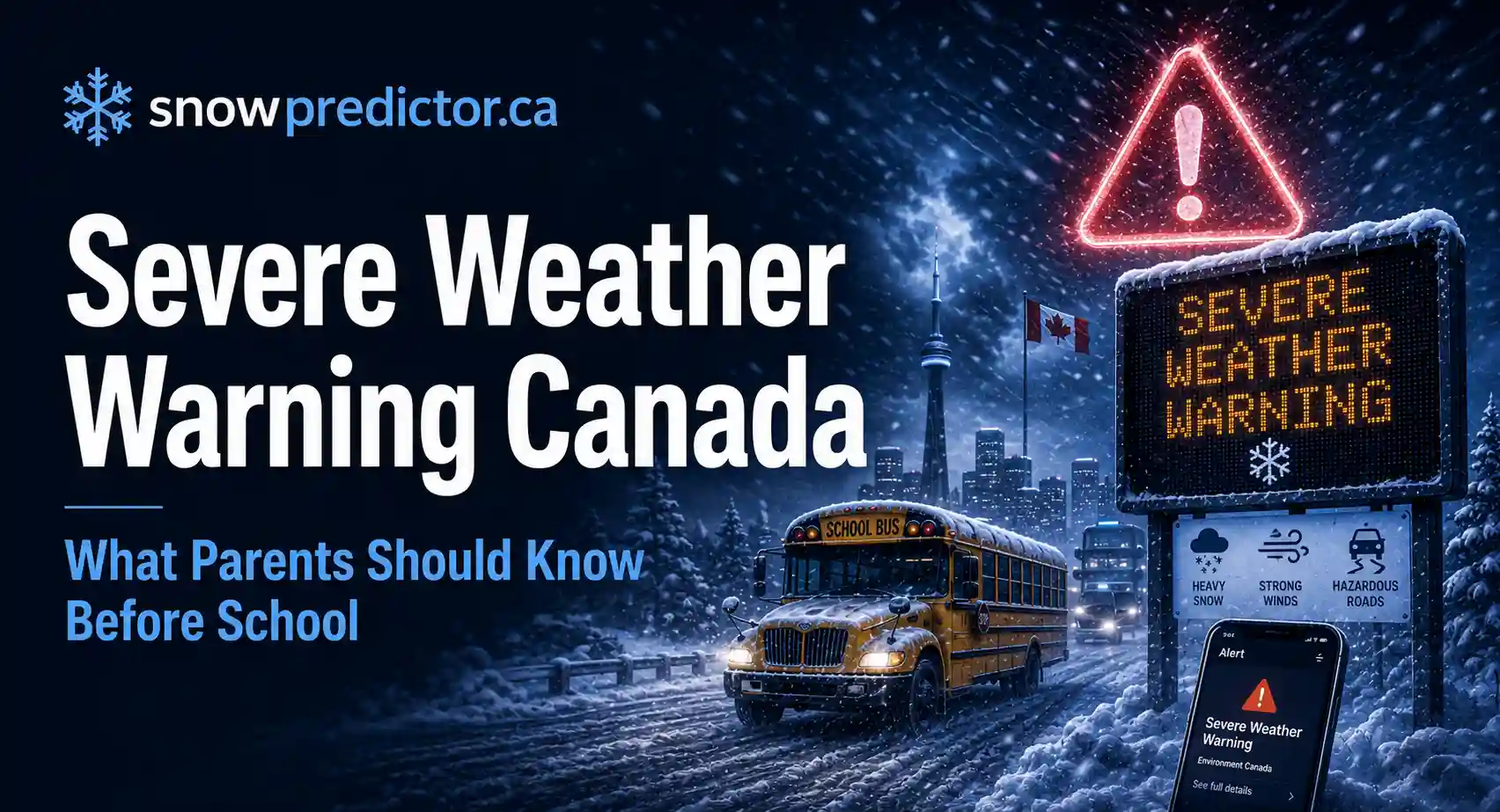
Severe Weather Warning Canada: What Parents Should Know Before School
Canadian parents may see a severe weather warning before school and immediately wonder whether buses will run, buildings will open or it is safe for children to leave home. The challenge is that weather agencies explain the hazard, while transportation providers and school boards make separate operating decisions. This severe weather warning Canada guide explains how the alert system works, which hazards matter most for school travel and what families should check before the morning commute begins. The Canada Snow Day Predictor can support early household planning, while official weather, road, transportation and school-board notices remain the final sources.
What the Alert Means for Families
The severe weather warning meaning is broader than one specific alert title. In Canada, the phrase is commonly used by the public, but Environment and Climate Change Canada usually issues hazard-specific warnings such as a Severe Thunderstorm Warning, Tornado Warning, Winter Storm Warning, Snow Squall Warning, Freezing Rain Warning, Wind Warning or Rainfall Warning.
A warning means hazardous weather posing a significant threat is occurring or expected, so people should take action. Canada also assigns yellow, orange or red colours to formal warnings, advisories and watches to communicate potential impact.
A severe weather warning does not automatically cancel school buses or close a building. Families must check the official alert, local conditions, transportation provider and school board.
How Canada’s Formal Alert Types Differ
Environment and Climate Change Canada uses three formal public alert types.
| Alert Type | What It Generally Means | Recommended Family Response |
|---|---|---|
| Warning | Severe weather is occurring or expected | Act promptly and reconsider unsafe travel |
| Advisory | Significant but generally less severe weather is expected | Take precautions and monitor conditions |
| Watch | Conditions are favourable for severe weather to develop | Prepare and watch for an upgrade |
Special Weather Statements provide extra information about unusual, inconvenient or potentially concerning conditions, but they are not one of the formal colour-coded alert types.
The severe weather watch vs warning comparison is mainly about certainty and urgency. A watch means dangerous weather could develop. A warning means the hazard is happening or expected with greater confidence. The weather advisory versus warning guide explains where advisories fit.
Understanding Yellow, Orange and Red Warnings
The alert type explains urgency, while the colour describes potential impact and forecast confidence.
Yellow Weather Warning
A yellow weather warning generally indicates moderate, localised or shorter-term disruption. It may still make one road, bus route, school entrance or neighbourhood unsafe.
Orange Weather Warning
An orange weather warning indicates a greater risk of major or widespread disruption. Travel, utilities, public services and school operations may be affected across a larger area.
Red Weather Warning
A red weather warning is Canada’s highest alert colour. It signals rare, extreme and potentially life-threatening conditions with possible widespread or prolonged disruption.
Yellow does not mean harmless, and orange does not guarantee closure. Families should read the colour, alert type, location, timing and full impact statement together.
Which Warnings Matter Most Before School?
Several hazard-specific Canadian weather warnings can affect school travel even when the building remains accessible.
Winter Storm and Snowfall Warnings
Heavy snow may cover roads, reduce traction, block sidewalks and delay buses. A winter storm can combine snow, freezing rain, strong wind, blowing snow and dangerous cold. Timing can matter more than the total accumulation.
Freezing Rain, Freezing Drizzle and Flash Freeze Alerts
Ice can create dangerous travel with little visible snow. Bridges, hills, untreated roads, pavements and school entrances may become slippery before families realise conditions have changed.
Snow Squall and Blizzard Warnings
Snow squalls can reduce visibility suddenly over a narrow area. Blizzard conditions combine strong wind with severely reduced visibility in falling or blowing snow. Travel may become dangerous even when snowfall totals are not exceptional.
Wind and Severe Thunderstorm Warnings
Strong wind can push large vehicles, break branches, damage traffic signals and bring down power lines. Severe thunderstorms may also produce lightning, hail, torrential rain, flash flooding or tornadoes.
Tornado Warnings
A tornado warning requires immediate protective action. Children should not begin a school trip or wait outside for transportation. Follow official shelter instructions.
Why a Warning Does Not Automatically Cancel Buses
Environment and Climate Change Canada issues weather alerts, but a transportation provider decides whether buses can operate. School bus cancellations may be based on:
- Current and forecast conditions
- Road reports and route inspections
- Visibility and traction
- Bridges, hills and exposed rural roads
- Flooding, fallen trees or downed lines
- Conditions expected near dismissal
- Whether the entire route can be completed safely
A severe weather warning may cover a large forecast region where local conditions vary.
The guide to how Canadian schools decide on snow days explains how forecasts, road checks and local observations shape those decisions.
Bus Cancellation and School Closure Are Different
A bus notice does not always confirm whether the school building is open. Possible outcomes include:
- Normal school and bus operations
- Selected route or weather-zone cancellations
- All buses cancelled while schools remain open
- Delayed opening
- Individual school closures
- Board-wide closure
- Early dismissal or afternoon transportation changes
School closures during severe weather depend on local roads, building access, staffing, utilities and conditions expected later in the day. Families should check both the transportation provider and school board rather than relying on one notice.
The bus cancelled but school open guide explains what families should do when transportation stops but classes continue.
A Reliable Order for Morning Checks
Read the Full Official Alert
Check the hazard, alert type, colour, affected area, issue time, expected duration, forecast confidence and recommended actions. Confirm whether the home, school and route are covered.
Review the Weather Map and Radar
The official Weather Information map shows alert areas. Radar shows recent precipitation movement, but it cannot confirm every road, pavement or bus-stop condition.
The weather alerts map Canada guide explains how to compare the home, route and school.
Check Provincial or Territorial Roads
Review surface conditions, visibility, closures and cameras. Municipal or rural roads may require a separate local check.
Check the Transportation Provider
Look for the child’s route, school, zone or system-wide cancellation. Confirm whether a morning cancellation remains in effect for the afternoon.
Check the School Board
Verify whether the building is open, delayed, closed or changing dismissal procedures. Use the board’s official website, email, text system or verified social account.
Inspect the Immediate Area
Look for untreated ice, standing water, drifting snow, fallen branches, lightning, poor visibility or an unsafe stop. Regional information cannot describe every street.
This sequence makes weather alerts before school easier to interpret without treating the warning as an automatic closure notice.
A Five-Minute Family Checklist
Before a child leaves, confirm that:
- The alert is current and has not changed colour or type
- The home, school and route were checked separately
- Transportation is operating
- The school board confirmed building status
- The walking route or bus stop is accessible
- The child has suitable clothing
- An adult can respond to delays or early dismissal
- The pickup and childcare plan is clear
- Phones and school notifications are working
Do not rely on an old screenshot, general forecast card or unofficial social-media post.
Checking Today and Near-Me Searches Correctly
A severe weather warning today search may show an expired or superseded headline. Open the newest official alert and confirm its publication time, affected region and expiry.
A severe weather warning near me search can also be misleading near forecast boundaries or when a device uses an inaccurate location. Confirm the named community and compare it with the school and route.
Environment Canada weather alerts should take priority over reposted headlines because the official notice provides the current hazard, colour, timing and safety actions.
Should Parents Drive When Buses Are Cancelled?
A family vehicle is not automatically safer than a school bus. First check why transportation stopped.
A bus route may include exposed highways, rural hills or bridges that a family will not use. However, ice, flooding, poor visibility, falling debris, lightning or severe wind can also make a short private trip unsafe.
During dangerous winter weather, delay unnecessary travel and check road reports before leaving. During severe thunderstorms or tornado threats, families should seek shelter rather than begin a journey.
Keeping Walkers and Bus Riders Safer
Children should not wait outside when lightning, tornado conditions, dangerous wind, extreme cold, poor visibility or falling debris creates an immediate risk.
They should stay away from trees, utility poles, floodwater, damaged structures and traffic. Use visible, weather-appropriate clothing and keep phones and headphones away while crossing roads.
Younger children should wait with an adult when delays are possible. Parents should consider the child’s age, mobility, walking distance and ability to recognise changing hazards.
When the Warning Starts After School Begins
Conditions can change quickly. A watch may become a warning, a yellow alert may become orange, or the affected region may expand during the day.
Keep school and transportation notifications enabled. Confirm who is authorised to collect the child if dismissal changes. Do not travel toward the school during a tornado warning or another immediate threat unless officials direct you.
Follow shelter instructions and school communication. The return trip may require a different decision from the morning commute.
How Families Can Receive Reliable Updates
WeatherCAN provides official forecasts and push notifications for saved Canadian locations. Parents can save both the home and school rather than monitoring only the phone’s current position.
The Weather Information map displays active alerts. Alert Ready can deliver certain critical messages through compatible wireless devices, television and radio.
A notification should prompt families to open the complete alert. Severe weather warnings may be expanded, downgraded, replaced or ended as conditions and forecast confidence change.
Preparing the Evening Before
When severe conditions are possible:
- Charge phones and power banks
- Enable school and transportation notifications
- Prepare weather-appropriate clothing
- Review childcare and work alternatives
- Confirm medication and accessibility needs
- Check household and vehicle emergency supplies
- Recheck the forecast before bed
- Check again before leaving home
The winter emergency kit Canada guide lists practical supplies for snow, ice, outages and travel delays.
How SnowPredictor.ca Supports Early Planning
Official alerts explain the hazard, road authorities report travel conditions, transportation providers decide whether buses operate, and school boards decide whether buildings open.
The Canada Snow Day Predictor supports early planning with a location-based estimate of possible school disruption. Families can compare that estimate with official alerts, roads, transportation notices and board announcements while arranging childcare or alternative travel.
The predictor is not an official closure notice or proof that a route is safe. Official decisions always take priority.
Frequently Asked Questions
What Does a Severe Weather Warning Mean in Canada?
It is a broad public phrase for an urgent weather message indicating that hazardous conditions are happening or expected. Canada normally uses hazard-specific titles, such as Winter Storm, Tornado, Wind, Freezing Rain or Severe Thunderstorm Warning. Read the full official alert for the location, timing, colour and safety actions.
Does a Weather Warning Mean School Is Closed?
No. The weather service issues the alert, the transportation provider decides whether buses operate, and the school board decides whether buildings open. Always check both school and transportation notices.
Which Is More Serious: a Watch or a Warning?
A warning is normally more urgent because the hazard is occurring or expected with greater certainty. A watch means conditions are favourable for dangerous weather to develop, so families should prepare and monitor for an upgrade.
What Is Canada’s Highest Weather-Alert Colour?
Red is the highest colour. It indicates rare, extreme and potentially life-threatening conditions with possible widespread or prolonged disruption. Yellow and orange still require attention because local impacts may be serious.
Can Buses Be Cancelled Without Schools Closing?
Yes. Buses may be cancelled because routes, bridges, hills, visibility or roadside stops are unsafe while the building remains accessible. Parents who drive a child to an open school may also need to arrange safe pickup.